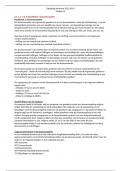
[Theft] ❶ Appropriation) The theft act [Theft] ❷ Property ) The theft act 1968 section 4 defines [Theft] ❸Belonging to another) The theft act 1968
1968 section 3 as Any assumption of the property as real or personal property, things in action section 5 defines belonging to another as in anthers
rights of the owner. This can be done by other intangible property – eventually anything that can possession, control or that another has a proprietary
Adverse interference (Morris) or by be stolen. This can include wild plants as in section 4.3 if interest, having an ownership right in it.
deception (Gomez). taken for reward or sale.
• R v Morris), D swapped price labels Property is NOT: Thus, belonging to another can mean two things:
on ham and thus assumed the rights • Electricity • Having possession or• Having a proprietary
of the owner. Switching the price • Land (Billings v Pill) control of property (R right or interest in
labels was an adverse interference • Wild animals v Tuner). property (R v
with the owners rights -Lord Roskill. • Wild plants Webster).
• R v Gomez), used fake cheques. There • Dead bodies (Kelly and Lindsay)
can be an appropriation of property • Knowledge (Oxford v Moss) ③Belonging to another:
even where the owner consented, if A thing in action is something that can be legally enforced • Property can still belong to another even if
that consent was obtained by such as money in a bank (R v Kohn) and other intangible apparently abandoned (R v Woodman 1974).
deception. property use (A-G for Hong Kong v Chan Nai-Keung 1987) • If a person receives property by mistaken, they
• R v Hinks) Even with the consent of are under an obligation to restore that property
the owner, it can still be (Williams 2006).
appropriation. Where a man of low • Property received under an obligation to treat it
IQ gave a £60,000 gift to D who was a particular way, D holds a legal obligation to
his carer. If an ordinary and honest fulfil that purpose (Davidge v Burnett).
Property offences: The Theft act 1968
person would not accept this as a gift • If property is received by mistake, D has an
in the same or similar circumstances
and would regard it as dishonest then Theft (Actus Reus) obligation to restore it. (A-g ref number 1 of
1985, 1985)
it is appropriation.
Property will belong to another if
it is in their possession or control
Section 3 Section 4 Section 5 Gosh/Ivey test Section 6
❺
❶ ❷ ❹
❸ With
The Of Property Dishonesty
Belonging intention to
Appropriat
to another parentally
ion
deprive
Acts Reus Mens Rea
[Theft] Definition) The dishonest appropriation of
If all three elements of: ❶, ❷ and ❸ are present property belonging to another with intention to
then the Actus Reus is made out and the Mens Rea permanently deprive the other of it.
needs to be proven.
Jake Saville (LVTc2-12/13) 31
1968 section 3 as Any assumption of the property as real or personal property, things in action section 5 defines belonging to another as in anthers
rights of the owner. This can be done by other intangible property – eventually anything that can possession, control or that another has a proprietary
Adverse interference (Morris) or by be stolen. This can include wild plants as in section 4.3 if interest, having an ownership right in it.
deception (Gomez). taken for reward or sale.
• R v Morris), D swapped price labels Property is NOT: Thus, belonging to another can mean two things:
on ham and thus assumed the rights • Electricity • Having possession or• Having a proprietary
of the owner. Switching the price • Land (Billings v Pill) control of property (R right or interest in
labels was an adverse interference • Wild animals v Tuner). property (R v
with the owners rights -Lord Roskill. • Wild plants Webster).
• R v Gomez), used fake cheques. There • Dead bodies (Kelly and Lindsay)
can be an appropriation of property • Knowledge (Oxford v Moss) ③Belonging to another:
even where the owner consented, if A thing in action is something that can be legally enforced • Property can still belong to another even if
that consent was obtained by such as money in a bank (R v Kohn) and other intangible apparently abandoned (R v Woodman 1974).
deception. property use (A-G for Hong Kong v Chan Nai-Keung 1987) • If a person receives property by mistaken, they
• R v Hinks) Even with the consent of are under an obligation to restore that property
the owner, it can still be (Williams 2006).
appropriation. Where a man of low • Property received under an obligation to treat it
IQ gave a £60,000 gift to D who was a particular way, D holds a legal obligation to
his carer. If an ordinary and honest fulfil that purpose (Davidge v Burnett).
Property offences: The Theft act 1968
person would not accept this as a gift • If property is received by mistake, D has an
in the same or similar circumstances
and would regard it as dishonest then Theft (Actus Reus) obligation to restore it. (A-g ref number 1 of
1985, 1985)
it is appropriation.
Property will belong to another if
it is in their possession or control
Section 3 Section 4 Section 5 Gosh/Ivey test Section 6
❺
❶ ❷ ❹
❸ With
The Of Property Dishonesty
Belonging intention to
Appropriat
to another parentally
ion
deprive
Acts Reus Mens Rea
[Theft] Definition) The dishonest appropriation of
If all three elements of: ❶, ❷ and ❸ are present property belonging to another with intention to
then the Actus Reus is made out and the Mens Rea permanently deprive the other of it.
needs to be proven.
Jake Saville (LVTc2-12/13) 31