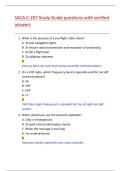
SACA C-207 Study Guide questions with verified
answers
1. What is the purpose of a pre-flight radio check?
A. To test navigation lights
B. To ensure radio transmission and reception is functioning
C. To file a flight plan
D. To calibrate altimeter
B
Ensures pilot can send and receive essential communications.
2. On a VHF radio, which frequency band is typically used for aircraft
communications?
A. HF
B. VHF
C. UHF
D. LF
B
VHF (Very High Frequency) is standard for line-of-sight aircraft
comms.
3. When should you use the phonetic alphabet?
A. Only in emergencies
B. To spell critical information clearly
C. When the message is too long
D. For entertainment
B
Improves clarity, especially over noisy channels.
,4. “Roger” means:
A. Negative
B. Message received and understood
C. Stand by
D. Repeat your message
B
Standard phrase acknowledging understanding.
5. “Wilco” means:
A. Will comply
B. Cannot comply
C. Wait a moment
D. Will change frequency
A
Indicates understanding and intent to follow instructions.
6. Which of the following indicates urgent communications?
A. Pan-Pan
B. Mayday
C. Both A and B
D. Over
C
Pan-Pan is urgent; Mayday is distress.
7. How is a distress call initiated?
A. Say “Mayday” three times
B. Say “Help” once
C. Say “Emergency” twice
D. Tap microphone rapidly
, A
Three times signals distress clearly.
8. A “squelch” control is used to:
A. Adjust volume
B. Eliminate background noise
C. Change channels
D. Increase power
B
Reduces static when no signal is present.
9. What does ATIS provide?
A. Navigation updates
B. Weather and airport information
C. Taxi instructions
D. Fuel prices
B
Automatic Terminal Information Service informs pilots of current
conditions.
10. A radio “frequency” is measured in:
A. Hertz
B. Volts
C. Amps
D. Watts
A
Frequency is cycles per second.
11. If you hear “traffic in sight,” you should:
A. Ignore it
B. Acknowledge and maintain visual separation
answers
1. What is the purpose of a pre-flight radio check?
A. To test navigation lights
B. To ensure radio transmission and reception is functioning
C. To file a flight plan
D. To calibrate altimeter
B
Ensures pilot can send and receive essential communications.
2. On a VHF radio, which frequency band is typically used for aircraft
communications?
A. HF
B. VHF
C. UHF
D. LF
B
VHF (Very High Frequency) is standard for line-of-sight aircraft
comms.
3. When should you use the phonetic alphabet?
A. Only in emergencies
B. To spell critical information clearly
C. When the message is too long
D. For entertainment
B
Improves clarity, especially over noisy channels.
,4. “Roger” means:
A. Negative
B. Message received and understood
C. Stand by
D. Repeat your message
B
Standard phrase acknowledging understanding.
5. “Wilco” means:
A. Will comply
B. Cannot comply
C. Wait a moment
D. Will change frequency
A
Indicates understanding and intent to follow instructions.
6. Which of the following indicates urgent communications?
A. Pan-Pan
B. Mayday
C. Both A and B
D. Over
C
Pan-Pan is urgent; Mayday is distress.
7. How is a distress call initiated?
A. Say “Mayday” three times
B. Say “Help” once
C. Say “Emergency” twice
D. Tap microphone rapidly
, A
Three times signals distress clearly.
8. A “squelch” control is used to:
A. Adjust volume
B. Eliminate background noise
C. Change channels
D. Increase power
B
Reduces static when no signal is present.
9. What does ATIS provide?
A. Navigation updates
B. Weather and airport information
C. Taxi instructions
D. Fuel prices
B
Automatic Terminal Information Service informs pilots of current
conditions.
10. A radio “frequency” is measured in:
A. Hertz
B. Volts
C. Amps
D. Watts
A
Frequency is cycles per second.
11. If you hear “traffic in sight,” you should:
A. Ignore it
B. Acknowledge and maintain visual separation