lOMoAR cPSD| 47061011
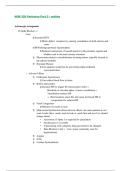
NUR 320 Perfusion Part 2 - outline
Adrenergic Antagonists
Alpha Blockers o
Uses:
Essential HTN
Block alpha 1 receptors by causing vasodilation of both arteries and
veins
BPH (benign prostatic hypertrophy)
Reduced contraction of smooth muscle in the prostatic capsule and
bladder neck to decrease urinary retention
Pheocromocytoma (a catecholamine secreting tumor, typically located in
the adrenal medulla.
Raynaud Disease
Can suppress symptoms by preventing alpha mediated
vasoconstriction
o Adverse Effects
Orthostatic hypotension
Can reduce blood flow to brain
Reflex tachycardia
Increase HR by trigger the baroreceptor reflex o
Blockade of vascular alpha 1 causes vasodilation o
Vasodilation reduces BP
o Baroreceptors sense this and cause increased HR to
compensate for reduced BP
Nasal Congestion
Dilation of vessels in nose
Male sexual dysfunction (these adverse effects can cause patients to not
want to take these meds, need to look at meds first and see if we should
change them)
• Activation of Alpha 1 is required for ejaculation
• Dysfunction is reversible
• If presenting with symptom, drug just needs to be changed
• Beta Blockers (-lol) o Uses: (most commonly seen for
hypertension)
Angina
HTN
Cardiac Dysrhythmias
, lOMoAR cPSD| 47061011
MI
Heart Failure (long acting only)
Decreased perioperative mortality due to perioperative MI reduction
Hyperthyroidism induced tachycardia
Migraine PPX (mechanism unknown)
Stage fright – block sympathetic activation
Pheochromocytoma (mentioned above) o Adverse Effects
Bradycardia ! (take hr and bp.. less than 60 and less than 100)
Decreased cardiac output
Precipitation of heart failure in acute exacerbation
AV block
Rebound cardiac excitation – should not abruptly stop (need to be
tapered off over a few days because of adverse rebound cardiac excitation)
• Indirect Acting Anti Adrenergic Agents o Categories
Centrally Acting
• Norepinephrine accumulates in the synapse activating alpha2
receptors.
• This signals that there is a sufficient amount of norepinephrine
causing a decrease in the synthesis of norepinephrine which causes
vasodilation
• Medication Example: Clonidine o Action:
Selectively activates alpha2 receptors in the CNS
specifically the brain stem reducing the sympathetic
outflow to the blood vessels and heart
(by stimulating alpha 2 we reduce sympathetic
outflow) o Effects:
By suppressing the firing of sympathetic nerves to
the heart, can cause bradycardia and decrease in CO
– increase SV
By suppressing sympathetic regulation in
blood vessels, can increase vasodilation o Adverse
Effects:
Drowsiness in about 35% of people !!
• Early in course, should be advised to avoid hazardous activities
(driving, sports ex. Ski)
• (small percent of these people experience complete sedation!!)
Xerostomia (dry mouth) in 40% people
• Decreases over 2-4 weeks of therapy
, lOMoAR cPSD| 47061011
• Not dangerous, just annoying (can cause people not want to take
med)(can fix by water, candy, gravy, gum, anything w mechanical
movement of mouth will produce more saliva)
Rebound HTN
• Do not stop abruptly
• Should taper med
Embryotoxic (avoid in patients who are pregnant)
Abuse potential (bc sedative properties)
• High doses can cause euphoria, sedation and hallucinations
Constipation
Gynecomastia! (enlarged
breast tissue in males)
Vivid dreams/nightmares
Anxiety/depression
Heart Failure Medications
• Medications o Commonly used medications for HF treatment:
Diuretics (first line)
• First line treatment when volume overload present
• Decreases the pressure within the heart
• Decreases afterload, or pressure heart must pump against
o Thiazide Diuretics Long term
GFR must be normal (monitor glomerular filtration rate- kidney)
Non severe edema
Given PO
Must monitor for hypokalemia (not potassium sparing)
o Loop Diuretics (ex. Furosemide/ Lasix)
When CO is decreased
Can be PO or IV
Monitor for hypokalemia o Potassium Sparing
Diuretics (ex. Spironolactone)
Scant diuresis
Use it to counteract the potassium lost by other
diuretics
Given PO
Monitor for hyperkalemia
• ACEi use can also increase potassium level. (when used
in combination with potassium sparing)
RAAS inhibitors
NUR 320 Perfusion Part 2 - outline
Adrenergic Antagonists
Alpha Blockers o
Uses:
Essential HTN
Block alpha 1 receptors by causing vasodilation of both arteries and
veins
BPH (benign prostatic hypertrophy)
Reduced contraction of smooth muscle in the prostatic capsule and
bladder neck to decrease urinary retention
Pheocromocytoma (a catecholamine secreting tumor, typically located in
the adrenal medulla.
Raynaud Disease
Can suppress symptoms by preventing alpha mediated
vasoconstriction
o Adverse Effects
Orthostatic hypotension
Can reduce blood flow to brain
Reflex tachycardia
Increase HR by trigger the baroreceptor reflex o
Blockade of vascular alpha 1 causes vasodilation o
Vasodilation reduces BP
o Baroreceptors sense this and cause increased HR to
compensate for reduced BP
Nasal Congestion
Dilation of vessels in nose
Male sexual dysfunction (these adverse effects can cause patients to not
want to take these meds, need to look at meds first and see if we should
change them)
• Activation of Alpha 1 is required for ejaculation
• Dysfunction is reversible
• If presenting with symptom, drug just needs to be changed
• Beta Blockers (-lol) o Uses: (most commonly seen for
hypertension)
Angina
HTN
Cardiac Dysrhythmias
, lOMoAR cPSD| 47061011
MI
Heart Failure (long acting only)
Decreased perioperative mortality due to perioperative MI reduction
Hyperthyroidism induced tachycardia
Migraine PPX (mechanism unknown)
Stage fright – block sympathetic activation
Pheochromocytoma (mentioned above) o Adverse Effects
Bradycardia ! (take hr and bp.. less than 60 and less than 100)
Decreased cardiac output
Precipitation of heart failure in acute exacerbation
AV block
Rebound cardiac excitation – should not abruptly stop (need to be
tapered off over a few days because of adverse rebound cardiac excitation)
• Indirect Acting Anti Adrenergic Agents o Categories
Centrally Acting
• Norepinephrine accumulates in the synapse activating alpha2
receptors.
• This signals that there is a sufficient amount of norepinephrine
causing a decrease in the synthesis of norepinephrine which causes
vasodilation
• Medication Example: Clonidine o Action:
Selectively activates alpha2 receptors in the CNS
specifically the brain stem reducing the sympathetic
outflow to the blood vessels and heart
(by stimulating alpha 2 we reduce sympathetic
outflow) o Effects:
By suppressing the firing of sympathetic nerves to
the heart, can cause bradycardia and decrease in CO
– increase SV
By suppressing sympathetic regulation in
blood vessels, can increase vasodilation o Adverse
Effects:
Drowsiness in about 35% of people !!
• Early in course, should be advised to avoid hazardous activities
(driving, sports ex. Ski)
• (small percent of these people experience complete sedation!!)
Xerostomia (dry mouth) in 40% people
• Decreases over 2-4 weeks of therapy
, lOMoAR cPSD| 47061011
• Not dangerous, just annoying (can cause people not want to take
med)(can fix by water, candy, gravy, gum, anything w mechanical
movement of mouth will produce more saliva)
Rebound HTN
• Do not stop abruptly
• Should taper med
Embryotoxic (avoid in patients who are pregnant)
Abuse potential (bc sedative properties)
• High doses can cause euphoria, sedation and hallucinations
Constipation
Gynecomastia! (enlarged
breast tissue in males)
Vivid dreams/nightmares
Anxiety/depression
Heart Failure Medications
• Medications o Commonly used medications for HF treatment:
Diuretics (first line)
• First line treatment when volume overload present
• Decreases the pressure within the heart
• Decreases afterload, or pressure heart must pump against
o Thiazide Diuretics Long term
GFR must be normal (monitor glomerular filtration rate- kidney)
Non severe edema
Given PO
Must monitor for hypokalemia (not potassium sparing)
o Loop Diuretics (ex. Furosemide/ Lasix)
When CO is decreased
Can be PO or IV
Monitor for hypokalemia o Potassium Sparing
Diuretics (ex. Spironolactone)
Scant diuresis
Use it to counteract the potassium lost by other
diuretics
Given PO
Monitor for hyperkalemia
• ACEi use can also increase potassium level. (when used
in combination with potassium sparing)
RAAS inhibitors