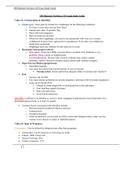
NUR 211 Final Exam Study Guide Study Guide
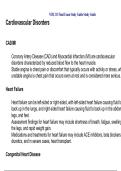
Cardiovascular Disorders
CAD/MI
Coronary Artery Disease (CAD) and Myocardial Infarction (MI) are cardiovascular
disorders characterized by reduced blood flow to the heart muscle.
Stable angina is chest pain or discomfort that typically occurs with activity or stress, wh
unstable angina is chest pain that occurs even at rest and is considered more serious.
Heart Failure
Heart failure can be left-sided or right-sided, with left-sided heart failure causing fluid to
back up in the lungs, and right-sided heart failure causing fluid to back up in the abdom
legs, and feet.
Assessment findings for heart failure may include shortness of breath, fatigue, swelling
the legs, and rapid weight gain.
Medications and treatments for heart failure may include ACE inhibitors, beta blockers,
diuretics, and in severe cases, heart transplant.
Congenital Heart Disease
, NUR 211 Final Exam Study Guide Study Guide
Congenital heart diseases such as Atrial Septal Defect (ASD), Ventricular Septal Defec
(VSD), Tetralogy of Fallot, and Aortic Valve Stenosis are present at birth and may requi
surgical intervention.
Patient assessment for congenital heart disease involves monitoring for symptoms suc
as poor feeding, rapid breathing, and cyanosis.
Cardiovascular Diagnostic Procedures
Electrocardiogram (EKG) readings are used to detect arrhythmias and guide treatment
Medications such as beta blockers, ACE inhibitors, and calcium channel blockers are
commonly used in cardiovascular disorders to manage blood pressure and heart rate.
Cardiac catheterization is a procedure to diagnose and treat certain heart conditions, a
post-procedure nursing care involves monitoring for bleeding and assessing the inserti
site.
Echocardiogram/Transesophageal Echocardiogram (TEE) are imaging tests that create
detailed pictures of the heart's structure and function.
Respiratory Disorders
Pneumonia, asthma, Chronic Obstructive Pulmonary Disease (COPD), tuberculosis, an
influenza are common respiratory disorders with distinct clinical manifestations and
treatments.
Cardiovascular Disorders
CAD/MI
Coronary Artery Disease (CAD) and Myocardial Infarction (MI) are cardiovascular
disorders characterized by reduced blood flow to the heart muscle.
Stable angina is chest pain or discomfort that typically occurs with activity or stress, wh
unstable angina is chest pain that occurs even at rest and is considered more serious.
Heart Failure
Heart failure can be left-sided or right-sided, with left-sided heart failure causing fluid to
back up in the lungs, and right-sided heart failure causing fluid to back up in the abdom
legs, and feet.
Assessment findings for heart failure may include shortness of breath, fatigue, swelling
the legs, and rapid weight gain.
Medications and treatments for heart failure may include ACE inhibitors, beta blockers,
diuretics, and in severe cases, heart transplant.
Congenital Heart Disease
, NUR 211 Final Exam Study Guide Study Guide
Congenital heart diseases such as Atrial Septal Defect (ASD), Ventricular Septal Defec
(VSD), Tetralogy of Fallot, and Aortic Valve Stenosis are present at birth and may requi
surgical intervention.
Patient assessment for congenital heart disease involves monitoring for symptoms suc
as poor feeding, rapid breathing, and cyanosis.
Cardiovascular Diagnostic Procedures
Electrocardiogram (EKG) readings are used to detect arrhythmias and guide treatment
Medications such as beta blockers, ACE inhibitors, and calcium channel blockers are
commonly used in cardiovascular disorders to manage blood pressure and heart rate.
Cardiac catheterization is a procedure to diagnose and treat certain heart conditions, a
post-procedure nursing care involves monitoring for bleeding and assessing the inserti
site.
Echocardiogram/Transesophageal Echocardiogram (TEE) are imaging tests that create
detailed pictures of the heart's structure and function.
Respiratory Disorders
Pneumonia, asthma, Chronic Obstructive Pulmonary Disease (COPD), tuberculosis, an
influenza are common respiratory disorders with distinct clinical manifestations and
treatments.