Exam 1 Concept Review Case NR302 Exam 1 Concepts
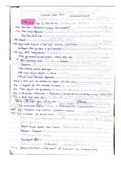
When studying, ensure that you study the normal and the abnormal findings, when listed. Subjective vs objective data • Subjective data: What person SAY about him or herself during history taking o Ex. Patient say…., Nausea noted from patient • Objective data: What you as the health professional observe by inspecting , percussing, palpating , and auscultating during the physical examination. Types of databases 1. Complete total health database o A complete health history and a full physical examination. o Describe the current and past health state and forms a baseline against future changes. Yield the first diagnosis o Use with Third-level priority problems and Collaborative problems 2. Focused or Problem-Centered Database o For limited or short-term problem o Collect a mini database, smaller in scope and more target than the complete database o Concern only one problem, one body system, and one cue complex o Use with Second- level priority problem. o Ex.2 days after surgery Mr.C suddenly has a congested cough, shortness of breath, and fatigue. The history and examination focus primarily on the respirator and cardiovascular system. 3. Follow- Up database o Status of any identified problem should be evaluated at regular and appropriate intervals. o Use in follow up both short term and chronic health problem o Ex. What change has occurred? Is the problem getting better or worse? 4. Emergency database o Urgent, rapid collection of crucial information and compiled with lifesaving measure. o Diagnosis must be swift and sure o Ex. Name, age, allergic, past medication, level of consciousness, type and screen o Use with First-level priority problem. Nursing process Nursing process include 6 phases 1. Assessment: Collect data; Review clinical record, interview, health history, physical examination, functional assessment, cultural and spiritual assessment, consultation, review of the literature o Use evidence base assessment technique o Document relevant data. 2. Diagnosis: Compare clinical finding with normal and abnormal variation and developmental events, Interpret data by identifying clusters of cues, validate diagnosis, document the diagnosis. 3. Outcome identification: Identify expected outcome, individualize to the person, culturally appropriate, realistic and measurable include timeline. 4. Planning: Establish priorities, develop outcome, set timeline for outcome, identify intervention, integrated evidence-based trends and research, document plan of care. 5. Implementation: Implement in safe and timely manner, used evidence-based interventions, collaborate with colleagues, use community resource, coordination care delivery, provide health teaching and health promotion, document implementation and any modification. 6. Evaluation: Progress toward outcome, conduct systematic, ongoing, criterion-based evaluation, Included patient and significant other. Identifying priorities for problems o First-level priority: Those that are emergent, life threatening and immediate such as establishing and air-way or supporting breathing. o Second-level priority: Next in urgency, requiring prompt intervention to forestall further deterioration. o Third-level priority: Important to patient's health but can be addressed after more urgent problem are addressed. Intervention to treat this problem are long term, and response effect is take more time. o Collaborative problem: the approach to treatment involves multiple disciplines. Collaborative problem are certain physiologic conditions in which nurse have the primary responsibility to diagnose the onset and monitor the changes in status. Ex. Patient had diabetes which represent collaborative problem . With this problem the sudden imbalance of insulin and blood sugar has profound implication on the central nervous system and GI system, in this case Nurse, Doctor, Dietitian, and case manager have to collaborate. Anything that use a lot of people from variety of major is belong to collaborative problem. Table 1.1 • Step to Setting Priorities 1. Assign high priority to First-Level priority problems Using ABC plus V to determine A: Airway problems B: Breathing problems C: Cardiac problems V: Vital sign concerns (high fever, irregular pulse, lower level of respiration) 2. Next attend to Secondary- Level priority problems : mental status change, Untreated medical problem who requiring immediate attention (diabetes patient who has not receive insulin), acute pain, abnormal laboratory problem, risk of infection 3. Address Third-level priority problems: Health problem that is not fit into the previous categories (e.g. patient with lack of knowledge, activities, rest) Evidence-based practice: it is the conviction that all patients deserve to be treated with the most current and best-practice techniques. It is a systematic approach to practice that emphasizes the use of the best evidence in combination with the clinician’s experience as well as the patient preference and values, to make decisions about care and treatment. o clinical decision making depends on all four factors: (1) the best evidence from a critical review of research literature; (2) the patient's own preferences; (3) the clinician's own experience and expertise; (4)finally physical examination and assessment
Written for
Document information
- Uploaded on
- February 22, 2021
- Number of pages
- 30
- Written in
- 2020/2021
- Type
- Case
- Professor(s)
- Prof
- Grade
- A+
Subjects
- exam 1 concept review
- nr302
-
case nr302 exam 1 concepts