Introduction to Business Accounting - D774
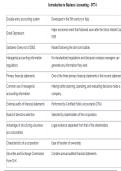
Double-entry accounting system Developed in the 15th century in Italy.
Major economic event that followed soon after the Stock Market Cras
Great Depression
1929.
Sarbanes-Oxley Act of 2002 Passed following the dot-com bubble.
Managerial accounting information No standardized regulations exist because company managers can
regulations generate any information they want.
Primary financial statements One of the three primary financial statements is the income statement
Common use of managerial Making better planning, operating, and evaluating decisions inside a
accounting information company.
External audits of financial statements Performed by Certified Public Accountants (CPA).
Board of directors selection Selected by shareholders of the corporation.
Advantage of structuring a business Legal existence separated from that of the shareholders.
as a corporation
Characteristics of a corporation Ease of transfer of ownership.
Securities and Exchange Commission Contains annual audited financial statements.
Form 10-K
, Introduction to Business Accounting - D774
Employees' interest in income To assess the current profitability of the company, its performance, an
statement liquidity.
Net income Reported amount contains the company's profitability after expenses
Assets consumed through business The amount of assets consumed through business operations
operations
Revenues exceed expenses The amount by which revenues exceed expenses
Cash on hand The amount of cash on hand at the end of the year
Total assets in balance sheet The total amount of assets reported in the balance sheet
Highlighted measurement in income Operating income
statement
Costs of buying or making products Cost of sales
First item on income statement Revenues
Reported item in income statement Revenues
Revenue reporting situation When products or services are sold
Item reported as revenue Amount earned from customers for the sale of goods
Double-entry accounting system Developed in the 15th century in Italy.
Major economic event that followed soon after the Stock Market Cras
Great Depression
1929.
Sarbanes-Oxley Act of 2002 Passed following the dot-com bubble.
Managerial accounting information No standardized regulations exist because company managers can
regulations generate any information they want.
Primary financial statements One of the three primary financial statements is the income statement
Common use of managerial Making better planning, operating, and evaluating decisions inside a
accounting information company.
External audits of financial statements Performed by Certified Public Accountants (CPA).
Board of directors selection Selected by shareholders of the corporation.
Advantage of structuring a business Legal existence separated from that of the shareholders.
as a corporation
Characteristics of a corporation Ease of transfer of ownership.
Securities and Exchange Commission Contains annual audited financial statements.
Form 10-K
, Introduction to Business Accounting - D774
Employees' interest in income To assess the current profitability of the company, its performance, an
statement liquidity.
Net income Reported amount contains the company's profitability after expenses
Assets consumed through business The amount of assets consumed through business operations
operations
Revenues exceed expenses The amount by which revenues exceed expenses
Cash on hand The amount of cash on hand at the end of the year
Total assets in balance sheet The total amount of assets reported in the balance sheet
Highlighted measurement in income Operating income
statement
Costs of buying or making products Cost of sales
First item on income statement Revenues
Reported item in income statement Revenues
Revenue reporting situation When products or services are sold
Item reported as revenue Amount earned from customers for the sale of goods