

Theme 1: Quality and Safety
Governance
Lecture 1: Governing quality in Aquaculture
Product qualities: tangible attributes, design, chemical compounds:
Taste, sensory, freshness, colour,
Process qualities: intangible attributes, related to how it was created or is dealt with as waste
Water quality, antibiotics
Credence qualities: Value-based attributes that cannot be perceived by consumers, even after consumption
Sustainability, animal welfare, organic
Goals: outsourcing risk, guidance and technical assistance,
regulation and standards
Article 1: Schlag, 2009
Main risk-related area’s: human health, environment, organizational, fish welfare and social issues
Balancing human health risks and benefits by consumers
Environmental risks: impact on biodiversity
Farmed fish and welfare
Sustainability: fish meal, low cost fish feed for higher value carnivorous fish
Social risks and benefits:
Benefits: provision of rural livelihoods, creation of wealth in many countries, better income,
new and alternative forms of employment, food security, better nutrition, as well as
the development of rural areas
Risks: constant need to produce more by increasing the production area or the unit
productivity. Social conflicts could arise among people or social groups, stemming
from competition for common resources and/or denial of access to resources. Social
inequities may be caused when benefits are not equally shared or when some reap
the benefits while others bear the risks.
Climate change
Transgenic fish
Organizational risks and regulation: adequate labelling, enforcement regulatory body, efficient global
regulation, specific strategies to reach policy goals
Perceived risks: commercial influence on research, foreign ownership, impact on culture and society, negative
public perception, tainted by association (with GM and antibiotics),welfare of fish as species, unnaturalness,
environmental risks and benefits, human health risk and benefit, media, aquacultural practices
Article 2: Gereffi, 2006
Variables in determining how global value chains are governed and change
1. the complexity of transactions
2. the ability to codify transactions
3. The capabilities in the supply-base
Types of global value chain governance: hierarchy, captive, relational, modular and market
, Article 3: Mol, 2015
1. Transparency may not increase inequality in value chains
when information is captured by the already powerful
2. Transparency will only reach goals when those involved
have adequate access and literacy
3. Transparency can increase control and surveillance rather
than increase democratic values
4. More transparency can lead to information overload
5. Transparency will only work when the quality and reliability
of information is guarded and guaranteed
6. Questions if transparency will lead to desired impacts
Tutorial 1: Qualities, value chains and information
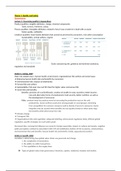
Factors of value chain governance:
1. Complexity of information and knowledge transfer required to sustain a particular
transaction, particularly with respect to product and process specifications
2. The extent to which this information and knowledge can be codified and therefore
transmitted efficiently and without transaction-specific investment between the
parties to the transaction
3. The capability of actual and potential suppliers in relation to the requirements of the
transaction
Economics
Video’s + Lecture 2: Economics of aquaculture and food quality
Aquaculture vs agriculture: Different skills: more than feed alone, must be able to swim
More capital: holding structures, oxygen maintenance and backup
More species
Aquaculture vs fisheries: Control of biophysical factors (water quality)
Control of human factors (public property vs privatized)
Scarce goods have opportunity costs: if you use it now, you give up the opportunity to use it later
(* %interest if you put it on the bank)
Typologies of economics:
Positive normative: what happens(behaviour, markets) vs. what should happen(optimisation)
Scales: Micro (individual producers, consumers) vs. macro (employment, GDP, inflation)
Fields: Business (companies) vs. Financial (investments, interest) vs. environmental (policy)
Enterprise budget: revenues and costs: begroting, winst-verlies rekening
Cash expenses: money that is actually paid
Capital costs: opportunity costs,
depreciation (verzonken kosten)
Opportunity costs of (own)
labour
Farm decisions: short term:
managing variable costs
long term: managing fixed costs
(investments, machinery, technology)
Governance
Lecture 1: Governing quality in Aquaculture
Product qualities: tangible attributes, design, chemical compounds:
Taste, sensory, freshness, colour,
Process qualities: intangible attributes, related to how it was created or is dealt with as waste
Water quality, antibiotics
Credence qualities: Value-based attributes that cannot be perceived by consumers, even after consumption
Sustainability, animal welfare, organic
Goals: outsourcing risk, guidance and technical assistance,
regulation and standards
Article 1: Schlag, 2009
Main risk-related area’s: human health, environment, organizational, fish welfare and social issues
Balancing human health risks and benefits by consumers
Environmental risks: impact on biodiversity
Farmed fish and welfare
Sustainability: fish meal, low cost fish feed for higher value carnivorous fish
Social risks and benefits:
Benefits: provision of rural livelihoods, creation of wealth in many countries, better income,
new and alternative forms of employment, food security, better nutrition, as well as
the development of rural areas
Risks: constant need to produce more by increasing the production area or the unit
productivity. Social conflicts could arise among people or social groups, stemming
from competition for common resources and/or denial of access to resources. Social
inequities may be caused when benefits are not equally shared or when some reap
the benefits while others bear the risks.
Climate change
Transgenic fish
Organizational risks and regulation: adequate labelling, enforcement regulatory body, efficient global
regulation, specific strategies to reach policy goals
Perceived risks: commercial influence on research, foreign ownership, impact on culture and society, negative
public perception, tainted by association (with GM and antibiotics),welfare of fish as species, unnaturalness,
environmental risks and benefits, human health risk and benefit, media, aquacultural practices
Article 2: Gereffi, 2006
Variables in determining how global value chains are governed and change
1. the complexity of transactions
2. the ability to codify transactions
3. The capabilities in the supply-base
Types of global value chain governance: hierarchy, captive, relational, modular and market
, Article 3: Mol, 2015
1. Transparency may not increase inequality in value chains
when information is captured by the already powerful
2. Transparency will only reach goals when those involved
have adequate access and literacy
3. Transparency can increase control and surveillance rather
than increase democratic values
4. More transparency can lead to information overload
5. Transparency will only work when the quality and reliability
of information is guarded and guaranteed
6. Questions if transparency will lead to desired impacts
Tutorial 1: Qualities, value chains and information
Factors of value chain governance:
1. Complexity of information and knowledge transfer required to sustain a particular
transaction, particularly with respect to product and process specifications
2. The extent to which this information and knowledge can be codified and therefore
transmitted efficiently and without transaction-specific investment between the
parties to the transaction
3. The capability of actual and potential suppliers in relation to the requirements of the
transaction
Economics
Video’s + Lecture 2: Economics of aquaculture and food quality
Aquaculture vs agriculture: Different skills: more than feed alone, must be able to swim
More capital: holding structures, oxygen maintenance and backup
More species
Aquaculture vs fisheries: Control of biophysical factors (water quality)
Control of human factors (public property vs privatized)
Scarce goods have opportunity costs: if you use it now, you give up the opportunity to use it later
(* %interest if you put it on the bank)
Typologies of economics:
Positive normative: what happens(behaviour, markets) vs. what should happen(optimisation)
Scales: Micro (individual producers, consumers) vs. macro (employment, GDP, inflation)
Fields: Business (companies) vs. Financial (investments, interest) vs. environmental (policy)
Enterprise budget: revenues and costs: begroting, winst-verlies rekening
Cash expenses: money that is actually paid
Capital costs: opportunity costs,
depreciation (verzonken kosten)
Opportunity costs of (own)
labour
Farm decisions: short term:
managing variable costs
long term: managing fixed costs
(investments, machinery, technology)


