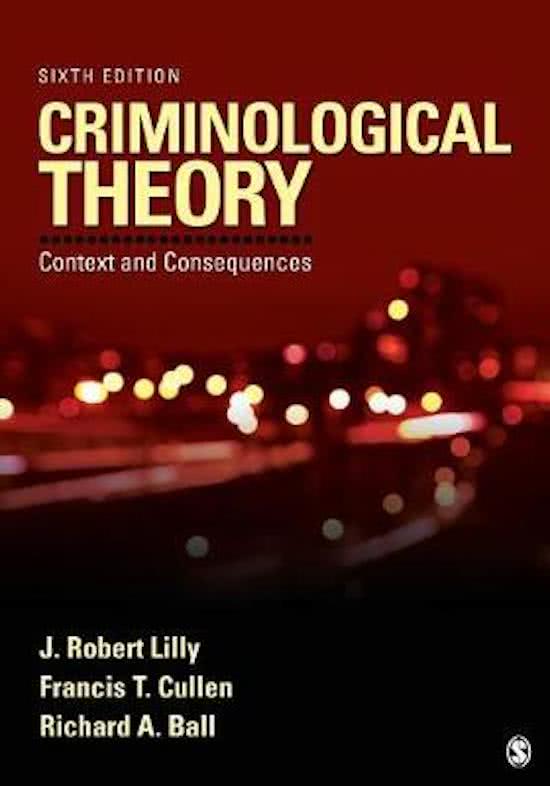
Criminological Theory:
Context and Consequences
ST
6th Edition
UV
TEST BANK
IA
_A
J. Robert Lilly
PP
Francis T. Cullen
Richard A. Ball
RO
Comprehensive Test Bank for Instructors
VE
and Students
D?
© J. Robert Lilly, Francis T. Cullen & Richard A. Ball
?
All rights reserved. Reproduction or distribution without permission is prohibited.
© DREAMSHUB
, Test Bank for Criminological Theory: Context and Consequences (6th
Edition)
J. Robert Lilly, Francis T. Cullen & Richard A. Ball
ISBN: 9781452258164
ST
UNIT 1: FOUNDATIONS AND EARLY THEORY DEVELOPMENT
1. The Context and Consequences of Theory
2. The Search for the “Criminal Man”
UV
3. Rejecting Individualism: The Chicago School
UNIT 2: STRAIN, CONTROL, AND LABELING PERSPECTIVES
4. Crime in American Society: Anomie and Strain Theories
5. Society as Insulation: The Origins of Control Theory
IA
6. The Complexity of Control: Hirschi’s Two Theories and Beyond
7. The Irony of State Intervention: Labeling Theory
_A
UNIT 3: POWER, CONFLICT, AND CRITICAL PERSPECTIVES
8. Social Power and the Construction of Crime: Conflict Theory
9. The Variety of Critical Theory
10. The Gendering of Criminology: Feminist Theory
PP
UNIT 4: CRIME TYPES, CONSERVATIVE THEORY, AND RATIONAL
PERSPECTIVES
11. Crimes of the Powerful: Theories of White-Collar Crime
12. Bringing Punishment Back In: Conservative Criminology
RO
13. Choosing Crime in Everyday Life: Routine Activity and Rational Choice
Theories
UNIT 5: BIOSOCIAL AND DEVELOPMENTAL THEORIES
14. The Search for the “Criminal Man” Revisited: Biosocial Theories
VE
15. New Directions in Biosocial Theory: Perspectives and Policies
16. The Development of Criminals: Life-Course Theories
D?
?
© DREAMSHUB
, Lilly, Criminological Theory 6e © 2015 SAGE Publications
1. Each year the FBI publishes the _______ in which it lists the numbers of various crimes that
have become known to the nation’s police departments.
*a. Uniform Crime Reports
b. Self-Report Survey
ST
c. Universal Crime Report
d. National Crime Report
Answer location: p 2
2. Which of the following is not included in the Uniform Crime Reports “Crime Index”?
UV
a. Murder
b. Assault
*c. Drug Offenses
d. Rape
Answer location: p 2
IA
3. ______ is a study in which citizens are asked whether they have been victimized.
a. Universal Crime Report
b. National Crime Report
*c. National Crime Victimization Survey
_A
d. Uniform Crime Report
Answer location: p 2
4. Lawlessness in ______ surpasses that in other industrialized nations.
a. England
PP
*b. the United States
c. Canada
d. Italy
Answer location: p 2
RO
5. ______ crime is especially prominent in the United States.
a. Property
b. Drug
c. Traffic
*d. Violent/lethal
VE
Answer location: p 2
6. Most people have developed their own _____ of criminal behavior.
a. Penalties
b. Experiments
D?
c. Laws
*d. Theories
Answer location: p 3
7. _____ shape the ways in which people come to think about crime.
?
*a. Social experiences
b. Stereotypes
, Lilly, Criminological Theory 6e © 2015 SAGE Publications
c. The media
d. Peers
Answer location: p 4
ST
8. Americans’ views on crime have _____ since the settlers first landed on the nation’s shores.
*a. changed
b. become less harsh
c. become more lenient
d. stayed the same
UV
Answer location: p 4
9. Support for criminal justice policies eventually will collapse if the _____ on which they are
based no longer makes sense.
a. data
*b. theory
IA
c. community
d. research
Answer location: p 5
_A
10. The very transformations in policy are themselves a product of _____ in society.
a. personalities
b. individual
c. time
*d. transformation
PP
Answer location: p 6
11. The _____ emphasized the rejection of spiritual or religious explanations of crime in favor of
the view that offenders use their reasoning in deciding to commit crime.
a. Positivist
RO
b. Chicago
*c. Classical
d. New York
Answer location: p 7
VE
12. The _____ school emphasized the scientific study of criminals.
*a. Positivist
b. Chicago
c. Classical
d. New York
D?
Answer location: p 7
13. Which of the following theory is not considered one of the three mainstream theories of
criminology?
a. Differential association theory
?
b. Anomie-strain theory
*c. Labeling theory
Context and Consequences
ST
6th Edition
UV
TEST BANK
IA
_A
J. Robert Lilly
PP
Francis T. Cullen
Richard A. Ball
RO
Comprehensive Test Bank for Instructors
VE
and Students
D?
© J. Robert Lilly, Francis T. Cullen & Richard A. Ball
?
All rights reserved. Reproduction or distribution without permission is prohibited.
© DREAMSHUB
, Test Bank for Criminological Theory: Context and Consequences (6th
Edition)
J. Robert Lilly, Francis T. Cullen & Richard A. Ball
ISBN: 9781452258164
ST
UNIT 1: FOUNDATIONS AND EARLY THEORY DEVELOPMENT
1. The Context and Consequences of Theory
2. The Search for the “Criminal Man”
UV
3. Rejecting Individualism: The Chicago School
UNIT 2: STRAIN, CONTROL, AND LABELING PERSPECTIVES
4. Crime in American Society: Anomie and Strain Theories
5. Society as Insulation: The Origins of Control Theory
IA
6. The Complexity of Control: Hirschi’s Two Theories and Beyond
7. The Irony of State Intervention: Labeling Theory
_A
UNIT 3: POWER, CONFLICT, AND CRITICAL PERSPECTIVES
8. Social Power and the Construction of Crime: Conflict Theory
9. The Variety of Critical Theory
10. The Gendering of Criminology: Feminist Theory
PP
UNIT 4: CRIME TYPES, CONSERVATIVE THEORY, AND RATIONAL
PERSPECTIVES
11. Crimes of the Powerful: Theories of White-Collar Crime
12. Bringing Punishment Back In: Conservative Criminology
RO
13. Choosing Crime in Everyday Life: Routine Activity and Rational Choice
Theories
UNIT 5: BIOSOCIAL AND DEVELOPMENTAL THEORIES
14. The Search for the “Criminal Man” Revisited: Biosocial Theories
VE
15. New Directions in Biosocial Theory: Perspectives and Policies
16. The Development of Criminals: Life-Course Theories
D?
?
© DREAMSHUB
, Lilly, Criminological Theory 6e © 2015 SAGE Publications
1. Each year the FBI publishes the _______ in which it lists the numbers of various crimes that
have become known to the nation’s police departments.
*a. Uniform Crime Reports
b. Self-Report Survey
ST
c. Universal Crime Report
d. National Crime Report
Answer location: p 2
2. Which of the following is not included in the Uniform Crime Reports “Crime Index”?
UV
a. Murder
b. Assault
*c. Drug Offenses
d. Rape
Answer location: p 2
IA
3. ______ is a study in which citizens are asked whether they have been victimized.
a. Universal Crime Report
b. National Crime Report
*c. National Crime Victimization Survey
_A
d. Uniform Crime Report
Answer location: p 2
4. Lawlessness in ______ surpasses that in other industrialized nations.
a. England
PP
*b. the United States
c. Canada
d. Italy
Answer location: p 2
RO
5. ______ crime is especially prominent in the United States.
a. Property
b. Drug
c. Traffic
*d. Violent/lethal
VE
Answer location: p 2
6. Most people have developed their own _____ of criminal behavior.
a. Penalties
b. Experiments
D?
c. Laws
*d. Theories
Answer location: p 3
7. _____ shape the ways in which people come to think about crime.
?
*a. Social experiences
b. Stereotypes
, Lilly, Criminological Theory 6e © 2015 SAGE Publications
c. The media
d. Peers
Answer location: p 4
ST
8. Americans’ views on crime have _____ since the settlers first landed on the nation’s shores.
*a. changed
b. become less harsh
c. become more lenient
d. stayed the same
UV
Answer location: p 4
9. Support for criminal justice policies eventually will collapse if the _____ on which they are
based no longer makes sense.
a. data
*b. theory
IA
c. community
d. research
Answer location: p 5
_A
10. The very transformations in policy are themselves a product of _____ in society.
a. personalities
b. individual
c. time
*d. transformation
PP
Answer location: p 6
11. The _____ emphasized the rejection of spiritual or religious explanations of crime in favor of
the view that offenders use their reasoning in deciding to commit crime.
a. Positivist
RO
b. Chicago
*c. Classical
d. New York
Answer location: p 7
VE
12. The _____ school emphasized the scientific study of criminals.
*a. Positivist
b. Chicago
c. Classical
d. New York
D?
Answer location: p 7
13. Which of the following theory is not considered one of the three mainstream theories of
criminology?
a. Differential association theory
?
b. Anomie-strain theory
*c. Labeling theory