
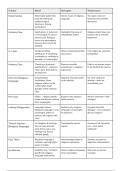
Scholar Belief Strengths Weaknesses
Moritz Schlick Meaningful statements Solves issues of religious Too rigid—rules out
must be empirically language. historical and scientific
verified (Logical discussion.
Positivism, Strong
Verification).
Anthony Flew Falsification: A statement Highlights the issue of Religious belief does not
is meaningful if it can be unfalsifiable claims. function like a scientific
proven false. Religious hypothesis.
claims are meaningless
because they cannot be
falsified.
A.J. Ayer Introduced Weak Allows historical/scientific Can religion be solved by
Verification: if something discussions. probability?
is probable or verifiable in
principle, it is meaningful.
Anthony Flew "Death by a thousand Exposes scientific Faith is not always meant
qualifications" – believers weaknesses in religious to be falsified like science.
never allow their faith to arguments.
be disproven.
John Hick (Religious Eschatological Supports Christian belief No more valid than
language) Verification: Some in the afterlife. atheism—both are
religious claims can be unverifiable now.
verified after death
(parable of the Celestial
City).
R.M. Hare "Bliks" – religious beliefs Explains why religious What if someone's "blik"
shape worldviews, making belief persists. changes?
them meaningful.
Ludwig Wittgenstein Language Games: Explains why religious Prevents interfaith
Religious language is only language is meaningful dialogue—can’t outsiders
meaningful within its for believers. discuss religion?
context, like a game with
rules.
Thomas Aquinas Via Negativa & Analogy: Theologically sound, Assumes God cannot be
(Religious language) We can only describe logical. evil—what about
what God is not or use suffering?
analogy (e.g. God as
infinitely good).
Paul Tillich Religious language is Acknowledges depth in Symbols are open to
symbolic, opening higher religious experience. subjective interpretation.
levels of reality.
Ian Ramsey Qualifiers (e.g. "infinitely" Allows religious language Still relies on human
good) help religious to be meaningful. concepts.
language make sense.
, Scholar Beliefs Strengths Weaknesses
Kant (Kantian ethics) Ethics based on duty Promotes fairness and Ignores emotions and
(Deontology). Moral law is justice, treating people as consequences, making it
universal and based on ends rather than means. rigid in real-life situations.
reason.
Bentham Act Utilitarianism—an Pragmatic and focuses on Can justify immoral acts if
action is good if it human happiness. they maximize happiness.
produces the most
pleasure.
John Stuart Mill Rule Protects against Differentiating between
Utilitarianism—focuses on exploitation by pleasures is subjective.
general happiness and emphasizing general
higher/lower pleasures. rules.
Augustine
John Hick (Problem of Soul-making theodicy: Explains suffering as Intense suffering (e.g.
Evil) suffering helps humans necessary for human Holocaust) challenges the
grow morally. We are development. idea that all suffering has
born flawed purpose.
Richard Dawkins Reductionist, believed Emphasizes scientific Ignore subjective religious
behaviour is a result of evidence and reason over experiences that many
biology blind faith. claim are meaningful.
Joseph Fletcher Situation Ethics: morality Flexible and allows for Can justify immoral
(Situation ethics) should be based on agape compassionate actions if they are seen as
(selfless love) rather than decision-making. "loving" (e.g. lying,
fixed rules. Decisions stealing).
should be context-based.
Aristotle (Virtue ethics) Ethics is about developing Focuses on personal Lacks clear guidelines for
good character through development rather than decision-making—what if
virtues like courage and rigid rules. virtues conflict?
wisdom. The goal is
eudaimonia.
Aquinas (Natural moral Everything has a purpose Provides a universal moral Assumes nature has an
law) (telos). Idea of a framework. essence of purpose
God-given moral order (telos), which is debated
and tendency to do good. in modern science.
Kant (Libertarianism) Believed in free will and People are held Neuroscience can prove
moral autonomy. What responsible for their psychological
we ought to do “Ought actions determinism.
implies can.”
Aquinas (Conscience) Conscience is the Combines faith with a Euthyphro dilemma, the
application of reason to scientific ability to reason conscience is sometimes
moral issues gifted by fallible so can it be trusted
God. With synderesis and
conscientia


