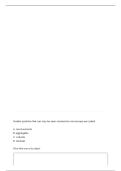
Smaller particles that can only be seen via electron microscope are called
A. micronutrients
B. aggregates
C. colloids
D. minerals
Give this one a try later!
, C. colloids
clay and humus
- most chemically and physically active part of soil because they exhibit
electromagnetic charges that attract pos/neg ions and h2o
What are the 6 classes of minerals found in soils?
Give this one a try later!
- Silicates
- Oxides
- Carbonates
- Phosphates
- Sulfates
- Halides
Apatite belongs to the _____ mineral class.
A. oxide
B. sulfate
C. phosphate
D. halides
Give this one a try later!
C. phosphates
apatite is very insoluble
,What actions/characteristics are contributed to cementation?
Give this one a try later!
- microbial exudates
- iron oxides
- organic c
- clay
The space between the solids can be summed up as
A. porosity
B. pore space
C. volume
D. mass
Give this one a try later!
B. pore space
**related to bulk density and particle density**
- % pore space is the volume of pores compared to bulk volume
Which 2 elements compose the pore spaceWhat are the in soil?
A. Carbon and Oxygen
B. Iron and Salt
C. Water and Air
D. Minerals and Organic matter
Give this one a try later!
, C. Water and Air
Which of the 5 soil forming factors are best described by the following:
- acts on parent material by the nature and intensity of weathering
- influences biota
Give this one a try later!
CLIMATE
- increases in temperature can speed up biological weathering
- defined by effective precipitation
The following are all TRUE characteristics of subsoil:
> not as affected by soil forming factors
> lighter in color (less soil organic matter)
> less biological activity
> more compacted, less pores
> often enriched in clay
Give this one a try later!
Yes, all characteristics are TRUE about subsoil
Halite (NaCl) and Sylvite (KCl) are two minerals found in the ___ mineral class.
A. halides
A. micronutrients
B. aggregates
C. colloids
D. minerals
Give this one a try later!
, C. colloids
clay and humus
- most chemically and physically active part of soil because they exhibit
electromagnetic charges that attract pos/neg ions and h2o
What are the 6 classes of minerals found in soils?
Give this one a try later!
- Silicates
- Oxides
- Carbonates
- Phosphates
- Sulfates
- Halides
Apatite belongs to the _____ mineral class.
A. oxide
B. sulfate
C. phosphate
D. halides
Give this one a try later!
C. phosphates
apatite is very insoluble
,What actions/characteristics are contributed to cementation?
Give this one a try later!
- microbial exudates
- iron oxides
- organic c
- clay
The space between the solids can be summed up as
A. porosity
B. pore space
C. volume
D. mass
Give this one a try later!
B. pore space
**related to bulk density and particle density**
- % pore space is the volume of pores compared to bulk volume
Which 2 elements compose the pore spaceWhat are the in soil?
A. Carbon and Oxygen
B. Iron and Salt
C. Water and Air
D. Minerals and Organic matter
Give this one a try later!
, C. Water and Air
Which of the 5 soil forming factors are best described by the following:
- acts on parent material by the nature and intensity of weathering
- influences biota
Give this one a try later!
CLIMATE
- increases in temperature can speed up biological weathering
- defined by effective precipitation
The following are all TRUE characteristics of subsoil:
> not as affected by soil forming factors
> lighter in color (less soil organic matter)
> less biological activity
> more compacted, less pores
> often enriched in clay
Give this one a try later!
Yes, all characteristics are TRUE about subsoil
Halite (NaCl) and Sylvite (KCl) are two minerals found in the ___ mineral class.
A. halides