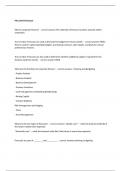
Unit 2 Endocrine System
-
·
Endocrine -> within separate (exocrine -
> to the outside)
·
Hormones -> often reserved for true endocrine molecules
act systemically at separate organ
-
or a
usually must be released in to be effective diluted plasma
high concen in
-
.
-
Alternate mediator molecules -> commonly for local
:
actions
-
paracrine - acts at in the same
neighboring cells structure
·
- organ
autocrine - plasma dilution may not
·
-
> acts on same
releasing molecules ,
occur
Secretogogue stimulates the release of hormone/mediator molecule
·
- molecule that a
Endocrine
·
mechanism
-
of hormones -> the hormone-receptor interactions (chemical) determine the response (bio)
-
hormone concentration
-
receptor concentration
up/down regulation
·
inherent affinity's allosteric modulation of receptor binding
-
Classes : Actions of Hormones
·
molecular structural classes :
-
proteins: Peptides
peptide hormone synthesis preprohormones prohormones, prohormones process
· ·
,
molecules derived from individual amino acids
-
Tryptophan used to synthesize serotonin (signal) : melatonin (pineal gland)
· :
-
·
Tyrosine
-
used
: to synthesize amine hormones
-
>
-
thyroid hormones catecholamines
> derived from cholesterol
steroid hormones -
↳
-
-
other
signaling molecules
-
Eicosanoids derived from arachidonic acid
·
>
-
·
Gas -nitric oxide; stabilized/transported as nitrite in blood to target cells
·
Nucleosides nucleotides
, solubility
·
-
water soluble :
-
·
transport-
> sol .
in intestitial fluid/plasma
mode of action ebind cell surface receptors initiate second system for
messenger kinase activation
genomic actions
·
,
or
time - rapid cell
signal response
·
short chem half life
longer biological half life
·
.
,
lipid soluble
-
:
use
·
transport -
>
reg plasma proteins to
.
get into blood; free hormone passes thru cell membrane (lipophilic)
mode of action -
> bind to nuclear
cytoplasmic receptors ; genomic action change DNA transcription/translation
·
or :
time -> Slow
reg DNA changes protein synthesis
·
.
,
longer half life
biological half life very long
·
,
Water soluble hormones
·
structure of cell surface receptors :
integral mem. proteins with amino acid seg that comprise
. one of three domains:
extracellular At residues exposed to outside of cell interact ligand (hormone/molecule) ligand-binding
with domain -
- :
- -
-
transmem : hydrophobic
seg of .
AA capable of beingin lipid bilayer ;helpanchor receptor
-
(cytoplasmic) single sections or loops of seg. project into cytoplasm; allows/initiates/reg molecules,
tracellular
:
.
generates second messengers
second messenger systems
multiple hormones use : hormone can use more than one system
single
·
same ones a
Adenylate cyclase system (cyclic AMP)
·
e
-
G-protein coupled
-
Adenyly1 cyclase synthesizes CAMP from ATP
-
enzyme is stimulated inhibited by specific hormone-receptor complexes
-
or
-
ex . activation of cAMP-dependent protein kinase
Guanylate cyclase system (cyclic GMP)
·
-
similar to adenylate cyclase but cGMP from GTP
generates
-
·
Phospholipase C
~
-
hydrolyses the membrane phospholipid phosphatidylinosito 4 5-bisphosphate (PIP2) to form
, , 1Pz diacylglycerol (DAG)
-
IP3 causes release of Ca from ER into cell
Tyrosine system
·
Kinase
-
receptors protein hinases activated by binding of
-
are hormone
phosphorylate tyrosine residues form tyrosine kinase cascade
Fate of the Hormone-receptor complexes
simply dissociate
·
internilization by endocytosis (forms endosomes) upon hormone
binding
·
> fuse with
destruction - lysosomes or ubiquination
-
recycling receptor returns to plasma mem by fusion of endosome with mem
->
-
. .
Lipid Soluble Hormones
Steroid (adrenal
·
-
glands gonads)
-
derived from cholesterols only sunthesized/released as needed (NOT stored)
bind receptor in cytoplasm nucleus-slow acting genomic
-
or , response
-
bind cell surface receptor s rapid typically non-genomic , response
-
·
Endocrine -> within separate (exocrine -
> to the outside)
·
Hormones -> often reserved for true endocrine molecules
act systemically at separate organ
-
or a
usually must be released in to be effective diluted plasma
high concen in
-
.
-
Alternate mediator molecules -> commonly for local
:
actions
-
paracrine - acts at in the same
neighboring cells structure
·
- organ
autocrine - plasma dilution may not
·
-
> acts on same
releasing molecules ,
occur
Secretogogue stimulates the release of hormone/mediator molecule
·
- molecule that a
Endocrine
·
mechanism
-
of hormones -> the hormone-receptor interactions (chemical) determine the response (bio)
-
hormone concentration
-
receptor concentration
up/down regulation
·
inherent affinity's allosteric modulation of receptor binding
-
Classes : Actions of Hormones
·
molecular structural classes :
-
proteins: Peptides
peptide hormone synthesis preprohormones prohormones, prohormones process
· ·
,
molecules derived from individual amino acids
-
Tryptophan used to synthesize serotonin (signal) : melatonin (pineal gland)
· :
-
·
Tyrosine
-
used
: to synthesize amine hormones
-
>
-
thyroid hormones catecholamines
> derived from cholesterol
steroid hormones -
↳
-
-
other
signaling molecules
-
Eicosanoids derived from arachidonic acid
·
>
-
·
Gas -nitric oxide; stabilized/transported as nitrite in blood to target cells
·
Nucleosides nucleotides
, solubility
·
-
water soluble :
-
·
transport-
> sol .
in intestitial fluid/plasma
mode of action ebind cell surface receptors initiate second system for
messenger kinase activation
genomic actions
·
,
or
time - rapid cell
signal response
·
short chem half life
longer biological half life
·
.
,
lipid soluble
-
:
use
·
transport -
>
reg plasma proteins to
.
get into blood; free hormone passes thru cell membrane (lipophilic)
mode of action -
> bind to nuclear
cytoplasmic receptors ; genomic action change DNA transcription/translation
·
or :
time -> Slow
reg DNA changes protein synthesis
·
.
,
longer half life
biological half life very long
·
,
Water soluble hormones
·
structure of cell surface receptors :
integral mem. proteins with amino acid seg that comprise
. one of three domains:
extracellular At residues exposed to outside of cell interact ligand (hormone/molecule) ligand-binding
with domain -
- :
- -
-
transmem : hydrophobic
seg of .
AA capable of beingin lipid bilayer ;helpanchor receptor
-
(cytoplasmic) single sections or loops of seg. project into cytoplasm; allows/initiates/reg molecules,
tracellular
:
.
generates second messengers
second messenger systems
multiple hormones use : hormone can use more than one system
single
·
same ones a
Adenylate cyclase system (cyclic AMP)
·
e
-
G-protein coupled
-
Adenyly1 cyclase synthesizes CAMP from ATP
-
enzyme is stimulated inhibited by specific hormone-receptor complexes
-
or
-
ex . activation of cAMP-dependent protein kinase
Guanylate cyclase system (cyclic GMP)
·
-
similar to adenylate cyclase but cGMP from GTP
generates
-
·
Phospholipase C
~
-
hydrolyses the membrane phospholipid phosphatidylinosito 4 5-bisphosphate (PIP2) to form
, , 1Pz diacylglycerol (DAG)
-
IP3 causes release of Ca from ER into cell
Tyrosine system
·
Kinase
-
receptors protein hinases activated by binding of
-
are hormone
phosphorylate tyrosine residues form tyrosine kinase cascade
Fate of the Hormone-receptor complexes
simply dissociate
·
internilization by endocytosis (forms endosomes) upon hormone
binding
·
> fuse with
destruction - lysosomes or ubiquination
-
recycling receptor returns to plasma mem by fusion of endosome with mem
->
-
. .
Lipid Soluble Hormones
Steroid (adrenal
·
-
glands gonads)
-
derived from cholesterols only sunthesized/released as needed (NOT stored)
bind receptor in cytoplasm nucleus-slow acting genomic
-
or , response
-
bind cell surface receptor s rapid typically non-genomic , response