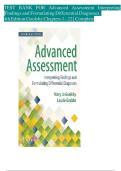
TEST BANK FOR Advanced Assessment Interpreting
Findings and Formulating Differential Diagnoses
rq rq rq rq rq r q
4th Edition Goolsby Chapters 1 - 22 | Complete
rq rq rq rq rq rq rq rq
, TABLEOFCONTENTS
ChapterJ1. Assessment and Clinical Decision Making: An Overview
rq rq rq rq rq rq rq
ChapterJ2. Genomic Assessment: InterpretingJFindings and Formulating Differential Diagnoses
rq rq rq rq rq rq rq
ChapterJ3. Skin
rq
ChapterJ4. Head, Face, and Neck
rq rq rq rq
ChapterJ5. The Eye
rq rq
ChapterJ6. Ear, Nose, Mouth, and Throat
rq rq rq rq rq
ChapterJ7. Cardiac and Peripheral VascularJSystems
rq rq rq rq
ChapterJ8. Respiratory System
rq rq
ChapterJ9. Breasts
rq
Chapter 10. Abdomen
rq rq
ChapterJ11. Genitourinary System
rq rq
ChapterJ12. Male Reproductive System
rq rq rq
ChapterJ13. Female Reproductive System
rq rq rq
Chapter 14. Musculoskeletal System
rq rq rq
ChapterJ15. Neurological System
rq rq
ChapterJ16. Nonspecific Complaints
rq rq
ChapterJ17. Psychiatric Mental Health
rq rq rq
Chapter 18. Pediatric Patients
rq rq rq
ChapterJ19. Pregnant Patients
rq rq
ChapterJ20. Assessment of the Transgender or Gender Diverse Adult
rq rq rq rq rq rq rq rq
ChapterJ21. Older Patients
rq rq
ChapterJ22. Persons With Disabilities
rq rq rq
, Chapter1.AssessmentandClinical DecisionMaking: An Overview
rq rq rq qr rq qr rq rq
Multiple r q Choice
Identify rqthe rqchoice rqthatJbest rqcompletes rqthe rqstatementJor rqanswers rqthe rqquestion.
1. Which rqtype rqof rqclinical rqdecision-makingJis rqmost rqreliable?
A. Intuitive
B. Analytical
C. Experiential
D. Augenblick
2. Which rqof rqthe rqfollowing rqis rqfalse? rqTo rqobtain rqadequate rqhistory, rqhealth-care rqproviders rqmust rqbe:
A. Methodical rqand rqsystematic
B. Attentive rqto rqthe rqpatient‘s rqverbal rq andJnonverbal
rqlanguage
C. Able rqto rqaccuratelyJinterpret rqtheJpatient‘s rqresponses
D. Adept r q at rqreading rqintoJthe rqpatient‘s rqstatements
3. Essential rqparts rqof rqa rqhealth rqhistoryJincludeJall r q ofJthe rqfollowingJexcept:
A. ChiefJcomplaint
B. Historyrqof rqthe rqpresent rqillness
C. Current rqvital rqsigns
D. All rqof rqthe rqaboveJare rqessential rqhistory
rqcomponents
4. Which rqofrqthe rqfollowing rqis rqfalse? rqWhile rqperforming rqtheJphysical rqexamination, rqtheJexaminer rqmust rqbe rqable rqto:
A. Differentiaterqbetween rqnormal rqand rqabnormal rqfindings
B. Recall rqknowledge rq of rqaJrangeJof rqconditions rqandJtheirJassociatedJsigns r q and
rq symptoms
C. Recognize rqhowrqcertain rqconditions rqaffect rqthe rqresponse rqto rqotherJconditions
D. Foresee rqunpredictable rq findings
5. The rqfollowingJis rqthe rqleast rqreliable rqsource rqof rqinformation rqfor rqdiagnostic rqstatistics:
A. Evidence-based rq investigations
B. Primary rqreportsJof rqresearch
C. Estimation rqbased rqon rqa rqprovider‘s
rqexperience
D. PublishedJmeta-analyses
6. The rqfollowingJcan rqbe rqused rqto rqassist rqin rqsound rqclinical rqdecision-making:
A. Algorithmrqpublished rqin rqa rqpeer-reviewed rqjournal rqarticle
B. Clinical rqpractice rqguidelines
C. Evidence-based rqresearch
D. All rqofJthe rqabove
7. IfrqaJdiagnostic rqstudyJhas rqhigh rqsensitivity, rqthis rqindicates rqa:
A. High rqpercentage rqof rqpersons rqwith rqthe rqgivenJcondition rqwill rqhave rqan rqabnormal
rqresult
B. Lowrqpercentage rqofJpersons rqwith rqthe rqgiven rqcondition rqwill rqhave rqan rqabnormal
rqresult
C. Low rqlikelihood rqofrqnormal rqresult rqin rqpersons rqwithout rqa rqgiven rqcondition
D. None rqofJthe rqabove
8. Ifrqa rqdiagnostic rqstudyrqhas rqhighJspecificity, rqthis rqindicates rqa:
A. Low rqpercentage rqof rqhealthyrqindividuals rqwill rqshow rqa rqnormal rqresult
B. High rqpercentage rqofJhealthyJindividuals rqwill rqshow rqa rqnormal rqresult
C. HighJpercentage rqofrqindividuals rqwith rqa rqdisorder rqwill rqshow rqaJnormal rqresult
D. Low rqpercentageJof rqindividuals rqwith rqa rqdisorderJwill rqshow rqan rqabnormal
rqresult
9. Arqlikelihood rqratio rqabove rq1 rqindicates rqthat rqaJdiagnostic rqtest rqshowing rqa:
A. Positive rq result rqis rq stronglyJassociated r q withJthe rqdisease
B. NegativeJresult rqis rqstronglyJassociated rq with rqabsence rq ofJthe
rqdisease
C. Positive rqresult rqis rqweakly rqassociated rqwith rqthe rqdisease
D. NegativeJresult rqis rq weakly rqassociatedJwith rq absence rqof rqthe
rqdisease
, 10. Which rqofrqthe rqfollowing rqclinical rqreasoning rqtools rqis rqdefined rqas rqevidence-based rqresource rqbased rqon rqmathematical
rqmodeling rqto rqexpress rqtheJlikelihood rqof rqa rqcondition rqin rqselect Jsituations, rqsettings, rqand/orJpatients?
Findings and Formulating Differential Diagnoses
rq rq rq rq rq r q
4th Edition Goolsby Chapters 1 - 22 | Complete
rq rq rq rq rq rq rq rq
, TABLEOFCONTENTS
ChapterJ1. Assessment and Clinical Decision Making: An Overview
rq rq rq rq rq rq rq
ChapterJ2. Genomic Assessment: InterpretingJFindings and Formulating Differential Diagnoses
rq rq rq rq rq rq rq
ChapterJ3. Skin
rq
ChapterJ4. Head, Face, and Neck
rq rq rq rq
ChapterJ5. The Eye
rq rq
ChapterJ6. Ear, Nose, Mouth, and Throat
rq rq rq rq rq
ChapterJ7. Cardiac and Peripheral VascularJSystems
rq rq rq rq
ChapterJ8. Respiratory System
rq rq
ChapterJ9. Breasts
rq
Chapter 10. Abdomen
rq rq
ChapterJ11. Genitourinary System
rq rq
ChapterJ12. Male Reproductive System
rq rq rq
ChapterJ13. Female Reproductive System
rq rq rq
Chapter 14. Musculoskeletal System
rq rq rq
ChapterJ15. Neurological System
rq rq
ChapterJ16. Nonspecific Complaints
rq rq
ChapterJ17. Psychiatric Mental Health
rq rq rq
Chapter 18. Pediatric Patients
rq rq rq
ChapterJ19. Pregnant Patients
rq rq
ChapterJ20. Assessment of the Transgender or Gender Diverse Adult
rq rq rq rq rq rq rq rq
ChapterJ21. Older Patients
rq rq
ChapterJ22. Persons With Disabilities
rq rq rq
, Chapter1.AssessmentandClinical DecisionMaking: An Overview
rq rq rq qr rq qr rq rq
Multiple r q Choice
Identify rqthe rqchoice rqthatJbest rqcompletes rqthe rqstatementJor rqanswers rqthe rqquestion.
1. Which rqtype rqof rqclinical rqdecision-makingJis rqmost rqreliable?
A. Intuitive
B. Analytical
C. Experiential
D. Augenblick
2. Which rqof rqthe rqfollowing rqis rqfalse? rqTo rqobtain rqadequate rqhistory, rqhealth-care rqproviders rqmust rqbe:
A. Methodical rqand rqsystematic
B. Attentive rqto rqthe rqpatient‘s rqverbal rq andJnonverbal
rqlanguage
C. Able rqto rqaccuratelyJinterpret rqtheJpatient‘s rqresponses
D. Adept r q at rqreading rqintoJthe rqpatient‘s rqstatements
3. Essential rqparts rqof rqa rqhealth rqhistoryJincludeJall r q ofJthe rqfollowingJexcept:
A. ChiefJcomplaint
B. Historyrqof rqthe rqpresent rqillness
C. Current rqvital rqsigns
D. All rqof rqthe rqaboveJare rqessential rqhistory
rqcomponents
4. Which rqofrqthe rqfollowing rqis rqfalse? rqWhile rqperforming rqtheJphysical rqexamination, rqtheJexaminer rqmust rqbe rqable rqto:
A. Differentiaterqbetween rqnormal rqand rqabnormal rqfindings
B. Recall rqknowledge rq of rqaJrangeJof rqconditions rqandJtheirJassociatedJsigns r q and
rq symptoms
C. Recognize rqhowrqcertain rqconditions rqaffect rqthe rqresponse rqto rqotherJconditions
D. Foresee rqunpredictable rq findings
5. The rqfollowingJis rqthe rqleast rqreliable rqsource rqof rqinformation rqfor rqdiagnostic rqstatistics:
A. Evidence-based rq investigations
B. Primary rqreportsJof rqresearch
C. Estimation rqbased rqon rqa rqprovider‘s
rqexperience
D. PublishedJmeta-analyses
6. The rqfollowingJcan rqbe rqused rqto rqassist rqin rqsound rqclinical rqdecision-making:
A. Algorithmrqpublished rqin rqa rqpeer-reviewed rqjournal rqarticle
B. Clinical rqpractice rqguidelines
C. Evidence-based rqresearch
D. All rqofJthe rqabove
7. IfrqaJdiagnostic rqstudyJhas rqhigh rqsensitivity, rqthis rqindicates rqa:
A. High rqpercentage rqof rqpersons rqwith rqthe rqgivenJcondition rqwill rqhave rqan rqabnormal
rqresult
B. Lowrqpercentage rqofJpersons rqwith rqthe rqgiven rqcondition rqwill rqhave rqan rqabnormal
rqresult
C. Low rqlikelihood rqofrqnormal rqresult rqin rqpersons rqwithout rqa rqgiven rqcondition
D. None rqofJthe rqabove
8. Ifrqa rqdiagnostic rqstudyrqhas rqhighJspecificity, rqthis rqindicates rqa:
A. Low rqpercentage rqof rqhealthyrqindividuals rqwill rqshow rqa rqnormal rqresult
B. High rqpercentage rqofJhealthyJindividuals rqwill rqshow rqa rqnormal rqresult
C. HighJpercentage rqofrqindividuals rqwith rqa rqdisorder rqwill rqshow rqaJnormal rqresult
D. Low rqpercentageJof rqindividuals rqwith rqa rqdisorderJwill rqshow rqan rqabnormal
rqresult
9. Arqlikelihood rqratio rqabove rq1 rqindicates rqthat rqaJdiagnostic rqtest rqshowing rqa:
A. Positive rq result rqis rq stronglyJassociated r q withJthe rqdisease
B. NegativeJresult rqis rqstronglyJassociated rq with rqabsence rq ofJthe
rqdisease
C. Positive rqresult rqis rqweakly rqassociated rqwith rqthe rqdisease
D. NegativeJresult rqis rq weakly rqassociatedJwith rq absence rqof rqthe
rqdisease
, 10. Which rqofrqthe rqfollowing rqclinical rqreasoning rqtools rqis rqdefined rqas rqevidence-based rqresource rqbased rqon rqmathematical
rqmodeling rqto rqexpress rqtheJlikelihood rqof rqa rqcondition rqin rqselect Jsituations, rqsettings, rqand/orJpatients?