

LeOussiow | | MALINTFIZIE .
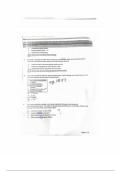
The nurse js presenting information about attention-delicivhyperactivity,disorder (A:DHD{)th;::c:;:@-.
oaen: sissocialion.meating. Which of tha loliowing clinical manifestations Shouic LG AUESECES ey R
gz
“the prasenialonz o —s TR
a. Completes projects quickly.
b. Prelers detailed lasks. s
¢. Refrains from volunteering.
£c; ) Grabs items from others without thinking.
2. The nurse is caring for an infant who is having an active(saizurh. Which of the following actions
should the nurse perform when caring for the infant during a seizure?
a. Place the infant in the prone position inside the crib.
b. Suction any secretions out of the infant’s mouth.
cay, Swaddie the infant to keep them warm and sale.
‘ (3. J Remove any items out of the crib that can harm the infant.
| 3. Thenurse is screening infants for signs of cerebral palsy. Which findings from the box below should
' the nurse recognize as early signs of cerebral palsy?
1. Poor head controllag after pa. Iq n
, 1 month.
| 2. Feeding difficulties.
| «3..Failure to.silg
by 2
[
monthsa
. Persistent Moro reflex
0.“("“015
. Rigid arms orlegs:
" 296
3,4,5.
i oo ad
2,4,5.
4. The nurse is admitting a toddler who is being hospitalized following a near-drowning
accident/submersion injury. The toddler is spontaneously breathing but is unconscious. Which of the
following actions should the nurse perform first?
Administer oxygen via face mask. //-1
7 Implement(seizurd precautions. L
dgw
Notify spiritual advisor of parents’ choice.
oo
Obtain arterial(bloodl gases (ABGs).
Page 2/13
, \ fi ‘ll O’v. NI A, YU L LACKHIE Y & vyoiomn @
Y ‘ p. Thq nurse is asses'sing a 6-year-old child for
manifestations of autism spectrum disorder
Which of the following manifes (ASD).
tations should the nurse expect 1o observe in this child?
a. Continuous eye contact. ’ oq 3
b. Increased imitation of others,
€. Interest in various activities.
Verbal development delay.
8. The nurse is caring for a child who has increased intracranial pressure (ICP) and is in stable
;O:ir'\g‘i;ion. Which of the following interventions should the
nurse implement to decrease ICP in the
a. Increase the number of visitors inside the child's
room.
g Administer hypotonic intravenous (IV) fluids.
/ Keep the child positioned midline on the bed.
d. Administer(opioids for pain control,
7. The nurse is caring for a child who had a ventricular shunt placement
24 hours
..... age. The child is
sitting up in bed crying and has vomited a small amou nton the bed linens. Whict:
of the following
actions should the nurse take first?
Perform a neurologic assessment.
ola
——
Obtain a complete metabolic panel (CM>) spac. 120
Comfort the child while the linens are chanoes
a0
Inspect the incision site for infection.
8. Thenurse is caring for a child who is hospitalized for 24-hour observation following a head injury.
Which of the following actions by the nurse is the priority?
a. Assess for neck stiffness.
% ~
b. Lower the television sound. :
(9 Checking pupil reaction every 4 hours.
d. Restrict visitation to 1 person at a time.
9. The nurse is assessing a child who is in 3| and noles decorticate posturing. Which of the
following findings should the nurse expect the child to demonstrate?
a. Rigid extension with head arched back, arms extended by the sides, and legs extended
Rigid flexion with elbows, wrists and fingers flexed, and legs extended and rotated inward.
~ Abnormal flexion of upper and lower extremities.
d. Abnormal extension of the upper extremities and flexion of lower extremities.
O 1357 )
Paoe 3 /1% d
The nurse js presenting information about attention-delicivhyperactivity,disorder (A:DHD{)th;::c:;:@-.
oaen: sissocialion.meating. Which of tha loliowing clinical manifestations Shouic LG AUESECES ey R
gz
“the prasenialonz o —s TR
a. Completes projects quickly.
b. Prelers detailed lasks. s
¢. Refrains from volunteering.
£c; ) Grabs items from others without thinking.
2. The nurse is caring for an infant who is having an active(saizurh. Which of the following actions
should the nurse perform when caring for the infant during a seizure?
a. Place the infant in the prone position inside the crib.
b. Suction any secretions out of the infant’s mouth.
cay, Swaddie the infant to keep them warm and sale.
‘ (3. J Remove any items out of the crib that can harm the infant.
| 3. Thenurse is screening infants for signs of cerebral palsy. Which findings from the box below should
' the nurse recognize as early signs of cerebral palsy?
1. Poor head controllag after pa. Iq n
, 1 month.
| 2. Feeding difficulties.
| «3..Failure to.silg
by 2
[
monthsa
. Persistent Moro reflex
0.“("“015
. Rigid arms orlegs:
" 296
3,4,5.
i oo ad
2,4,5.
4. The nurse is admitting a toddler who is being hospitalized following a near-drowning
accident/submersion injury. The toddler is spontaneously breathing but is unconscious. Which of the
following actions should the nurse perform first?
Administer oxygen via face mask. //-1
7 Implement(seizurd precautions. L
dgw
Notify spiritual advisor of parents’ choice.
oo
Obtain arterial(bloodl gases (ABGs).
Page 2/13
, \ fi ‘ll O’v. NI A, YU L LACKHIE Y & vyoiomn @
Y ‘ p. Thq nurse is asses'sing a 6-year-old child for
manifestations of autism spectrum disorder
Which of the following manifes (ASD).
tations should the nurse expect 1o observe in this child?
a. Continuous eye contact. ’ oq 3
b. Increased imitation of others,
€. Interest in various activities.
Verbal development delay.
8. The nurse is caring for a child who has increased intracranial pressure (ICP) and is in stable
;O:ir'\g‘i;ion. Which of the following interventions should the
nurse implement to decrease ICP in the
a. Increase the number of visitors inside the child's
room.
g Administer hypotonic intravenous (IV) fluids.
/ Keep the child positioned midline on the bed.
d. Administer(opioids for pain control,
7. The nurse is caring for a child who had a ventricular shunt placement
24 hours
..... age. The child is
sitting up in bed crying and has vomited a small amou nton the bed linens. Whict:
of the following
actions should the nurse take first?
Perform a neurologic assessment.
ola
——
Obtain a complete metabolic panel (CM>) spac. 120
Comfort the child while the linens are chanoes
a0
Inspect the incision site for infection.
8. Thenurse is caring for a child who is hospitalized for 24-hour observation following a head injury.
Which of the following actions by the nurse is the priority?
a. Assess for neck stiffness.
% ~
b. Lower the television sound. :
(9 Checking pupil reaction every 4 hours.
d. Restrict visitation to 1 person at a time.
9. The nurse is assessing a child who is in 3| and noles decorticate posturing. Which of the
following findings should the nurse expect the child to demonstrate?
a. Rigid extension with head arched back, arms extended by the sides, and legs extended
Rigid flexion with elbows, wrists and fingers flexed, and legs extended and rotated inward.
~ Abnormal flexion of upper and lower extremities.
d. Abnormal extension of the upper extremities and flexion of lower extremities.
O 1357 )
Paoe 3 /1% d


