NSG 3029 CH1 (9) QUIZ | LATEST UPDATE
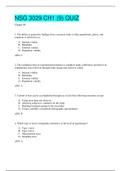
NSG 3029 CH1 (9) QUIZ NSG 3029 CH1 (9) QUIZ Chapter 09 1. The ability to generalize findings from a research study to other populations, places, and situations is referred to as: A. Internal validity B. Reliability C. External validity D. Population validity 2. The confidence that an experimental treatment or condition made a difference and that rival explanations were ruled out through study design and control is called: A. Internal validity B. Reliability C. External validity D. Population validity 3. Control of bias can be accomplished through use of all of the following measures except: A. Using more than one observer B. Allowing subjects to volunteer for the study C. Blinding treatment groups to the researcher D. Using a carefully constructed demographic questionnaire 4. Which type of error is frequently referred to as the level of significance? A. Type 1 error B. Type 2 error C. Measurement error D. Sampling error 5. Which type of error is related to the power of the statistical test? A. Type 1 error B. Type 2 error C. Measurement error D. Sampling error 6. The magnitude of the impact that the intervention or variable is expected to have on the outcome is referred to as the: A. Power B. Experimenter effect C. Effect size D. Treatment effect 7. All of the following are threats to external validity except: A. Selection effect B. Experimenter effect C. Maturation D. History 8. All of the following strategies help to increase the trustworthiness of qualitative research except: A. Triangulation B. Bracketing C. Audit trail D. Random Selection 9. Threats to validity can be handled by the researcher in all of these ways except: A. Eliminate the threat B. Control the threat C. Account for the threat D. Ignore the threat 10. A threat to internal validity in which the subject reactions are due to the effect of being observed are referred to as: A. Selection effects B. Treatment effects C. Experimental mortality D. Maturation 11. The ability to generalize findings from a research study to other populations, places, and situations is referred to as: A. Internal validity B. Reliability C. External validity D. Population validity 12. The confidence that an experimental treatment or condition made a difference and that rival explanations were ruled out through study design and control is called: A. Internal validity B. Reliability C. External validity D. Population validity
Written for
- Institution
-
South University
- Course
-
NSG 3023
Document information
- Uploaded on
- February 5, 2021
- Number of pages
- 3
- Written in
- 2020/2021
- Type
- Exam (elaborations)
- Contains
- Questions & answers
Subjects
- places
-
nsg 3029 ch1 9 quiz chapter 09 1 the ability to generalize findings from a research study to other populations
-
and situations is referred to as a internal validity b reliability c e

Also available in package deal