

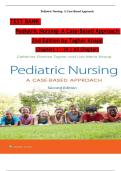
Pediatric Nursing- A Case-Based Approach
TEST BANK
Pediatric Nursing- A Case-Based Approach
2nd Edition by Tagher Knapp
Chapters 1 - 34 | All Chapters
,Pediatric Nursing- A Case-Based Approach
, Pediatric Nursing- A Case-Based Approach
Chapter 1: Bronchiolitis
1. Which intervention is appropriate for the infant hospitalized with bronchiolitis?
a. Position on the side with neck slightly flexed.
b. Administer antibiotics as ordered.
c. Restrict oral and parenteral fluids if tachypneic.
d. Give cool, humidified oxygen.
ANSWER: D
Cool, humidified oxygen is given to relieve dyspnea, hypoxemia, and insensible fluid loss from
tachypnea. The infant should be positioned with the head and chest elevated at a 30- to 40-degree
angle and the neck slightly extended to maintain an open airway and decrease pressure on the
diaphragm. The etiology of bronchiolitis is viral. Antibiotics are given only if there is a
secondary bacterial infection. nTachypnea nincreases ninsensible nfluid nloss. nIf nthe ninfant nis
ntachypneic, nfluids nare ngiven nparenterally nto nprevent ndehydration.
2. An ninfant nwith nbronchiolitis nis nhospitalized. nThe ncausative norganism nis nrespiratory
nsyncytial nvirus n(RSV). nThe nnurse nknows nthat na nchild ninfected nwith nthis nvirus nrequires
nwhat ntype nof nisolation?
a. Reverse nisolation
b. Airborne nisolation
c. Contact nPrecautions
d. Standard
nPrecautions nANSWER: nC
RSV nis ntransmitted nthrough ndroplets. nIn naddition nto nStandard nPrecautions nand nhand
nwashing, nContact nPrecautions nare nrequired. nCaregivers nmust nuse ngloves nand ngowns nwhen
nentering nthe
room. nCare nis ntaken nnot nto ntouch ntheir nown neyes nor nmucous nmembranes nwith na
ncontaminated ngloved nhand. nChildren nare nplaced nin na nprivate nroom nor nin na nroom nwith
nother nchildren nwith nRSV ninfections. nReverse nisolation nfocuses non nkeeping nbacteria naway
nfrom nthe ninfant. nWith nRSV, nother nchildren nneed nto nbe nprotected nfrom nexposure nto nthe
nvirus. nThe nvirus nis nnot nairborne.
3. A nchild nhas na nchronic ncough nand ndiffuse nwheezing nduring nthe nexpiratory nphase nof
nrespiration. nThis nsuggests nwhat ncondition?
a. Asthma
b. Pneumonia
c. Bronchiolitis
d. Foreign nbody nin
ntrachea nANSWER: nA
, Pediatric Nursing- A Case-Based Approach
Asthma nmay nhave nthese nchronic nsigns nand nsymptoms. nPneumonia nappears nwith nan nacute nonset,
fever, nand ngeneral nmalaise. nBronchiolitis nis nan nacute ncondition ncaused nby nrespiratory nsyncytial
TEST BANK
Pediatric Nursing- A Case-Based Approach
2nd Edition by Tagher Knapp
Chapters 1 - 34 | All Chapters
,Pediatric Nursing- A Case-Based Approach
, Pediatric Nursing- A Case-Based Approach
Chapter 1: Bronchiolitis
1. Which intervention is appropriate for the infant hospitalized with bronchiolitis?
a. Position on the side with neck slightly flexed.
b. Administer antibiotics as ordered.
c. Restrict oral and parenteral fluids if tachypneic.
d. Give cool, humidified oxygen.
ANSWER: D
Cool, humidified oxygen is given to relieve dyspnea, hypoxemia, and insensible fluid loss from
tachypnea. The infant should be positioned with the head and chest elevated at a 30- to 40-degree
angle and the neck slightly extended to maintain an open airway and decrease pressure on the
diaphragm. The etiology of bronchiolitis is viral. Antibiotics are given only if there is a
secondary bacterial infection. nTachypnea nincreases ninsensible nfluid nloss. nIf nthe ninfant nis
ntachypneic, nfluids nare ngiven nparenterally nto nprevent ndehydration.
2. An ninfant nwith nbronchiolitis nis nhospitalized. nThe ncausative norganism nis nrespiratory
nsyncytial nvirus n(RSV). nThe nnurse nknows nthat na nchild ninfected nwith nthis nvirus nrequires
nwhat ntype nof nisolation?
a. Reverse nisolation
b. Airborne nisolation
c. Contact nPrecautions
d. Standard
nPrecautions nANSWER: nC
RSV nis ntransmitted nthrough ndroplets. nIn naddition nto nStandard nPrecautions nand nhand
nwashing, nContact nPrecautions nare nrequired. nCaregivers nmust nuse ngloves nand ngowns nwhen
nentering nthe
room. nCare nis ntaken nnot nto ntouch ntheir nown neyes nor nmucous nmembranes nwith na
ncontaminated ngloved nhand. nChildren nare nplaced nin na nprivate nroom nor nin na nroom nwith
nother nchildren nwith nRSV ninfections. nReverse nisolation nfocuses non nkeeping nbacteria naway
nfrom nthe ninfant. nWith nRSV, nother nchildren nneed nto nbe nprotected nfrom nexposure nto nthe
nvirus. nThe nvirus nis nnot nairborne.
3. A nchild nhas na nchronic ncough nand ndiffuse nwheezing nduring nthe nexpiratory nphase nof
nrespiration. nThis nsuggests nwhat ncondition?
a. Asthma
b. Pneumonia
c. Bronchiolitis
d. Foreign nbody nin
ntrachea nANSWER: nA
, Pediatric Nursing- A Case-Based Approach
Asthma nmay nhave nthese nchronic nsigns nand nsymptoms. nPneumonia nappears nwith nan nacute nonset,
fever, nand ngeneral nmalaise. nBronchiolitis nis nan nacute ncondition ncaused nby nrespiratory nsyncytial


