

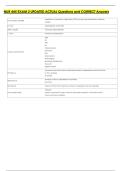
NUR 445 EXAM 2 UPDATED ACTUAL Questions and CORRECT Answers
palpitations, hypotension, diaphoresis, SOB, syncope, light-headedness, dizziness,
s/s of cardiac instability
anxiety
p wave depolarization of the atria
QRS complex ventricular depolarization
T wave ventricular repolarization
age
MI
HTN
HF
cardiomyopathy
infections
cardiac dysrhythmia r/f
DM
sleep apnea
heart surgery
electrolyte disturbances
drug use
digoxin toxicity
measure of time that it takes an electrical impulse to depolarize the atria and travel
PR interval to the ventricles
(0.12-0.20)
measure of time to depolarize the ventricles
QRS interval
(0.6-0.10)
QT interval measure of time that it takes the ventricle to depolarize and then repolarize
<60 bpm
sinus bradycardia hypoxia, hypothermia, sleep, ischemia, electrolyte imbalance, medication toxicity
can be normal in athletes
, sinus brady treatment symptomatic: atropine 1 mg IV push, pacemaker if not effective
>100 bpm
sinus tachycadia
fever, anemia, pain, hypovolemia, PE, MI
sinus tach treatment treat the cause, beta blockers, CCB, vagal maneuvers
atrial dysrhythmias atrial fibriliation, atrial flutter, supraventricular tachycardia, PACs
atrial fibrillation no P waves, narrow + irregular QRS complex
uncontrolled afib rapid rate (>100bpm) - rapid ventricular response
controlled afib regular rate
afib causes age, cardiomyopathy, pericarditis, HTN, valvular disease, obesity, DM, CKD, CAD
afib patho loss of cardiac output (atrial kick) causing the blood to pool in the atria
afib complications syncope, palpitations, SOB. clots
based on new onset or established diagnosis, anticoagulations, rate control in new
afib treatment onset using BB, CCB, digoxin, antiarrhythmic to control rhythm, cardiac ablation,
cardioversion
new onset + symptomatic afib treatment control HR first using CCB, BB, or dig, then initiate anticoagulation therapy
no P waves, F waves present (sawtooth), QRS complex present and regular
atrial flutter
atrial rate can range from 250-350 bpm (RVR) or have a normal HR
atrial flutter causes acute MI, severe mitral valve disease, thyrotoxicosis, COPD
atrial flutter treatment control the rate using BB, CCB, or digoxin, antiarrhythmic, cardioversion
cardioversion for a-flutter warranted if experiencing chest pain, hypotension, SOB
SVT fast HR - unable to determine the rhythm. Narrow QRS complex
ST, AT, a-fib w/ RVR, a-flutter w/ RVR, JT, ischemia, stimulants, infection, fever,
SVT causes
ischemia, hypovolemia, hypoxia, MI, electrolyte imbalances
SVT treatment adenosine, O2, BB, cardioversion
3 or more PVCs in a row, >150 bpm, can be life threatening b/c of reduced cardiac
output, will cause death if untreated
ventricular tachycardia
ALWAYS check if there is a pulse or not
hypovolemia, hypoxia, acidosis, hypo/hyperkalemia, hypoglycemia, hypothermia,
vtach causes
toxins, cardiac tamponade, MI, PE
antiarrhythmic medications (amiodarone), electrolyte replacements (K+ + Mg),
cardioversion
vtach w/ a pulse
cardioversion is typically reserved for patients who are symptomatic such as
hypotension, SOB, or complaining of chest pain
pulseless vtach treatment CPR + defibrilation, epinephrine, + amiodarone
shaky, coarse, fine
ventricular fibrillation
lethal dysrhythmia that requires immediate treatment
palpitations, hypotension, diaphoresis, SOB, syncope, light-headedness, dizziness,
s/s of cardiac instability
anxiety
p wave depolarization of the atria
QRS complex ventricular depolarization
T wave ventricular repolarization
age
MI
HTN
HF
cardiomyopathy
infections
cardiac dysrhythmia r/f
DM
sleep apnea
heart surgery
electrolyte disturbances
drug use
digoxin toxicity
measure of time that it takes an electrical impulse to depolarize the atria and travel
PR interval to the ventricles
(0.12-0.20)
measure of time to depolarize the ventricles
QRS interval
(0.6-0.10)
QT interval measure of time that it takes the ventricle to depolarize and then repolarize
<60 bpm
sinus bradycardia hypoxia, hypothermia, sleep, ischemia, electrolyte imbalance, medication toxicity
can be normal in athletes
, sinus brady treatment symptomatic: atropine 1 mg IV push, pacemaker if not effective
>100 bpm
sinus tachycadia
fever, anemia, pain, hypovolemia, PE, MI
sinus tach treatment treat the cause, beta blockers, CCB, vagal maneuvers
atrial dysrhythmias atrial fibriliation, atrial flutter, supraventricular tachycardia, PACs
atrial fibrillation no P waves, narrow + irregular QRS complex
uncontrolled afib rapid rate (>100bpm) - rapid ventricular response
controlled afib regular rate
afib causes age, cardiomyopathy, pericarditis, HTN, valvular disease, obesity, DM, CKD, CAD
afib patho loss of cardiac output (atrial kick) causing the blood to pool in the atria
afib complications syncope, palpitations, SOB. clots
based on new onset or established diagnosis, anticoagulations, rate control in new
afib treatment onset using BB, CCB, digoxin, antiarrhythmic to control rhythm, cardiac ablation,
cardioversion
new onset + symptomatic afib treatment control HR first using CCB, BB, or dig, then initiate anticoagulation therapy
no P waves, F waves present (sawtooth), QRS complex present and regular
atrial flutter
atrial rate can range from 250-350 bpm (RVR) or have a normal HR
atrial flutter causes acute MI, severe mitral valve disease, thyrotoxicosis, COPD
atrial flutter treatment control the rate using BB, CCB, or digoxin, antiarrhythmic, cardioversion
cardioversion for a-flutter warranted if experiencing chest pain, hypotension, SOB
SVT fast HR - unable to determine the rhythm. Narrow QRS complex
ST, AT, a-fib w/ RVR, a-flutter w/ RVR, JT, ischemia, stimulants, infection, fever,
SVT causes
ischemia, hypovolemia, hypoxia, MI, electrolyte imbalances
SVT treatment adenosine, O2, BB, cardioversion
3 or more PVCs in a row, >150 bpm, can be life threatening b/c of reduced cardiac
output, will cause death if untreated
ventricular tachycardia
ALWAYS check if there is a pulse or not
hypovolemia, hypoxia, acidosis, hypo/hyperkalemia, hypoglycemia, hypothermia,
vtach causes
toxins, cardiac tamponade, MI, PE
antiarrhythmic medications (amiodarone), electrolyte replacements (K+ + Mg),
cardioversion
vtach w/ a pulse
cardioversion is typically reserved for patients who are symptomatic such as
hypotension, SOB, or complaining of chest pain
pulseless vtach treatment CPR + defibrilation, epinephrine, + amiodarone
shaky, coarse, fine
ventricular fibrillation
lethal dysrhythmia that requires immediate treatment


