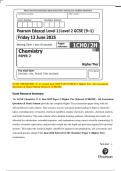
GCSE CHEMISTRY (9–1): Actual June 2025 PAST PAPER 2: Higher Tier. All Assessment
Questions & Mark Scheme [Edexcel 1CH0/2H]
Exam Resource Summary
The GCSE Chemistry (9–1) June 2025 Paper 2: Higher Tier [Edexcel 1CH0/2H] – All Assessment
Questions & Mark Scheme provides the complete Higher Tier examination paper along with the
official Edexcel mark scheme. This resource assesses advanced understanding of Paper 2 chemistry
topics, including rates of reaction, chemical equilibria, organic chemistry, polymers, chemical analysis,
and Earth chemistry. The mark scheme offers detailed marking guidance, illustrating how marks are
allocated for calculations, extended responses, and explanations using correct scientific terminology. It
clarifies examiner expectations and provides insight into the depth and precision required for top-band
answers. This makes the resource highly valuable for targeted exam preparation, self-assessment, and
structured practice ahead of the June 2026 Edexcel GCSE Chemistry Paper 2 (Higher Tier)
examination.
Turn over
, Answer ALL questions. Write your answers in the spaces provided.
Some questions must be answered with a cross in a box . If you change your mind about an
DO NOT WRITE IN THIS AREA
answer, put a line through the box and then mark your new answer with a cross .
1 (a) A student carries out a flame test on a salt.
The student observes a yellow flame.
Which ion is in the salt?
(1)
A Ca2+
B Cu2+
C Na+
D Li+
(b) A molecule of a yellow substance is shown in Figure 1.
DO NOT WRITE IN THIS AREA
CH3
O2N C NO2
C C
C C
H C H
NO2
Figure 1
(i) What is the formula of this molecule?
(1)
A C6H5(NO2)3
B C6H2(CH3)(3NO2)
C C7H5N3O6
DO NOT WRITE IN THIS AREA
D C7H6N3O6
2
■■■■
, (ii) A bottle of this substance is labelled with the hazard symbol in Figure 2.
DO NOT WRITE IN THIS AREA
Figure 2
State the danger associated with the contents of this bottle.
(1)
. . . .. . .. . .. . .. . .. . .. . .. . .. . .. . .. . .. . .. . .. . .. . .. . .. . .. . .. . .. . .. . .. . .. .. . . .. . .. . .. . .. . .. . .. . .. . .. . .. . .. . .. . .. . .. . .. . .. . .. . .. . .. . . .. . .. .. . . .. . .. . .. . .. . .. . .. . .. . .. . .. . .. . .. . .. . .. . .. . .. . .. . . . . .. . .. . .. . .. . .. .. . . .. . .. . .. . .. . .. . .. . .. . .. . .. . .. . .. . .. . .. . .. . .. . .. . . ......................
(c) Yellow bananas emit ethene gas, C2H4 .
Draw one molecule of ethene, showing all covalent bonds.
DO NOT WRITE IN THIS AREA
(2)
(d) Gold has a yellow colour.
A gold nanosphere has a surface area of 305 nm2.
The surface area to volume ratio is 1 : 4.60.
Calculate the volume, in nm3, of the gold nanosphere.
(1)
DO NOT WRITE IN THIS AREA
. . . .. . .. . .. . .. . .. . .. . .. . .. . .. . .. . .. . .. . .. . .. . .. . .. . .. . .. . .. . .. . .. . .. .. . . .. . .. . .. . .. . .. . .. . .. . .. . .. . .. . .. . .. . .. . .. . .. . .. . .. . .. . . .. . .. .. . . .. . .. . .. . .. . .. . .. . .. . .. . .. . .. . .. . .. . .. . .. . .. . .. . .. . .. . .. . .. . .. . .. .. . . .. . .. . .. . .. . .. . .. . .. . .. . .. . .. . .. . .. . .. . .. . .. . .. . . ......................
. . . .. . .. . .. . .. . .. . .. . .. . .. . .. . .. . .. . .. . .. . .. . .. . .. . .. . .. . .. . .. . .. . .. .. . . .. . . . . .. . .. . .. . .. . .. . .. . .. . .. . .. . .. . .. . .. . .. . .. . .. . .. . . .. . .. .. . . .. . .. . .. . .. . .. . .. . .. . .. . .. . .. . .. . .. . .. . .. . .. . .. . .. . .. . .. . .. . .. . .. .. . . .. . .. . .. . .. . .. . .. . .. . .. . .. . .. . .. . .. . .. . .. . .. . .. . . ......................
volume = .......................... nm3
(Total for Question 1 = 6 marks)
3
■■■■ Turn over
, 2 When solutions P and Q are mixed together, a purple mixture forms.
This mixture slowly becomes colourless.
DO NOT WRITE IN THIS AREA
(a) A student pours 25 cm3 of solution P into a conical flask and then adds
25 cm3 of solution Q.
The student uses a beaker to measure out these volumes.
Name a piece of apparatus that could be used to measure these volumes
more accurately.
(1)
. . . .. . .. . .. . .. . .. . .. . .. . .. . .. . .. . .. . .. . .. . .. . .. . .. . .. . .. . .. . .. . .. . .. .. . . .. . .. . .. . .. . .. . .. . .. . .. . .. . .. . .. . .. . .. . .. . .. . .. . .. . .. . . .. . .. .. . . .. . .. . .. . .. . .. . .. . .. . .. . .. . .. . .. . .. . .. . .. . .. . .. . .. . .. . .. . .. . .. . .. .. . . .. . .. . .. . .. . .. . .. . .. . .. . .. . .. . .. . .. . .. . .. . .. . .. . . ......................
(b) The student investigates this reaction using the apparatus shown in Figure 3.
The student measures the time taken for the cross to become visible.
The experiment is repeated at different temperatures.
eye
DO NOT WRITE IN THIS AREA
reaction mixture
paper with black cross
Figure 3
Figure 4 shows the results.
temperature in °C time in s
20 45
40 19 DO NOT WRITE IN THIS AREA
60 10
Figure 4
4
■■■■
Questions & Mark Scheme [Edexcel 1CH0/2H]
Exam Resource Summary
The GCSE Chemistry (9–1) June 2025 Paper 2: Higher Tier [Edexcel 1CH0/2H] – All Assessment
Questions & Mark Scheme provides the complete Higher Tier examination paper along with the
official Edexcel mark scheme. This resource assesses advanced understanding of Paper 2 chemistry
topics, including rates of reaction, chemical equilibria, organic chemistry, polymers, chemical analysis,
and Earth chemistry. The mark scheme offers detailed marking guidance, illustrating how marks are
allocated for calculations, extended responses, and explanations using correct scientific terminology. It
clarifies examiner expectations and provides insight into the depth and precision required for top-band
answers. This makes the resource highly valuable for targeted exam preparation, self-assessment, and
structured practice ahead of the June 2026 Edexcel GCSE Chemistry Paper 2 (Higher Tier)
examination.
Turn over
, Answer ALL questions. Write your answers in the spaces provided.
Some questions must be answered with a cross in a box . If you change your mind about an
DO NOT WRITE IN THIS AREA
answer, put a line through the box and then mark your new answer with a cross .
1 (a) A student carries out a flame test on a salt.
The student observes a yellow flame.
Which ion is in the salt?
(1)
A Ca2+
B Cu2+
C Na+
D Li+
(b) A molecule of a yellow substance is shown in Figure 1.
DO NOT WRITE IN THIS AREA
CH3
O2N C NO2
C C
C C
H C H
NO2
Figure 1
(i) What is the formula of this molecule?
(1)
A C6H5(NO2)3
B C6H2(CH3)(3NO2)
C C7H5N3O6
DO NOT WRITE IN THIS AREA
D C7H6N3O6
2
■■■■
, (ii) A bottle of this substance is labelled with the hazard symbol in Figure 2.
DO NOT WRITE IN THIS AREA
Figure 2
State the danger associated with the contents of this bottle.
(1)
. . . .. . .. . .. . .. . .. . .. . .. . .. . .. . .. . .. . .. . .. . .. . .. . .. . .. . .. . .. . .. . .. . .. .. . . .. . .. . .. . .. . .. . .. . .. . .. . .. . .. . .. . .. . .. . .. . .. . .. . .. . .. . . .. . .. .. . . .. . .. . .. . .. . .. . .. . .. . .. . .. . .. . .. . .. . .. . .. . .. . .. . . . . .. . .. . .. . .. . .. .. . . .. . .. . .. . .. . .. . .. . .. . .. . .. . .. . .. . .. . .. . .. . .. . .. . . ......................
(c) Yellow bananas emit ethene gas, C2H4 .
Draw one molecule of ethene, showing all covalent bonds.
DO NOT WRITE IN THIS AREA
(2)
(d) Gold has a yellow colour.
A gold nanosphere has a surface area of 305 nm2.
The surface area to volume ratio is 1 : 4.60.
Calculate the volume, in nm3, of the gold nanosphere.
(1)
DO NOT WRITE IN THIS AREA
. . . .. . .. . .. . .. . .. . .. . .. . .. . .. . .. . .. . .. . .. . .. . .. . .. . .. . .. . .. . .. . .. . .. .. . . .. . .. . .. . .. . .. . .. . .. . .. . .. . .. . .. . .. . .. . .. . .. . .. . .. . .. . . .. . .. .. . . .. . .. . .. . .. . .. . .. . .. . .. . .. . .. . .. . .. . .. . .. . .. . .. . .. . .. . .. . .. . .. . .. .. . . .. . .. . .. . .. . .. . .. . .. . .. . .. . .. . .. . .. . .. . .. . .. . .. . . ......................
. . . .. . .. . .. . .. . .. . .. . .. . .. . .. . .. . .. . .. . .. . .. . .. . .. . .. . .. . .. . .. . .. . .. .. . . .. . . . . .. . .. . .. . .. . .. . .. . .. . .. . .. . .. . .. . .. . .. . .. . .. . .. . . .. . .. .. . . .. . .. . .. . .. . .. . .. . .. . .. . .. . .. . .. . .. . .. . .. . .. . .. . .. . .. . .. . .. . .. . .. .. . . .. . .. . .. . .. . .. . .. . .. . .. . .. . .. . .. . .. . .. . .. . .. . .. . . ......................
volume = .......................... nm3
(Total for Question 1 = 6 marks)
3
■■■■ Turn over
, 2 When solutions P and Q are mixed together, a purple mixture forms.
This mixture slowly becomes colourless.
DO NOT WRITE IN THIS AREA
(a) A student pours 25 cm3 of solution P into a conical flask and then adds
25 cm3 of solution Q.
The student uses a beaker to measure out these volumes.
Name a piece of apparatus that could be used to measure these volumes
more accurately.
(1)
. . . .. . .. . .. . .. . .. . .. . .. . .. . .. . .. . .. . .. . .. . .. . .. . .. . .. . .. . .. . .. . .. . .. .. . . .. . .. . .. . .. . .. . .. . .. . .. . .. . .. . .. . .. . .. . .. . .. . .. . .. . .. . . .. . .. .. . . .. . .. . .. . .. . .. . .. . .. . .. . .. . .. . .. . .. . .. . .. . .. . .. . .. . .. . .. . .. . .. . .. .. . . .. . .. . .. . .. . .. . .. . .. . .. . .. . .. . .. . .. . .. . .. . .. . .. . . ......................
(b) The student investigates this reaction using the apparatus shown in Figure 3.
The student measures the time taken for the cross to become visible.
The experiment is repeated at different temperatures.
eye
DO NOT WRITE IN THIS AREA
reaction mixture
paper with black cross
Figure 3
Figure 4 shows the results.
temperature in °C time in s
20 45
40 19 DO NOT WRITE IN THIS AREA
60 10
Figure 4
4
■■■■