KEY:
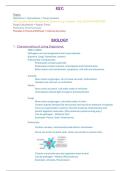
Topic:
Definitions + Calculations + Theory Answers
QW: Question Word and How to do Question (e.g. Evaluate) – FULL SECTION AT BOTTOM
Graph Calculations + Explain Trend:
Method for Core Practicals:
Mistakes in Practical Methods + Improve Accuracy:
BIOLOGY
1. Characteristics of Living Organisms:
MRS C GREN
Pathogens are microorganisms that cause disease
(bacteria, fungi, Protoctists, viruses)
Prokaryotes vs Eukaryotes:
Prokaryotes contain plasmids.
Eukaryotes contain nucleus, chloroplasts and mitochondria.
Both contain cell membranes, cytoplasm, cell wall and ribosomes.
Animals:
Store carbs as glycogen, do not have cell wall, multicellular.
Usually have nervous co-ordination.
Plants:
Store carbs as starch, cell walls made of cellulose.
Chloroplasts absorb light energy for photosynthesis.
Fungi:
Store carbs as glycogen, cell walls made of chitin.
Contain hyphae (thread-like structures) and mycelium (network of hyphae).
Carry out saprotrophic nutrition: Secrete enzymes extracellularly and
absorb digested molecules. (Stay stationary while hunting prey.)
Can be pathogen – Athlete’s Foot
Examples: Mucor, Yeast, Mushrooms.
Protoctists:
Contain nucleus, mitochondria and distinct membrane.
Some are similar to plant cells, others are similar to animal cells.
Contain contractile vacuole (regulates water levels)
Can be pathogen – Malaria (Plasmodium)
Examples: Amoeba, Plasmodium.
,Bacteria:
Prokaryotic – No nucleus, mitochondria or membrane-bound organelles.
Contain cell wall, cell membrane, circular chromosome and plasmids.
Most feed off other organisms.
Carry out saprotrophic nutrition.
Can be pathogen – Pneumonia (Pneumoccocus)
Examples: Lactobacillus (yoghurt), Pneumoccocus.
Viruses:
Contain protein coat and genetic material (DNA/RNA).
Requires a host to reproduce (parasite).
Examples of Viruses:
Tobacco Mosaic Virus (TMV): Prevents chloroplasts from forming, reduces
growth due to lack of photosynthesis, discolouration of leaves.
HIV (Leads to AIDS): Spread by sexual contact, exchange of bodily fluids.
Attacks white blood cells weakening the immune system. Number
decreasing due to availability of medication to prevent replication, Better
education about how HIV spreads.
Influenza: Infects cells that line airways, cause high temperatures, body
aches and fatigue.
,2. Level Of Organisation:
Organelles – Component within a cell that carries out a specific function
Cells – Basic functional and structural units in a living organism
Tissues – A group of cells of similar structure working together to perform a
specific function.
Organs – A group of different tissues working together to perform a specific
function.
Organ systems – A group of organs with related functions, working together to
perform body functions within the organism.
3. Cell Structure:
Organelles’ Functions:
Nucleus – Contains genetic material that controls the cell
Cytoplasm – Site of chemical reactions in the cell
Mitochondria – Site of aerobic respiration, providing energy for the cell.
(Metabolically active)
Cell Membrane – Controls what substances enter and leave the cell
Ribosomes – Site of protein production.
Plant Organelles’ Functions:
Cell Wall – Rigid wall to support and strengthen cell
Vacuole – Contains cell sap to support and strengthen cell, stores water.
Chloroplasts – Site of photosynthesis.
Root Hair Cell:
Large surface area – Maximise absorption of water and minerals from soil. (Water
needed for photosynthesis).
Lots of mitochondria – Energy for active transport.
Sperm Cell:
Tail – Gives cell ability to move to find egg cell.
Digestive enzymes – Allow cell to digest egg membrane to penetrate egg.
Red Blood Cell:
Biconcave disc – Large surface area to volume ratio – Diffusion of oxygen in and
out.
No nucleus – Frees up space to carry oxygen.
Haemoglobin – Binds to oxygen in lungs – Unbinds in body cells
Palisade Mesophyll Cell:
Lots of chloroplasts – Maximises absorption of light for photosynthesis.
Large vacuole – Can store water – Needed for photosynthesis.
Neurone/Nerve Cell:
Fatty sheath – Insulates axon to speed up impulse transmission.
, Cell differentiation is when a cell changes to become specialised to its function by
developing particular organelles.
DNA controls differentiation by switching genes on or off
So, the cell develops different organelles.
A stem cell is an undifferentiated cell that can divide by mitosis and specialise into
other cell types.
Stem cells are found in human embryos and bone marrow.
In embryos, unspecialised cells develop into specialised cells to produce
tissues/organs.
Adult stem cells can be found in bone marrow or the umbilical cord.
Adult VS Embryonic Stem Cells:
Adults stem cells can only turn into certain cells, while embryonic stem cells have
the ability to differentiate into any type of cell.
Adults stem cells are found in specific places in the body, while embryonic stem
cells are found in a developing embryo.
Role of adult stem cells is to replace damaged cells, while role of embryonic stem
cells is to allow the development of a whole organism.
Ethical issues about embryonic stem cells as they are potential human lives.
Stem cells used to treat muscles:
Stem cells can be injected into muscle tissue.
Stem cells divide by mitosis
Stem cells differentiate into muscle cells.
Stem cells used in medicine:
Stem cells can be encouraged to develop into certain tissue types.
Stem cells are injected into a damaged tissue to replace damaged cells.
E.g. replacing skin cells to treat burn patients.
E.g. replacing damaged nerve cells to treat paralysis
Stem cells can be grown to produce clones and differentiated into specialised
cells for medicine/research:
Advantages of Stem Cells in Medicine.:
Adult stem cells can cure diseases – healthy stem cells can replace faulty cells
Embryonic stem cells can cure diseases – nerve cells can be used to cure
paralysis
Curing suffering patients is more important than the rights of embryos.
Embryos used in research are unwanted ones from fertility clinics – would be
destroyed anyway.
Disadvantages of Stem Cells in Medicine:
Stem cells could be contaminated by a virus that makes receiver sicker.
Human embryos are potential human lives.
Topic:
Definitions + Calculations + Theory Answers
QW: Question Word and How to do Question (e.g. Evaluate) – FULL SECTION AT BOTTOM
Graph Calculations + Explain Trend:
Method for Core Practicals:
Mistakes in Practical Methods + Improve Accuracy:
BIOLOGY
1. Characteristics of Living Organisms:
MRS C GREN
Pathogens are microorganisms that cause disease
(bacteria, fungi, Protoctists, viruses)
Prokaryotes vs Eukaryotes:
Prokaryotes contain plasmids.
Eukaryotes contain nucleus, chloroplasts and mitochondria.
Both contain cell membranes, cytoplasm, cell wall and ribosomes.
Animals:
Store carbs as glycogen, do not have cell wall, multicellular.
Usually have nervous co-ordination.
Plants:
Store carbs as starch, cell walls made of cellulose.
Chloroplasts absorb light energy for photosynthesis.
Fungi:
Store carbs as glycogen, cell walls made of chitin.
Contain hyphae (thread-like structures) and mycelium (network of hyphae).
Carry out saprotrophic nutrition: Secrete enzymes extracellularly and
absorb digested molecules. (Stay stationary while hunting prey.)
Can be pathogen – Athlete’s Foot
Examples: Mucor, Yeast, Mushrooms.
Protoctists:
Contain nucleus, mitochondria and distinct membrane.
Some are similar to plant cells, others are similar to animal cells.
Contain contractile vacuole (regulates water levels)
Can be pathogen – Malaria (Plasmodium)
Examples: Amoeba, Plasmodium.
,Bacteria:
Prokaryotic – No nucleus, mitochondria or membrane-bound organelles.
Contain cell wall, cell membrane, circular chromosome and plasmids.
Most feed off other organisms.
Carry out saprotrophic nutrition.
Can be pathogen – Pneumonia (Pneumoccocus)
Examples: Lactobacillus (yoghurt), Pneumoccocus.
Viruses:
Contain protein coat and genetic material (DNA/RNA).
Requires a host to reproduce (parasite).
Examples of Viruses:
Tobacco Mosaic Virus (TMV): Prevents chloroplasts from forming, reduces
growth due to lack of photosynthesis, discolouration of leaves.
HIV (Leads to AIDS): Spread by sexual contact, exchange of bodily fluids.
Attacks white blood cells weakening the immune system. Number
decreasing due to availability of medication to prevent replication, Better
education about how HIV spreads.
Influenza: Infects cells that line airways, cause high temperatures, body
aches and fatigue.
,2. Level Of Organisation:
Organelles – Component within a cell that carries out a specific function
Cells – Basic functional and structural units in a living organism
Tissues – A group of cells of similar structure working together to perform a
specific function.
Organs – A group of different tissues working together to perform a specific
function.
Organ systems – A group of organs with related functions, working together to
perform body functions within the organism.
3. Cell Structure:
Organelles’ Functions:
Nucleus – Contains genetic material that controls the cell
Cytoplasm – Site of chemical reactions in the cell
Mitochondria – Site of aerobic respiration, providing energy for the cell.
(Metabolically active)
Cell Membrane – Controls what substances enter and leave the cell
Ribosomes – Site of protein production.
Plant Organelles’ Functions:
Cell Wall – Rigid wall to support and strengthen cell
Vacuole – Contains cell sap to support and strengthen cell, stores water.
Chloroplasts – Site of photosynthesis.
Root Hair Cell:
Large surface area – Maximise absorption of water and minerals from soil. (Water
needed for photosynthesis).
Lots of mitochondria – Energy for active transport.
Sperm Cell:
Tail – Gives cell ability to move to find egg cell.
Digestive enzymes – Allow cell to digest egg membrane to penetrate egg.
Red Blood Cell:
Biconcave disc – Large surface area to volume ratio – Diffusion of oxygen in and
out.
No nucleus – Frees up space to carry oxygen.
Haemoglobin – Binds to oxygen in lungs – Unbinds in body cells
Palisade Mesophyll Cell:
Lots of chloroplasts – Maximises absorption of light for photosynthesis.
Large vacuole – Can store water – Needed for photosynthesis.
Neurone/Nerve Cell:
Fatty sheath – Insulates axon to speed up impulse transmission.
, Cell differentiation is when a cell changes to become specialised to its function by
developing particular organelles.
DNA controls differentiation by switching genes on or off
So, the cell develops different organelles.
A stem cell is an undifferentiated cell that can divide by mitosis and specialise into
other cell types.
Stem cells are found in human embryos and bone marrow.
In embryos, unspecialised cells develop into specialised cells to produce
tissues/organs.
Adult stem cells can be found in bone marrow or the umbilical cord.
Adult VS Embryonic Stem Cells:
Adults stem cells can only turn into certain cells, while embryonic stem cells have
the ability to differentiate into any type of cell.
Adults stem cells are found in specific places in the body, while embryonic stem
cells are found in a developing embryo.
Role of adult stem cells is to replace damaged cells, while role of embryonic stem
cells is to allow the development of a whole organism.
Ethical issues about embryonic stem cells as they are potential human lives.
Stem cells used to treat muscles:
Stem cells can be injected into muscle tissue.
Stem cells divide by mitosis
Stem cells differentiate into muscle cells.
Stem cells used in medicine:
Stem cells can be encouraged to develop into certain tissue types.
Stem cells are injected into a damaged tissue to replace damaged cells.
E.g. replacing skin cells to treat burn patients.
E.g. replacing damaged nerve cells to treat paralysis
Stem cells can be grown to produce clones and differentiated into specialised
cells for medicine/research:
Advantages of Stem Cells in Medicine.:
Adult stem cells can cure diseases – healthy stem cells can replace faulty cells
Embryonic stem cells can cure diseases – nerve cells can be used to cure
paralysis
Curing suffering patients is more important than the rights of embryos.
Embryos used in research are unwanted ones from fertility clinics – would be
destroyed anyway.
Disadvantages of Stem Cells in Medicine:
Stem cells could be contaminated by a virus that makes receiver sicker.
Human embryos are potential human lives.