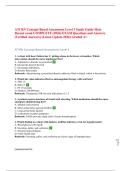
ATI RN Concept-Based Assessment Level 3 Study Guide Most
Recent exam COMPLETE (2026) EXAM Questions and Answers
(Verified Answers) (Latest Update 2026) Graded A+
ATI RN Concept-Based Assessment Level 3
1. A client with heart failure has 2+ pitting edema in the lower extremities. Which
intervention should the nurse implement first?
A. Administer a diuretic as prescribed
B. Elevate the head of the bed
C. Encourage ambulation
D. Restrict fluid intake
Rationale: Administering a prescribed diuretic addresses fluid overload, which is the priority.
2. Which lab value indicates effective anticoagulant therapy with warfarin?
A. INR 1.0
B. INR 2.5
C. PT 10 seconds
D. Platelets 250,000/mm³
Rationale: Therapeutic INR for most indications is 2–3.
3. A patient reports shortness of breath and wheezing. Which medication should the nurse
anticipate administering first?
A. Inhaled corticosteroid
B. Short-acting beta2 agonist (SABA)
C. Long-acting beta2 agonist
D. Leukotriene receptor antagonist
Rationale: SABA provides rapid relief of acute bronchospasm.
4. Which finding in a client with diabetes mellitus indicates a risk for hypoglycemia?
A. Blood glucose 250 mg/dL
B. Sweating, pallor, and confusion
C. Polyuria and polydipsia
D. Fruity breath odor
Rationale: Sweating, pallor, and confusion are classic signs of hypoglycemia.
1
Page
EXAMPREPMASTER
,5. A nurse is teaching a patient about proper inhaler use. Which instruction is correct?
A. Shake the inhaler before use
B. Exhale after pressing the inhaler
C. Inhale rapidly after actuation
D. Use the inhaler once daily only
Rationale: Shaking ensures medication is properly suspended; patient should inhale slowly.
6. Which nursing action takes priority for a patient with suspected sepsis?
A. Obtain cultures before antibiotics
B. Administer IV fluids
C. Apply oxygen
D. Monitor vital signs
Rationale: Cultures must be obtained before antibiotics to identify causative organisms.
7. Which patient is at highest risk for deep vein thrombosis (DVT)?
A. 25-year-old postpartum patient
B. 40-year-old with controlled hypertension
C. 60-year-old with mild osteoarthritis
D. 35-year-old recovering from appendectomy
Rationale: Postpartum patients are hypercoagulable and at high risk for DVT.
8. What is the first step when a patient has a new onset of chest pain?
A. Obtain a 12-lead ECG
B. Administer nitroglycerin
C. Call the physician
D. Draw cardiac enzymes
Rationale: Immediate ECG is needed to determine if myocardial infarction is occurring.
9. Which electrolyte imbalance is most concerning for a patient on furosemide?
A. Hypernatremia
B. Hypokalemia
C. Hypercalcemia
D. Hypophosphatemia
Rationale: Furosemide is a loop diuretic that can cause potassium loss, which may lead to
cardiac dysrhythmias.
10. A patient with chronic kidney disease has a potassium level of 6.2 mEq/L. Which action
should the nurse take first?
A. Administer sodium polystyrene sulfonate (Kayexalate)
B. Notify the provider
C. Restrict potassium intake
D. Repeat the lab test in 1 hour
Rationale: Hyperkalemia can cause life-threatening cardiac dysrhythmias; immediate treatment
is required.
2
Page
EXAMPREPMASTER
,✅ ATI RN Concept-Based Assessment Level 3 — Questions 51–100
51. A nurse is caring for a patient with chronic obstructive pulmonary disease (COPD) who
is experiencing increased dyspnea. Which intervention should the nurse implement first?
A. Administer a short-acting bronchodilator
B. Encourage deep breathing exercises
C. Elevate the patient’s legs
D. Provide supplemental oxygen at 4 L/min via nasal cannula
Rationale: Rapid-acting bronchodilators relieve bronchospasm and improve airflow
immediately.
52. Which lab value indicates an increased risk of bleeding for a patient on heparin
therapy?
A. aPTT 45 seconds
B. aPTT 90 seconds
C. INR 2.5
D. Platelets 250,000/mm³
Rationale: Therapeutic aPTT is usually 60–80 seconds; values above this increase bleeding risk.
53. A patient with hypothyroidism reports fatigue, weight gain, and cold intolerance.
Which lab result would confirm the diagnosis?
A. Low TSH, high T3/T4
B. High TSH, low T3/T4
C. Low TSH, low T3/T4
D. High TSH, high T3/T4
Rationale: Primary hypothyroidism shows elevated TSH and low thyroid hormone levels.
54. Which finding indicates fluid overload in a patient with heart failure?
A. Dry mucous membranes
B. Jugular vein distention
C. Decreased blood pressure
D. Hypokalemia
Rationale: Jugular vein distention is a classic sign of fluid retention in heart failure.
55. A nurse is preparing to administer a blood transfusion. Which action is most important
before starting the transfusion?
A. Check the patient’s blood type and crossmatch
B. Administer acetaminophen
C. Warm the blood to room temperature
D. Obtain vital signs after 15 minutes
Rationale: Correct blood type and crossmatching prevent hemolytic transfusion reactions.
56. A patient on digoxin therapy has a serum digoxin level of 2.5 ng/mL and reports nausea
3
and visual changes. What should the nurse do first?
Page
A. Administer the next dose as scheduled
EXAMPREPMASTER
, B. Hold the dose and notify the provider
C. Increase potassium intake
D. Recheck the level in 24 hours
Rationale: Digoxin toxicity occurs at levels >2 ng/mL; holding the dose and notifying the
provider is essential.
57. Which intervention should the nurse implement for a patient with neutropenia?
A. Encourage visitors
B. Use strict hand hygiene
C. Allow fresh flowers in the room
D. Provide a high-residue diet
Rationale: Hand hygiene reduces the risk of infection in immunocompromised patients.
58. Which clinical manifestation is most indicative of hypovolemic shock?
A. Bradycardia
B. Hypotension
C. Bounding pulses
D. Warm, flushed skin
Rationale: Hypovolemic shock presents with low blood pressure due to decreased circulating
volume.
59. A patient reports severe pain after surgery. Which action should the nurse take first?
A. Administer prescribed analgesic
B. Apply cold therapy
C. Encourage ambulation
D. Offer distraction techniques
Rationale: Pain management is a priority to promote comfort and recovery.
60. A nurse is teaching a patient about metformin. Which statement indicates correct
understanding?
A. “I should stop taking it if I feel nauseous once.”
B. “I should take it with food to reduce gastrointestinal upset.”
C. “I can drink alcohol with this medication.”
D. “It is safe to take with contrast dye without precautions.”
Rationale: Taking metformin with food reduces GI upset, and contrast dye precautions must be
observed.
61. Which electrolyte imbalance is most common in patients with chronic kidney disease?
A. Hypokalemia
B. Hyperkalemia
C. Hyponatremia
D. Hypocalcemia
Rationale: CKD reduces potassium excretion, leading to hyperkalemia.
4
Page
EXAMPREPMASTER
Recent exam COMPLETE (2026) EXAM Questions and Answers
(Verified Answers) (Latest Update 2026) Graded A+
ATI RN Concept-Based Assessment Level 3
1. A client with heart failure has 2+ pitting edema in the lower extremities. Which
intervention should the nurse implement first?
A. Administer a diuretic as prescribed
B. Elevate the head of the bed
C. Encourage ambulation
D. Restrict fluid intake
Rationale: Administering a prescribed diuretic addresses fluid overload, which is the priority.
2. Which lab value indicates effective anticoagulant therapy with warfarin?
A. INR 1.0
B. INR 2.5
C. PT 10 seconds
D. Platelets 250,000/mm³
Rationale: Therapeutic INR for most indications is 2–3.
3. A patient reports shortness of breath and wheezing. Which medication should the nurse
anticipate administering first?
A. Inhaled corticosteroid
B. Short-acting beta2 agonist (SABA)
C. Long-acting beta2 agonist
D. Leukotriene receptor antagonist
Rationale: SABA provides rapid relief of acute bronchospasm.
4. Which finding in a client with diabetes mellitus indicates a risk for hypoglycemia?
A. Blood glucose 250 mg/dL
B. Sweating, pallor, and confusion
C. Polyuria and polydipsia
D. Fruity breath odor
Rationale: Sweating, pallor, and confusion are classic signs of hypoglycemia.
1
Page
EXAMPREPMASTER
,5. A nurse is teaching a patient about proper inhaler use. Which instruction is correct?
A. Shake the inhaler before use
B. Exhale after pressing the inhaler
C. Inhale rapidly after actuation
D. Use the inhaler once daily only
Rationale: Shaking ensures medication is properly suspended; patient should inhale slowly.
6. Which nursing action takes priority for a patient with suspected sepsis?
A. Obtain cultures before antibiotics
B. Administer IV fluids
C. Apply oxygen
D. Monitor vital signs
Rationale: Cultures must be obtained before antibiotics to identify causative organisms.
7. Which patient is at highest risk for deep vein thrombosis (DVT)?
A. 25-year-old postpartum patient
B. 40-year-old with controlled hypertension
C. 60-year-old with mild osteoarthritis
D. 35-year-old recovering from appendectomy
Rationale: Postpartum patients are hypercoagulable and at high risk for DVT.
8. What is the first step when a patient has a new onset of chest pain?
A. Obtain a 12-lead ECG
B. Administer nitroglycerin
C. Call the physician
D. Draw cardiac enzymes
Rationale: Immediate ECG is needed to determine if myocardial infarction is occurring.
9. Which electrolyte imbalance is most concerning for a patient on furosemide?
A. Hypernatremia
B. Hypokalemia
C. Hypercalcemia
D. Hypophosphatemia
Rationale: Furosemide is a loop diuretic that can cause potassium loss, which may lead to
cardiac dysrhythmias.
10. A patient with chronic kidney disease has a potassium level of 6.2 mEq/L. Which action
should the nurse take first?
A. Administer sodium polystyrene sulfonate (Kayexalate)
B. Notify the provider
C. Restrict potassium intake
D. Repeat the lab test in 1 hour
Rationale: Hyperkalemia can cause life-threatening cardiac dysrhythmias; immediate treatment
is required.
2
Page
EXAMPREPMASTER
,✅ ATI RN Concept-Based Assessment Level 3 — Questions 51–100
51. A nurse is caring for a patient with chronic obstructive pulmonary disease (COPD) who
is experiencing increased dyspnea. Which intervention should the nurse implement first?
A. Administer a short-acting bronchodilator
B. Encourage deep breathing exercises
C. Elevate the patient’s legs
D. Provide supplemental oxygen at 4 L/min via nasal cannula
Rationale: Rapid-acting bronchodilators relieve bronchospasm and improve airflow
immediately.
52. Which lab value indicates an increased risk of bleeding for a patient on heparin
therapy?
A. aPTT 45 seconds
B. aPTT 90 seconds
C. INR 2.5
D. Platelets 250,000/mm³
Rationale: Therapeutic aPTT is usually 60–80 seconds; values above this increase bleeding risk.
53. A patient with hypothyroidism reports fatigue, weight gain, and cold intolerance.
Which lab result would confirm the diagnosis?
A. Low TSH, high T3/T4
B. High TSH, low T3/T4
C. Low TSH, low T3/T4
D. High TSH, high T3/T4
Rationale: Primary hypothyroidism shows elevated TSH and low thyroid hormone levels.
54. Which finding indicates fluid overload in a patient with heart failure?
A. Dry mucous membranes
B. Jugular vein distention
C. Decreased blood pressure
D. Hypokalemia
Rationale: Jugular vein distention is a classic sign of fluid retention in heart failure.
55. A nurse is preparing to administer a blood transfusion. Which action is most important
before starting the transfusion?
A. Check the patient’s blood type and crossmatch
B. Administer acetaminophen
C. Warm the blood to room temperature
D. Obtain vital signs after 15 minutes
Rationale: Correct blood type and crossmatching prevent hemolytic transfusion reactions.
56. A patient on digoxin therapy has a serum digoxin level of 2.5 ng/mL and reports nausea
3
and visual changes. What should the nurse do first?
Page
A. Administer the next dose as scheduled
EXAMPREPMASTER
, B. Hold the dose and notify the provider
C. Increase potassium intake
D. Recheck the level in 24 hours
Rationale: Digoxin toxicity occurs at levels >2 ng/mL; holding the dose and notifying the
provider is essential.
57. Which intervention should the nurse implement for a patient with neutropenia?
A. Encourage visitors
B. Use strict hand hygiene
C. Allow fresh flowers in the room
D. Provide a high-residue diet
Rationale: Hand hygiene reduces the risk of infection in immunocompromised patients.
58. Which clinical manifestation is most indicative of hypovolemic shock?
A. Bradycardia
B. Hypotension
C. Bounding pulses
D. Warm, flushed skin
Rationale: Hypovolemic shock presents with low blood pressure due to decreased circulating
volume.
59. A patient reports severe pain after surgery. Which action should the nurse take first?
A. Administer prescribed analgesic
B. Apply cold therapy
C. Encourage ambulation
D. Offer distraction techniques
Rationale: Pain management is a priority to promote comfort and recovery.
60. A nurse is teaching a patient about metformin. Which statement indicates correct
understanding?
A. “I should stop taking it if I feel nauseous once.”
B. “I should take it with food to reduce gastrointestinal upset.”
C. “I can drink alcohol with this medication.”
D. “It is safe to take with contrast dye without precautions.”
Rationale: Taking metformin with food reduces GI upset, and contrast dye precautions must be
observed.
61. Which electrolyte imbalance is most common in patients with chronic kidney disease?
A. Hypokalemia
B. Hyperkalemia
C. Hyponatremia
D. Hypocalcemia
Rationale: CKD reduces potassium excretion, leading to hyperkalemia.
4
Page
EXAMPREPMASTER