

PKSC 2020 test 3
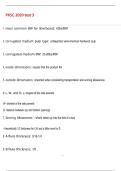
1. most common BW for linerboard: 42lbs/MSF
2. corrugated medium pulp type: unbleached semi-chemical hardwood pulp
3. corrugated medium BW: 23-26lbs/MSF
4. inside dimensions: insures that the product fits
5. outside dimensions: important when considering transportation and scoring allowances
6. L, W, and D: L- longest of the side pannels
W- shortest of the side pannels
D- distance between top and bottom openings
7. Scoring Allowances: - what's taken up into the fold of a box
- theoretically 1/2 thickness for LW and a little more for D
8. A flute thickness: 3/16-1/4
9. B flute thickness: 1/8
1/9
,10. C flute thickness: 5/32
11. E flute thickness: 1/6
12. what dimension is flute orientation almost always parallel to and why?: depth
because of added stacking strength and weight distribution
13. RSC features: Regular Slotted Container
- most common box style
- all flaps have the same length
- two outer flaps are one half of box's width
14. HSC features: Half Slotted Container
- similar to RSC, but no flaps on top
- sometimes has a lid
15. FOL features: Full Overlapping Container
- all flaps have the same width as the box
- resistant to rough handling
- provides product with extra cushioning
16. CSSC features: Center Special Slotted Container
2/9
, - inner and outer flaps are different lengths
- both flap sets meet at the center
- top and bottom have double board thickness
- inner flap provides level base for product
3/9
1. most common BW for linerboard: 42lbs/MSF
2. corrugated medium pulp type: unbleached semi-chemical hardwood pulp
3. corrugated medium BW: 23-26lbs/MSF
4. inside dimensions: insures that the product fits
5. outside dimensions: important when considering transportation and scoring allowances
6. L, W, and D: L- longest of the side pannels
W- shortest of the side pannels
D- distance between top and bottom openings
7. Scoring Allowances: - what's taken up into the fold of a box
- theoretically 1/2 thickness for LW and a little more for D
8. A flute thickness: 3/16-1/4
9. B flute thickness: 1/8
1/9
,10. C flute thickness: 5/32
11. E flute thickness: 1/6
12. what dimension is flute orientation almost always parallel to and why?: depth
because of added stacking strength and weight distribution
13. RSC features: Regular Slotted Container
- most common box style
- all flaps have the same length
- two outer flaps are one half of box's width
14. HSC features: Half Slotted Container
- similar to RSC, but no flaps on top
- sometimes has a lid
15. FOL features: Full Overlapping Container
- all flaps have the same width as the box
- resistant to rough handling
- provides product with extra cushioning
16. CSSC features: Center Special Slotted Container
2/9
, - inner and outer flaps are different lengths
- both flap sets meet at the center
- top and bottom have double board thickness
- inner flap provides level base for product
3/9


