NURS 2500 Quiz 1 Questions With 100% Correct Answers
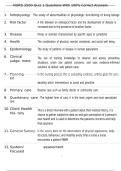
1. Pathophysiology The study of abnormalities in physiologic functioning of living beings
2. Risk factor A link between an etiological factor and the development of disease is
increased due to the presence of another factor
3. Disease Illness or sickness characterised by specific signs or symptoms
4. Health The combination of physical, mental, emotional, and social well being
5. Epidemiology The study of patterns of disease in human populations
6. Clinical The use of nursing knowledge to observe and assess presenting
judge- ment
situations, priori- tize patient concerns, and uses evidence-informed
solutions to deliver safe patient care
7. Planning In the nursing process this is evaluating evidence, setting goals for care,
and
deciding which interventions to avoid and prioritize
8. Primary care Routine care such as family doctor or community care
9. Quartenary care The highest form of care, it is the most urgent and most specialized
care
10. Client Health This is a direct interview with a patient about their medical history, it is
His- tory
chance to gather subjective data on and gain perception of a person's
own health and is used to determine the patients concerns and help
find solutions
11. General Survey Is the survey done on the observations of physical appearance, body
structure, behaviour, and mobility every time a nurse a nurse
encounters a patient PBBM
12. System/ assessment
Focused
1/
9
, NURS 2500 Quiz 1 Questions With 100% Correct Answers
An in depth focus on a concern using IPPA or other assessment techniques and is performed
specific system used to after interventions, changes in condition, or as needed
assess/reassess areas of
13. Percussion Tapping with short, sharp strokes to assess underlying structures such
as organs and cavities
2/
9
1. Pathophysiology The study of abnormalities in physiologic functioning of living beings
2. Risk factor A link between an etiological factor and the development of disease is
increased due to the presence of another factor
3. Disease Illness or sickness characterised by specific signs or symptoms
4. Health The combination of physical, mental, emotional, and social well being
5. Epidemiology The study of patterns of disease in human populations
6. Clinical The use of nursing knowledge to observe and assess presenting
judge- ment
situations, priori- tize patient concerns, and uses evidence-informed
solutions to deliver safe patient care
7. Planning In the nursing process this is evaluating evidence, setting goals for care,
and
deciding which interventions to avoid and prioritize
8. Primary care Routine care such as family doctor or community care
9. Quartenary care The highest form of care, it is the most urgent and most specialized
care
10. Client Health This is a direct interview with a patient about their medical history, it is
His- tory
chance to gather subjective data on and gain perception of a person's
own health and is used to determine the patients concerns and help
find solutions
11. General Survey Is the survey done on the observations of physical appearance, body
structure, behaviour, and mobility every time a nurse a nurse
encounters a patient PBBM
12. System/ assessment
Focused
1/
9
, NURS 2500 Quiz 1 Questions With 100% Correct Answers
An in depth focus on a concern using IPPA or other assessment techniques and is performed
specific system used to after interventions, changes in condition, or as needed
assess/reassess areas of
13. Percussion Tapping with short, sharp strokes to assess underlying structures such
as organs and cavities
2/
9