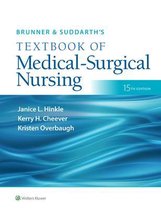
Brunner & Suddarth's Textbook of Medical-
Surgical Nursing
15th Edition
Author(s)Janice Hinkle, Kerry H. Cheever,
Kristen Overbaugh
TEST BANK
1
1⃣ Reference
Ch. 1 — Professional Nursing Practice — The Nursing Process
2️⃣ Question Stem
A 68-year-old man is admitted with new-onset confusion and
dehydration. During initial assessment the nurse documents dry
mucous membranes, decreased urine output, and an elevated
pulse. Which nursing action best demonstrates accurate use of
the nursing process at this stage?
,3️⃣ Options
A. Implement IV fluid replacement immediately.
B. Formulate a nursing diagnosis of fluid volume deficit.
C. Evaluate the effectiveness of oral fluid intake.
D. Teach the patient about signs of dehydration.
4️⃣ Correct Answer
B
5⃣ Rationales
Correct: Formulating a nursing diagnosis (fluid volume deficit)
organizes collected assessment data into a clinical problem
statement, guiding planning and interventions.
A: Implementing IV fluids is an implementation step; doing so
before establishing a diagnosis may bypass planning and
priority setting.
C: Evaluation occurs after interventions; there are no
interventions yet to evaluate.
D: Teaching is a planned intervention appropriate later but
premature before diagnosis and planning.
6⃣ Teaching Point
Convert assessment data into a clear nursing diagnosis to guide
care planning.
7️⃣ Citation (simplified APA)
Hinkle, J., Cheever, K., & Overbaugh, K. (2️02️2️). Brunner &
Suddarth’s Textbook of Medical-Surgical Nursing (15th Ed.). Ch.
1.
,2
1⃣ Reference
Ch. 1 — Professional Nursing Practice — Critical Thinking
2️⃣ Question Stem
A nurse evaluating a plan of care notices that one
recommended intervention lacks supporting evidence and may
increase fall risk. Which critical-thinking action should the nurse
take first?
3️⃣ Options
A. Remove the intervention without discussion.
B. Consult current evidence and discuss alternatives with the
team.
C. Continue the intervention and monitor closely for falls.
D. Ask the patient to refuse the intervention.
4️⃣ Correct Answer
B
5⃣ Rationales
Correct: Critical thinking requires seeking evidence and
collaborating with the interprofessional team to choose safer,
evidence-based alternatives.
A: Withdrawing interventions unilaterally may disrupt
continuity of care and violates collaborative practice.
C: Continuing an intervention suspected to be harmful ignores
evidence appraisal and safety priorities.
, D: Asking the patient to refuse shifts responsibility
inappropriately without informing the team or presenting
alternatives.
6⃣ Teaching Point
Use evidence appraisal and team communication when safety
concerns arise.
7️⃣ Citation (simplified APA)
Hinkle, J., Cheever, K., & Overbaugh, K. (2️02️2️). Brunner &
Suddarth’s Textbook of Medical-Surgical Nursing (15th Ed.). Ch.
1.
3
1⃣ Reference
Ch. 1 — Professional Nursing Practice — The Patient: Consumer
of Nursing and Health Care
2️⃣ Question Stem
A patient refuses a recommended medication after reading
about side effects online. The nurse’s best immediate response
is to:
3️⃣ Options
A. Tell the patient the online source is unreliable and proceed
anyway.
B. Respect refusal and document that the patient declined.
C. Explore the patient’s concerns and provide evidence-based
Surgical Nursing
15th Edition
Author(s)Janice Hinkle, Kerry H. Cheever,
Kristen Overbaugh
TEST BANK
1
1⃣ Reference
Ch. 1 — Professional Nursing Practice — The Nursing Process
2️⃣ Question Stem
A 68-year-old man is admitted with new-onset confusion and
dehydration. During initial assessment the nurse documents dry
mucous membranes, decreased urine output, and an elevated
pulse. Which nursing action best demonstrates accurate use of
the nursing process at this stage?
,3️⃣ Options
A. Implement IV fluid replacement immediately.
B. Formulate a nursing diagnosis of fluid volume deficit.
C. Evaluate the effectiveness of oral fluid intake.
D. Teach the patient about signs of dehydration.
4️⃣ Correct Answer
B
5⃣ Rationales
Correct: Formulating a nursing diagnosis (fluid volume deficit)
organizes collected assessment data into a clinical problem
statement, guiding planning and interventions.
A: Implementing IV fluids is an implementation step; doing so
before establishing a diagnosis may bypass planning and
priority setting.
C: Evaluation occurs after interventions; there are no
interventions yet to evaluate.
D: Teaching is a planned intervention appropriate later but
premature before diagnosis and planning.
6⃣ Teaching Point
Convert assessment data into a clear nursing diagnosis to guide
care planning.
7️⃣ Citation (simplified APA)
Hinkle, J., Cheever, K., & Overbaugh, K. (2️02️2️). Brunner &
Suddarth’s Textbook of Medical-Surgical Nursing (15th Ed.). Ch.
1.
,2
1⃣ Reference
Ch. 1 — Professional Nursing Practice — Critical Thinking
2️⃣ Question Stem
A nurse evaluating a plan of care notices that one
recommended intervention lacks supporting evidence and may
increase fall risk. Which critical-thinking action should the nurse
take first?
3️⃣ Options
A. Remove the intervention without discussion.
B. Consult current evidence and discuss alternatives with the
team.
C. Continue the intervention and monitor closely for falls.
D. Ask the patient to refuse the intervention.
4️⃣ Correct Answer
B
5⃣ Rationales
Correct: Critical thinking requires seeking evidence and
collaborating with the interprofessional team to choose safer,
evidence-based alternatives.
A: Withdrawing interventions unilaterally may disrupt
continuity of care and violates collaborative practice.
C: Continuing an intervention suspected to be harmful ignores
evidence appraisal and safety priorities.
, D: Asking the patient to refuse shifts responsibility
inappropriately without informing the team or presenting
alternatives.
6⃣ Teaching Point
Use evidence appraisal and team communication when safety
concerns arise.
7️⃣ Citation (simplified APA)
Hinkle, J., Cheever, K., & Overbaugh, K. (2️02️2️). Brunner &
Suddarth’s Textbook of Medical-Surgical Nursing (15th Ed.). Ch.
1.
3
1⃣ Reference
Ch. 1 — Professional Nursing Practice — The Patient: Consumer
of Nursing and Health Care
2️⃣ Question Stem
A patient refuses a recommended medication after reading
about side effects online. The nurse’s best immediate response
is to:
3️⃣ Options
A. Tell the patient the online source is unreliable and proceed
anyway.
B. Respect refusal and document that the patient declined.
C. Explore the patient’s concerns and provide evidence-based