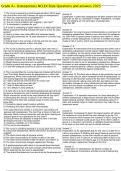
Grade A+ Osteoporosis NCLEX Style Questions and answers 2025
1) The nurse is assessing a postmenopausal client. Which ques-
Answer: B
tion should the nurse ask to assess for signs of osteoporosis?
Explanation: A client with osteoporosis will often present with low
A) "Have you experienced any palpitations?"
back pain as well as a decrease in height. Palpitations, constipa-
B) "Are you having any low back pain?"
C) "Are you having problems with swelling in your feet?" tion, and swelling are not early signs of osteoporosis.
Page Ref: 857
D) "Is constipation a problem for you?"
2) A nurse is conducting a health history on an older adult client.
Which assessment finding indicates the client is at risk for osteo- Answer: B
porosis? Explanation: A) Long-time use of corticosteroids is a risk factor for
A) Having a body mass index (BMI) that indicates obesity developing osteoporosis. Obesity is not a risk factor for osteoporo-
B) Using glucocorticoids for 10 years because of a chronic lung sis. Skim milk is a good source of calcium and vitamin D, which
disorder prevents or slows osteoporosis. A diet rich in shellfish and organ
C) Eating three to five servings of shrimp and liver per week meats is high in purine, which may predispose the client to gout.
D) Drinking three glasses of skim milk daily
Answer: C, E
3) The nurse is planning care for a female adult client who is Explanation: A) Interventions that may decrease this client's risk of
high-risk for developing osteoporosis. Which interventions will de- developing osteoporosis include regular weight-bearing exercise,
crease the client's risk of developing this health problem? Select such as walking, as this activity slows bone loss. Other interven-
all that apply. tion include encouraging clients to consume adequate amounts
A) Increasing the intake of alcoholic beverages of calcium and vitamin D in their diets to prevent osteoporotic
B) Isometric exercise for at least 30 minutes three times per week fracture. A DEXA test measures bone density, but it does not
C) Weight-bearing exercises such as walking decrease the client's risk for developing osteoporosis. Measures
D) Having a yearly dual-energy x-ray absorptiometry (DEXA) test to prevent or treat osteoporosis include limiting the intake of bev-
E) A diet with adequate amounts of calcium and vitamin D erages containing alcohol, caffeine, and phosphorus. Isometric
exercises are not effective against osteoporosis.
4) The nurse identifies the nursing diagnosis Imbalanced Nutrition: Answer: D
Less Than Body Requirements as appropriate for a client with Explanation: A) The client who is allergic to dairy products may not
osteoporosis. Which client statement indicated to the nurse that take in much calcium, which increases the risk of osteoporosis, so
this nursing diagnosis was appropriate? focusing on diet would be a priority for this client. The statements
A) "I like to remove all of the fat from the meat I eat." about removing fat, eating a low-carb diet, and eating out less
B) "I am trying to eat a low-carb diet." are healthy changes for many individuals that help reduce calorie
C) "I plan to start eating out less." intake, but they would not address one of the root causes of
D) "I am allergic to dairy products." osteoporosis, deficient calcium intake.
5) A client who is at risk for developing osteoporosis asks what can
be done to decrease the risk of actually developing the disease. Answer: C
Which intervention would be the most beneficial for this client? Explanation: A) A standard intervention for those attempting to
A) Decreasing the amount of calcium in the client's diet prevent osteoporosis is beginning an exercise plan that includes
B) Providing the client with assisted range of motion exercising weight-bearing activities. Strict bedrest, decreasing calcium in-
twice daily take, and assisted range of motion exercises may make the os-
C) Increasing regular weight-bearing activities teoporosis worse.
D) Protecting the client's bones with strict bedrest
6) An adult client who resides in a long-term care facility is di- Answer: B
agnosed with osteoporosis. The client has a history of falls and
Explanation: A) Keeping the bed in the lowest position will reduce
dementia. Which nursing intervention will best aid in meeting an
the incidence of injury should the client attempt to get up. The
outcome goal of injury prevention for this client?
A) Using furniture as obstacles to keep the client in the bed use of restraints could increase the incidence of injury. Using the
furniture as an obstacle could cause injury if the client is able to
B) Keeping the bed in the lowest position
C) Keeping a nightlight on in the hallway get up. In a long-term care facility, a nightlight should be provided
in the room so the client can see to use the restroom.
D) The use of wrist restraints
7) The nurse is providing teaching to a young adult who is at risk Answer: C
for early-onset osteoporosis. Which intervention should the nurse Explanation: A) An appropriate goal for this client is a diet rich in
suggest? calcium and vitamin D. Walking and weight-bearing exercise help
A) The client should stop all physical activity. prevent osteoporosis, so the client should not stop all physical
B) The client should reduce the intake of dairy in the diet. activity. Dairy is rich in calcium, so reducing intake of dairy is not
C) The client should increase intake of calcium and vitamin D. recommended. Due to the client's age, it is not likely that the client
D) The client should start estrogen replacement therapy. needs estrogen replacement therapy at this time.
8) A postmenopausal adult client is concerned about the devel-
Answer: C
opment of osteoporosis and wants to begin preventative activities.
Explanation: A) Osteoporosis risk factors increase af-
Which statement by the nurse is appropriate?
ter menopause. Preventative activities include implementing
A) "You should first determine if you are at risk for the development
1/3
1) The nurse is assessing a postmenopausal client. Which ques-
Answer: B
tion should the nurse ask to assess for signs of osteoporosis?
Explanation: A client with osteoporosis will often present with low
A) "Have you experienced any palpitations?"
back pain as well as a decrease in height. Palpitations, constipa-
B) "Are you having any low back pain?"
C) "Are you having problems with swelling in your feet?" tion, and swelling are not early signs of osteoporosis.
Page Ref: 857
D) "Is constipation a problem for you?"
2) A nurse is conducting a health history on an older adult client.
Which assessment finding indicates the client is at risk for osteo- Answer: B
porosis? Explanation: A) Long-time use of corticosteroids is a risk factor for
A) Having a body mass index (BMI) that indicates obesity developing osteoporosis. Obesity is not a risk factor for osteoporo-
B) Using glucocorticoids for 10 years because of a chronic lung sis. Skim milk is a good source of calcium and vitamin D, which
disorder prevents or slows osteoporosis. A diet rich in shellfish and organ
C) Eating three to five servings of shrimp and liver per week meats is high in purine, which may predispose the client to gout.
D) Drinking three glasses of skim milk daily
Answer: C, E
3) The nurse is planning care for a female adult client who is Explanation: A) Interventions that may decrease this client's risk of
high-risk for developing osteoporosis. Which interventions will de- developing osteoporosis include regular weight-bearing exercise,
crease the client's risk of developing this health problem? Select such as walking, as this activity slows bone loss. Other interven-
all that apply. tion include encouraging clients to consume adequate amounts
A) Increasing the intake of alcoholic beverages of calcium and vitamin D in their diets to prevent osteoporotic
B) Isometric exercise for at least 30 minutes three times per week fracture. A DEXA test measures bone density, but it does not
C) Weight-bearing exercises such as walking decrease the client's risk for developing osteoporosis. Measures
D) Having a yearly dual-energy x-ray absorptiometry (DEXA) test to prevent or treat osteoporosis include limiting the intake of bev-
E) A diet with adequate amounts of calcium and vitamin D erages containing alcohol, caffeine, and phosphorus. Isometric
exercises are not effective against osteoporosis.
4) The nurse identifies the nursing diagnosis Imbalanced Nutrition: Answer: D
Less Than Body Requirements as appropriate for a client with Explanation: A) The client who is allergic to dairy products may not
osteoporosis. Which client statement indicated to the nurse that take in much calcium, which increases the risk of osteoporosis, so
this nursing diagnosis was appropriate? focusing on diet would be a priority for this client. The statements
A) "I like to remove all of the fat from the meat I eat." about removing fat, eating a low-carb diet, and eating out less
B) "I am trying to eat a low-carb diet." are healthy changes for many individuals that help reduce calorie
C) "I plan to start eating out less." intake, but they would not address one of the root causes of
D) "I am allergic to dairy products." osteoporosis, deficient calcium intake.
5) A client who is at risk for developing osteoporosis asks what can
be done to decrease the risk of actually developing the disease. Answer: C
Which intervention would be the most beneficial for this client? Explanation: A) A standard intervention for those attempting to
A) Decreasing the amount of calcium in the client's diet prevent osteoporosis is beginning an exercise plan that includes
B) Providing the client with assisted range of motion exercising weight-bearing activities. Strict bedrest, decreasing calcium in-
twice daily take, and assisted range of motion exercises may make the os-
C) Increasing regular weight-bearing activities teoporosis worse.
D) Protecting the client's bones with strict bedrest
6) An adult client who resides in a long-term care facility is di- Answer: B
agnosed with osteoporosis. The client has a history of falls and
Explanation: A) Keeping the bed in the lowest position will reduce
dementia. Which nursing intervention will best aid in meeting an
the incidence of injury should the client attempt to get up. The
outcome goal of injury prevention for this client?
A) Using furniture as obstacles to keep the client in the bed use of restraints could increase the incidence of injury. Using the
furniture as an obstacle could cause injury if the client is able to
B) Keeping the bed in the lowest position
C) Keeping a nightlight on in the hallway get up. In a long-term care facility, a nightlight should be provided
in the room so the client can see to use the restroom.
D) The use of wrist restraints
7) The nurse is providing teaching to a young adult who is at risk Answer: C
for early-onset osteoporosis. Which intervention should the nurse Explanation: A) An appropriate goal for this client is a diet rich in
suggest? calcium and vitamin D. Walking and weight-bearing exercise help
A) The client should stop all physical activity. prevent osteoporosis, so the client should not stop all physical
B) The client should reduce the intake of dairy in the diet. activity. Dairy is rich in calcium, so reducing intake of dairy is not
C) The client should increase intake of calcium and vitamin D. recommended. Due to the client's age, it is not likely that the client
D) The client should start estrogen replacement therapy. needs estrogen replacement therapy at this time.
8) A postmenopausal adult client is concerned about the devel-
Answer: C
opment of osteoporosis and wants to begin preventative activities.
Explanation: A) Osteoporosis risk factors increase af-
Which statement by the nurse is appropriate?
ter menopause. Preventative activities include implementing
A) "You should first determine if you are at risk for the development
1/3