
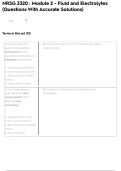
NRSG 3320 : Module 2 - Fluid and Electrolytes
(Questions With Accurate Solutions)
Save
Terms in this set (31)
A nurse is caring for a B. Urine output below 30 mL/hr indicates decreased
patient with suspected renal perfusion.
hypovolemia. Which
assessment finding requires
immediate intervention?
A. Dry mucous membranes
B. Urine output of 20 mL/hr
C. Blood pressure of 115/72
mmHg
D. Heart rate of 90 bpm
A nurse is assessing an B. Confusion in older adults can indicate severe
older adult with fluid dehydration.
volume deficit. Which
finding is most
concerning?
A. Decreased skin turgor
B. New-onset confusion
C. Blood pressure of 130/80
mmHg
D. Increased thirst
, Which patient is at highest A. Burns increase the risk of third-spacing.
risk for third-spacing of
fluids?
A. A patient with a burn
injury
B. A patient with chronic
kidney disease
C. A patient taking loop
diuretics
D. A patient with
hypoglycemia
A nurse is caring for a C. Crackles indicate fluid overload, a serious
patient receiving 3% NaCl complication.
IV for severe
hyponatremia. Which
assessment finding is most
concerning?
A. Increased thirst
B. Urine output of 40 mL/hr
C. Crackles in the lungs
D. Sodium level of 133
mEq/L
A nurse is caring for a B. Distended jugular veins suggest worsening fluid
postoperative patient who overload.
is at risk for fluid volume
excess. Which assessment
finding requires immediate
intervention?
A. 2+ pitting edema in the
lower extremities
B. Distended jugular veins
C. Urine output of 50 mL/hr
D. Blood pressure of 138/85
mmHg
(Questions With Accurate Solutions)
Save
Terms in this set (31)
A nurse is caring for a B. Urine output below 30 mL/hr indicates decreased
patient with suspected renal perfusion.
hypovolemia. Which
assessment finding requires
immediate intervention?
A. Dry mucous membranes
B. Urine output of 20 mL/hr
C. Blood pressure of 115/72
mmHg
D. Heart rate of 90 bpm
A nurse is assessing an B. Confusion in older adults can indicate severe
older adult with fluid dehydration.
volume deficit. Which
finding is most
concerning?
A. Decreased skin turgor
B. New-onset confusion
C. Blood pressure of 130/80
mmHg
D. Increased thirst
, Which patient is at highest A. Burns increase the risk of third-spacing.
risk for third-spacing of
fluids?
A. A patient with a burn
injury
B. A patient with chronic
kidney disease
C. A patient taking loop
diuretics
D. A patient with
hypoglycemia
A nurse is caring for a C. Crackles indicate fluid overload, a serious
patient receiving 3% NaCl complication.
IV for severe
hyponatremia. Which
assessment finding is most
concerning?
A. Increased thirst
B. Urine output of 40 mL/hr
C. Crackles in the lungs
D. Sodium level of 133
mEq/L
A nurse is caring for a B. Distended jugular veins suggest worsening fluid
postoperative patient who overload.
is at risk for fluid volume
excess. Which assessment
finding requires immediate
intervention?
A. 2+ pitting edema in the
lower extremities
B. Distended jugular veins
C. Urine output of 50 mL/hr
D. Blood pressure of 138/85
mmHg


