

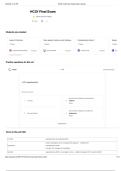
10/30/25, 4:16 PM NCOI Final Exam Flashcards | Quizlet
NCOI Final Exam
Leave the first rating
Save
Students also studied
types of fractures Bone Aging, Fractures, and Healing:... Fundamentals Exam II Surgery
15 terms 34 terms 97 terms 31 terms
mackenziebachman06 Preview averywilkins10 Preview smonarrez12 Preview sop
Practice questions for this set
Learn 1 /7 Study with Learn
- KCl supplements
Choose an answer
electrolyte imbalance assessment:
1 iv fluids 2 sodium
hypo
electrolyte imbalance treatment:
3 Normal Saline 4 potassium
hypo
Don't know?
Terms in this set (126)
iv fluids - maintenance and replacement
- lower osmolarity when compared to plasma -- dilutes ECF
hypotonic - maintenance fluids
- monitor for changes in mentation
isotonic - expands only ECF, no net gain or loss -- ideal to replace ECF volume deficit
https://quizlet.com/861751072/ncoi-final-exam-flash-cards/ 1/10
, 10/30/25, 4:16 PM NCOI Final Exam Flashcards | Quizlet
- used to replace water losses
D5W
- helps prevent ketosis
- NS
- 0.9% saline
Normal Saline - NSS
- used when both fluid and sodium is loss
- only solution used with BLOOD
- expands ECF, treats burns and GI losses
Lactated Ringers Solution
- contraindicated with liver dysfunction, hyperkalemia, and severe hypovolemia
hypertonic - draws water out of the cell into ECF
D5 1/2 NS - maintenance fluid, replaces fluid loss
-provides free water but no electrolytes
D10W
- limit of dextrose concentration that may be infused peripherally
- stay in vascular space and increases oncotic pressure
colloids
- human plasma products, semisynthetic
sodium - generating nerve infuses, muscle contractility, and regulates acid-base balance
electrolyte imbalance assessment: - thirst
sodium - mental changes
hyper - fluid volume deficit symptoms
- headache
- irritability
electrolyte imbalance assessment: - difficulty concentrating
sodium - confusion
hypo - vomiting
- seizures
- coma
- resting membrane potential of nerve and muscle cells, cellular growth, cardiac
potassium
rhythm, and acid-base balance
- dysrhythmias
- fatigue
electrolyte imbalance assessment:
- confusion
potassium
- muscle cramps
hyper
- weak or paralyzed skeletal muscles
- abdominal cramping or diarrhea
- leg weakness
electrolyte imbalance assessment:
- weakness of respiratory muscles
potassium
- decreased GI motility
hypo
- hyperglycemia
- formation of teeth and bones, blood clotting, transmission of nerve impulses,
calcium
myocardial contractions, and muscle contraction
https://quizlet.com/861751072/ncoi-final-exam-flash-cards/ 2/10
NCOI Final Exam
Leave the first rating
Save
Students also studied
types of fractures Bone Aging, Fractures, and Healing:... Fundamentals Exam II Surgery
15 terms 34 terms 97 terms 31 terms
mackenziebachman06 Preview averywilkins10 Preview smonarrez12 Preview sop
Practice questions for this set
Learn 1 /7 Study with Learn
- KCl supplements
Choose an answer
electrolyte imbalance assessment:
1 iv fluids 2 sodium
hypo
electrolyte imbalance treatment:
3 Normal Saline 4 potassium
hypo
Don't know?
Terms in this set (126)
iv fluids - maintenance and replacement
- lower osmolarity when compared to plasma -- dilutes ECF
hypotonic - maintenance fluids
- monitor for changes in mentation
isotonic - expands only ECF, no net gain or loss -- ideal to replace ECF volume deficit
https://quizlet.com/861751072/ncoi-final-exam-flash-cards/ 1/10
, 10/30/25, 4:16 PM NCOI Final Exam Flashcards | Quizlet
- used to replace water losses
D5W
- helps prevent ketosis
- NS
- 0.9% saline
Normal Saline - NSS
- used when both fluid and sodium is loss
- only solution used with BLOOD
- expands ECF, treats burns and GI losses
Lactated Ringers Solution
- contraindicated with liver dysfunction, hyperkalemia, and severe hypovolemia
hypertonic - draws water out of the cell into ECF
D5 1/2 NS - maintenance fluid, replaces fluid loss
-provides free water but no electrolytes
D10W
- limit of dextrose concentration that may be infused peripherally
- stay in vascular space and increases oncotic pressure
colloids
- human plasma products, semisynthetic
sodium - generating nerve infuses, muscle contractility, and regulates acid-base balance
electrolyte imbalance assessment: - thirst
sodium - mental changes
hyper - fluid volume deficit symptoms
- headache
- irritability
electrolyte imbalance assessment: - difficulty concentrating
sodium - confusion
hypo - vomiting
- seizures
- coma
- resting membrane potential of nerve and muscle cells, cellular growth, cardiac
potassium
rhythm, and acid-base balance
- dysrhythmias
- fatigue
electrolyte imbalance assessment:
- confusion
potassium
- muscle cramps
hyper
- weak or paralyzed skeletal muscles
- abdominal cramping or diarrhea
- leg weakness
electrolyte imbalance assessment:
- weakness of respiratory muscles
potassium
- decreased GI motility
hypo
- hyperglycemia
- formation of teeth and bones, blood clotting, transmission of nerve impulses,
calcium
myocardial contractions, and muscle contraction
https://quizlet.com/861751072/ncoi-final-exam-flash-cards/ 2/10


