

Blood Pressure and the Kidney
The controls and effects of the renin-angiotensin-aldosterone system
The control of atrial natriuretic peptide (ANP) release from the atrial
wall in response to hypervolaemia and atrial stretch and how it leads to
an increase in urinary sodium excretion
Pressure natriuresis (ie. the natriuresis caused by rises in arterial blood
pressure)
How losses and gains of body sodium influence ECF volume, plasma
volume and blood pressure
The mechanisms by which the kidneys can contribute to arterial
hypertension via salt and water retention
The mechanisms by which the kidneys can contribute to arterial
hypertension by their role in the excessive angiotensin II production
Relationship Between Salt Intake (Na+) and Blood Pressure
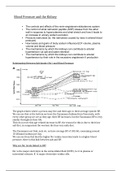
The graph relates where a person may live and their age, to their average systolic BP.
We can see that at the bottom we have the Yanomamo Indians from Venezuela, with
every other group we see as they age, their BP increases, but the Yanomamo BP is very
similar throughout their life.
They do not see this age-related increase in BP, the reason for this is due to their low
salt diet, in comparison the western diet has very salty diet.
The Yanomamo eat fruit, nuts etc. so have average BP of 100/60, consuming around
10-20mmol sodium per day.
We can see from this that the higher Na+ intake/excretion leads to a higher blood
pressure, there is this link between salt and BP.
Why are Na+ levels linked to BP?
Na+ is the major electrolyte in the extracellular fluid (ECFV), be it in plasma or
interstitial volumes. K+ is major electrolyte within cells.
, Changes in Na+ balance will lead to changes in osmolality, which will change ADH
release, this will then change how much water is reabsorbed or excreted in our urine,
therefore changing our ECFV (by increasing aquaporins).
Because we have changed our ECFV, this will mean changes in our blood volume and
interstitial volume.
(if you have increased salt intake and volume remains the same, osmolality will
increase, therefore to decrease it, body will add more water)
If we have changes in blood volume, this will have big effect on our stroke volume due
to increased ventricular filling so due to Starling’s law (increased preload) we have an
increase in stroke volume.
An increase in SV, will increase cardiac output, increased cardiac output means
increased BP (remember equation)
BP = CO x TPR
This controlling of Na+ levels and hence blood volume is a LONG-TERM control
mechanism of blood pressure (i.e. throughout the day). This is in contrast with the
baroreceptors, which exert a short term control (min-min, reflex control of postural
hypotension for example) of blood pressure via sympathetic system.
So this is why the Yanomamo people are sitting at a much lower BP, because of their
salt intake.
What Controls Na+ and Blood Volume
So Na+ levels are very important in controlling blood volume, hence Na+ is important in
controlling BP.
So changes in our intake of Na+ via diet, will result in change in ECFV (via ADH), this
will be sensed by afferent pathways (arriving), we also then have efferent outputs.
The change in volume will be sensed by the cardiac volume receptors, the
baroreceptors and importantly renal artery pressure (kidneys will sense how much
blood volume/BP has changed, this is important as this will affect our level of Na +
reabsorption.
So once we have sensed these changes in blood volume (due to the change in Na +) we
will then have efferent pathways to produce an output.
On a neuronal level, the sympathetic system will respond due to the baroreceptors and
renal arterial pressure changes.
We will also have hormonal responses, RAAS and ANP.
We will also have haemodynamic changes (changes in blood flow), this is seen
especially with blood flow through the kidney. There will be changes in GFR and in
pressure natriuresis (pressure related to how much Na + we get rid off).
All these efferent pathways will result in changes in renal Na + output
The controls and effects of the renin-angiotensin-aldosterone system
The control of atrial natriuretic peptide (ANP) release from the atrial
wall in response to hypervolaemia and atrial stretch and how it leads to
an increase in urinary sodium excretion
Pressure natriuresis (ie. the natriuresis caused by rises in arterial blood
pressure)
How losses and gains of body sodium influence ECF volume, plasma
volume and blood pressure
The mechanisms by which the kidneys can contribute to arterial
hypertension via salt and water retention
The mechanisms by which the kidneys can contribute to arterial
hypertension by their role in the excessive angiotensin II production
Relationship Between Salt Intake (Na+) and Blood Pressure
The graph relates where a person may live and their age, to their average systolic BP.
We can see that at the bottom we have the Yanomamo Indians from Venezuela, with
every other group we see as they age, their BP increases, but the Yanomamo BP is very
similar throughout their life.
They do not see this age-related increase in BP, the reason for this is due to their low
salt diet, in comparison the western diet has very salty diet.
The Yanomamo eat fruit, nuts etc. so have average BP of 100/60, consuming around
10-20mmol sodium per day.
We can see from this that the higher Na+ intake/excretion leads to a higher blood
pressure, there is this link between salt and BP.
Why are Na+ levels linked to BP?
Na+ is the major electrolyte in the extracellular fluid (ECFV), be it in plasma or
interstitial volumes. K+ is major electrolyte within cells.
, Changes in Na+ balance will lead to changes in osmolality, which will change ADH
release, this will then change how much water is reabsorbed or excreted in our urine,
therefore changing our ECFV (by increasing aquaporins).
Because we have changed our ECFV, this will mean changes in our blood volume and
interstitial volume.
(if you have increased salt intake and volume remains the same, osmolality will
increase, therefore to decrease it, body will add more water)
If we have changes in blood volume, this will have big effect on our stroke volume due
to increased ventricular filling so due to Starling’s law (increased preload) we have an
increase in stroke volume.
An increase in SV, will increase cardiac output, increased cardiac output means
increased BP (remember equation)
BP = CO x TPR
This controlling of Na+ levels and hence blood volume is a LONG-TERM control
mechanism of blood pressure (i.e. throughout the day). This is in contrast with the
baroreceptors, which exert a short term control (min-min, reflex control of postural
hypotension for example) of blood pressure via sympathetic system.
So this is why the Yanomamo people are sitting at a much lower BP, because of their
salt intake.
What Controls Na+ and Blood Volume
So Na+ levels are very important in controlling blood volume, hence Na+ is important in
controlling BP.
So changes in our intake of Na+ via diet, will result in change in ECFV (via ADH), this
will be sensed by afferent pathways (arriving), we also then have efferent outputs.
The change in volume will be sensed by the cardiac volume receptors, the
baroreceptors and importantly renal artery pressure (kidneys will sense how much
blood volume/BP has changed, this is important as this will affect our level of Na +
reabsorption.
So once we have sensed these changes in blood volume (due to the change in Na +) we
will then have efferent pathways to produce an output.
On a neuronal level, the sympathetic system will respond due to the baroreceptors and
renal arterial pressure changes.
We will also have hormonal responses, RAAS and ANP.
We will also have haemodynamic changes (changes in blood flow), this is seen
especially with blood flow through the kidney. There will be changes in GFR and in
pressure natriuresis (pressure related to how much Na + we get rid off).
All these efferent pathways will result in changes in renal Na + output


