

10/30/25, 4:46 PM COB300 Marketing Exam 1 Flashcards | Quizlet
Social Science Business Marketing
COB300 Marketing Exam 1
Leave the first rating
Save
Students also studied
Modern Fashion Retail Industry: Key... Persuasion Matrix, Source Credibilit... Chapter 4: External Secondary Rese... Market
51 terms 46 terms 20 terms 13 terms
nicolemoore2 Preview kendallcdavis2 Preview aleexandraa2 Preview rau
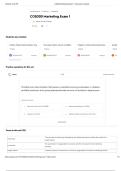
Practice questions for this set
Learn 1 /7 Study with Learn
Prohibits price discrimination that lessens competition among wholesalers or retailers;
prohibits producers from giving disproportionate services or facilities to large buyers
Choose an answer
1 Sherman Anti-trust Act (1890) 2 Robinson-Patman Act (1936)
3 Clayton Act (1914) 4 Federal Trade Commission Act (1914)
Don't know?
Terms in this set (129)
-The process of exploring, developing, and delivering value to satisfy the needs of a
marketing
target market
The purchasers of organizations' products and the focal point of all marketing
customers
activities
target market A specific group of customers on whom an organization focuses its marketing efforts
https://quizlet.com/1077006642/cob300-marketing-exam-1-flash-cards/ 1/6
, 10/30/25, 4:46 PM COB300 Marketing Exam 1 Flashcards | Quizlet
Four marketing variables—product, distribution, promotion, and pricing—that a firm
marketing mix
can control to meet the needs of customers within its target market
four external forces that impact marking Technological, Political/Legal/regulatory, economic, competitive, sociocultural
mix
A customer's subjective assessment of benefits relative to costs in determining the
value
worth of a product
Constituents who have a "stake," or claim, in some aspect of a company's products,
stakeholders operations, markets, industry, and outcomes (customers, employees, investors,
suppliers, etc.)
The competitive, economic, political/legal/ regulatory, technological, and
marketing environment
sociocultural forces that surround the customer and affect the marketing mix
A managerial philosophy that an organization should try to satisfy customers' needs
marketing concept through a coordinated set of activities that also allows the organization to achieve its
goals
An organization-wide commitment to researching and responding to customer
market orientation
needs that amerged in the mid-20th century
Using information about customers to create marketing strategies that develop and
customer relationship management (CRM)
sustain rewarding customer relationships
relationship marketing Establishing long-term, mutually satisfying buyer-seller relationships
A key measurement that forecasts a customer's lifetime economic contribution based
customer lifetime value (CLV)
on continued relationship marketing efforts
A strategic process involving stakeholder assessment to create meaningful long-
green marketing term relationships with customers while maintaining, supporting, and enhancing the
natural environment
A designation given to for-profit companies that have achieved private certifications
certified B corporation regarding their social and environmental performance and which also contribute to
environmental causes
The process of planning, implementing, and evaluating the performance of
strategic marketing management
marketing activities and strategies, both effectively and efficiently
strategic planning Defines a company's vision for the future and identifies its organizational objectives
mission statement A concise explanation of an organization's reason for being
Mission statement -> Corporate strategy -> Business-unit strategy -> marketing
Levels of Strategic planning
strategy -> Marketing mix elements
A long-term plan designed to help the firm gain a competitive advantage in the
corporate strategy
marketplace while creating customer value
Strategic business unit (SBU) A division, product line, or other profit center within the parent company
The percentage of a market that actually buys a specific product from a particular
market share
company
A helpful business tool, based on the philosophy that a product's market growth rate
market growth/market share mix and its market share are important considerations in determining its marketing
strategy
Dominant share of market & Good prospects for growth
Stars •Use more cash than generated to finance growth, add capacity, increase market
share
Dominant share of the market & Low prospects for growth
Cash Cows
•Generate more cash than is required to maintain market share
https://quizlet.com/1077006642/cob300-marketing-exam-1-flash-cards/ 2/6
Social Science Business Marketing
COB300 Marketing Exam 1
Leave the first rating
Save
Students also studied
Modern Fashion Retail Industry: Key... Persuasion Matrix, Source Credibilit... Chapter 4: External Secondary Rese... Market
51 terms 46 terms 20 terms 13 terms
nicolemoore2 Preview kendallcdavis2 Preview aleexandraa2 Preview rau
Practice questions for this set
Learn 1 /7 Study with Learn
Prohibits price discrimination that lessens competition among wholesalers or retailers;
prohibits producers from giving disproportionate services or facilities to large buyers
Choose an answer
1 Sherman Anti-trust Act (1890) 2 Robinson-Patman Act (1936)
3 Clayton Act (1914) 4 Federal Trade Commission Act (1914)
Don't know?
Terms in this set (129)
-The process of exploring, developing, and delivering value to satisfy the needs of a
marketing
target market
The purchasers of organizations' products and the focal point of all marketing
customers
activities
target market A specific group of customers on whom an organization focuses its marketing efforts
https://quizlet.com/1077006642/cob300-marketing-exam-1-flash-cards/ 1/6
, 10/30/25, 4:46 PM COB300 Marketing Exam 1 Flashcards | Quizlet
Four marketing variables—product, distribution, promotion, and pricing—that a firm
marketing mix
can control to meet the needs of customers within its target market
four external forces that impact marking Technological, Political/Legal/regulatory, economic, competitive, sociocultural
mix
A customer's subjective assessment of benefits relative to costs in determining the
value
worth of a product
Constituents who have a "stake," or claim, in some aspect of a company's products,
stakeholders operations, markets, industry, and outcomes (customers, employees, investors,
suppliers, etc.)
The competitive, economic, political/legal/ regulatory, technological, and
marketing environment
sociocultural forces that surround the customer and affect the marketing mix
A managerial philosophy that an organization should try to satisfy customers' needs
marketing concept through a coordinated set of activities that also allows the organization to achieve its
goals
An organization-wide commitment to researching and responding to customer
market orientation
needs that amerged in the mid-20th century
Using information about customers to create marketing strategies that develop and
customer relationship management (CRM)
sustain rewarding customer relationships
relationship marketing Establishing long-term, mutually satisfying buyer-seller relationships
A key measurement that forecasts a customer's lifetime economic contribution based
customer lifetime value (CLV)
on continued relationship marketing efforts
A strategic process involving stakeholder assessment to create meaningful long-
green marketing term relationships with customers while maintaining, supporting, and enhancing the
natural environment
A designation given to for-profit companies that have achieved private certifications
certified B corporation regarding their social and environmental performance and which also contribute to
environmental causes
The process of planning, implementing, and evaluating the performance of
strategic marketing management
marketing activities and strategies, both effectively and efficiently
strategic planning Defines a company's vision for the future and identifies its organizational objectives
mission statement A concise explanation of an organization's reason for being
Mission statement -> Corporate strategy -> Business-unit strategy -> marketing
Levels of Strategic planning
strategy -> Marketing mix elements
A long-term plan designed to help the firm gain a competitive advantage in the
corporate strategy
marketplace while creating customer value
Strategic business unit (SBU) A division, product line, or other profit center within the parent company
The percentage of a market that actually buys a specific product from a particular
market share
company
A helpful business tool, based on the philosophy that a product's market growth rate
market growth/market share mix and its market share are important considerations in determining its marketing
strategy
Dominant share of market & Good prospects for growth
Stars •Use more cash than generated to finance growth, add capacity, increase market
share
Dominant share of the market & Low prospects for growth
Cash Cows
•Generate more cash than is required to maintain market share
https://quizlet.com/1077006642/cob300-marketing-exam-1-flash-cards/ 2/6


