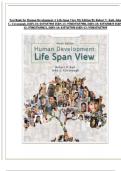
, TESTXtBANKXtFORXtHUMANXtDEVELOPMENT:XtAXtLIFE-
SPANXtVIEWXt9thXtEDITIONXtROBERTXtV.XtKAILXtJOHNXtC.XtCAVANAUGHX t ISBN-10:Xt1337554839
ISBN-13:Xt9781337554831
Table Of Contents
Xt Xt
1. The Study of Human Development.
Xt Xt Xt Xt
Part I: PRENATAL DEVELOPMENT, INFANCY, AND EARLY CHILDHOOD.
Xt Xt Xt Xt Xt Xt Xt
2. Biological Foundations: Heredity, Prenatal Development, and Birth.
Xt Xt Xt Xt Xt Xt
3. Tools for Exploring the World: Physical, Perceptual, and Motor Development.
Xt Xt Xt Xt Xt Xt Xt Xt Xt
4. The Emergence of Thought and Language: Cognitive Development in Infancy and Early Childhood.
Xt Xt Xt Xt Xt Xt Xt Xt Xt Xt Xt Xt
5. Entering the Social World: Socioemotional Development in Infancy and Early Childhood.
Xt Xt Xt Xt Xt Xt Xt Xt Xt Xt
Part II: SCHOOL-AGE CHILDREN AND ADOLESCENTS.
Xt Xt Xt Xt Xt
6. Off to School: Cognitive and Physical Development in Middle Childhood.
Xt Xt Xt Xt Xt Xt Xt Xt Xt
7. Expanding Social Horizons: Socioemotional Development in Middle Childhood.
Xt Xt Xt Xt Xt Xt Xt
8. Rites of Passage: Physical and Cognitive Development in Adolescence.
Xt Xt Xt Xt Xt Xt Xt Xt
9. Moving Into the Adult Social World: Socioemotional Development in Adolescence.
Xt Xt Xt Xt Xt Xt Xt Xt Xt
Part III: YOUNG AND MIDDLE ADULTHOOD.
Xt Xt Xt Xt Xt
10. Becoming an Adult: Physical, Cognitive, and Personality Development in Young Adulthood.
Xt Xt Xt Xt Xt Xt Xt Xt Xt Xt
11. Being With Others: Forming Relationships in Young and Middle Adulthood.
Xt Xt Xt Xt Xt Xt Xt Xt Xt
12. Work, Leisure, and Retirement.
Xt Xt Xt
13. Making It in Midlife: The Biopsychosocial Challenges of Middle Adulthood.
Xt Xt Xt Xt Xt Xt Xt Xt Xt
Part IV: LATE ADULTHOOD.
Xt Xt Xt
14. The Personal Context of Later Life: Physical, Cognitive, and Mental Health Issues.
Xt Xt Xt Xt Xt Xt Xt Xt Xt Xt Xt
15. Social Aspects of Later Life: Psychosocial, Retirement, Relationship, and Societal Issues.
Xt Xt Xt Xt Xt Xt Xt Xt Xt Xt
16. The Final Passage: Dying and Bereavement.
Xt Xt Xt Xt Xt
,1. The scientific study of human development can best be described as
Xt Xt Xt Xt Xt Xt Xt Xt Xt Xt
*a. multidisciplinary
Xt
b. focused on groups rather than individuals Xt Xt Xt Xt Xt
c. non-theoretical
d. emphasizing stability over change Xt Xt Xt
2. Which term does not belong in this group?
Xt Xt Xt Xt Xt Xt Xt
a. experiential
b. nurture
c. environmental
*d. hereditary Xt
3. Dr. Kim takes a strong nature position with regard to the origins of intellectual
Xt Xt Xt Xt Xt Xt Xt Xt Xt Xt Xt Xt Xt Xt
disabilities. Therefore, she would most likely hypothesize that her son‘s intellectu
Xt Xt Xt Xt Xt Xt Xt Xt Xt Xt Xt
al disability (formally known as mental retardation) is due to
Xt Xt Xt Xt Xt Xt Xt Xt Xt
a. her parenting style
Xt Xt Xt
*b. his genes Xt Xt
c. his exposure to a toxic chemical prior to birth
Xt Xt Xt Xt Xt Xt Xt Xt Xt
d. his exposure to Rubella prior to birth
Xt Xt Xt Xt Xt Xt Xt
4. The notion that development is best described in terms of a series of abrupt s h
Xt Xt Xt Xt Xt Xt Xt Xt Xt Xt Xt Xt Xt Xt Xt
ifts in behavior best fits with the
Xt Xt approach. Xt Xt Xt Xt XtX t X t X t
a. nature
b. nurture
c. continuity
*d. discontinuity Xt
5. Cleo, a director of a daycare, uses terms like ―pre-K,‖ ―K-3,‖ and the ―upper-
Xt Xt Xt Xt Xt Xt Xt Xt Xt Xt Xt Xt Xt
ele mentary.‖ These ideas are most compatible with a
Xt Xt view. Xt Xt Xt Xt Xt Xt XtX t X t X t
a. context-specificity
b. hereditary
, c. continuity
*d. discontinuity
Xt
6. Dr. Fletcher is attempting to determine whether adult criminals were rule-
Xt Xt Xt Xt Xt Xt Xt Xt Xt Xt
break ers throughout their childhood or whether they suddenly turned to a life of cr
Xt Xt Xt Xt Xt Xt Xt Xt Xt Xt Xt Xt Xt Xt
ime. Her research is most concerned with which issue of human development?
Xt Xt Xt Xt Xt Xt Xt Xt Xt Xt Xt
a. nature versus nurture Xt Xt
b. universal versus context-specific development Xt Xt Xt
c. biological versus sociocultural forces Xt Xt Xt
*d. continuity versus discontinuity
Xt Xt Xt
7. Mustafa is interested in determining whether children develop virtually the sa
Xt Xt Xt Xt Xt Xt Xt Xt Xt Xt Xt
me way in Algeria as they do in other parts of the world. Mustafa‘s research deals
Xt Xt Xt Xt Xt Xt Xt Xt Xt Xt Xt Xt Xt Xt Xt Xt
primarily with the issue of human development.
Xt Xt Xt Xt Xt Xt
a. psychological versus biological forces
Xt Xt Xt Xt
*b. universal versus context-specific development
Xt Xt Xt Xt
c. nature versus nurture
Xt Xt Xt
d. continuity versus discontinuity
Xt Xt Xt
8. When Clarisse says, ―It doesn‘t matter if they are French, Swedish, or Chinese,
Xt Xt Xt Xt Xt Xt Xt Xt Xt Xt Xt Xt Xt
kids are kids,‖ she is espousing a
Xt Xt position concerning human development.
Xt Xt Xt Xt Xt Xt Xt Xt
a. discontinuous
Xt
*b. universal Xt
c. nurtureXt
d. context-specific
Xt
9. Viviana notices that children seem to mature socially much faster in Costa Ric
Xt Xt Xt Xt Xt Xt Xt Xt Xt Xt Xt Xt Xt
a than in the Canada. Viviana is most likely to support a
Xt Xt Xt Xt position regarding h Xt Xt Xt Xt Xt Xt Xt XtX t X t Xt Xt X
uman development.
t Xt
a. nature
b. discontinuous
*c. context-specific
Xt
SPANXtVIEWXt9thXtEDITIONXtROBERTXtV.XtKAILXtJOHNXtC.XtCAVANAUGHX t ISBN-10:Xt1337554839
ISBN-13:Xt9781337554831
Table Of Contents
Xt Xt
1. The Study of Human Development.
Xt Xt Xt Xt
Part I: PRENATAL DEVELOPMENT, INFANCY, AND EARLY CHILDHOOD.
Xt Xt Xt Xt Xt Xt Xt
2. Biological Foundations: Heredity, Prenatal Development, and Birth.
Xt Xt Xt Xt Xt Xt
3. Tools for Exploring the World: Physical, Perceptual, and Motor Development.
Xt Xt Xt Xt Xt Xt Xt Xt Xt
4. The Emergence of Thought and Language: Cognitive Development in Infancy and Early Childhood.
Xt Xt Xt Xt Xt Xt Xt Xt Xt Xt Xt Xt
5. Entering the Social World: Socioemotional Development in Infancy and Early Childhood.
Xt Xt Xt Xt Xt Xt Xt Xt Xt Xt
Part II: SCHOOL-AGE CHILDREN AND ADOLESCENTS.
Xt Xt Xt Xt Xt
6. Off to School: Cognitive and Physical Development in Middle Childhood.
Xt Xt Xt Xt Xt Xt Xt Xt Xt
7. Expanding Social Horizons: Socioemotional Development in Middle Childhood.
Xt Xt Xt Xt Xt Xt Xt
8. Rites of Passage: Physical and Cognitive Development in Adolescence.
Xt Xt Xt Xt Xt Xt Xt Xt
9. Moving Into the Adult Social World: Socioemotional Development in Adolescence.
Xt Xt Xt Xt Xt Xt Xt Xt Xt
Part III: YOUNG AND MIDDLE ADULTHOOD.
Xt Xt Xt Xt Xt
10. Becoming an Adult: Physical, Cognitive, and Personality Development in Young Adulthood.
Xt Xt Xt Xt Xt Xt Xt Xt Xt Xt
11. Being With Others: Forming Relationships in Young and Middle Adulthood.
Xt Xt Xt Xt Xt Xt Xt Xt Xt
12. Work, Leisure, and Retirement.
Xt Xt Xt
13. Making It in Midlife: The Biopsychosocial Challenges of Middle Adulthood.
Xt Xt Xt Xt Xt Xt Xt Xt Xt
Part IV: LATE ADULTHOOD.
Xt Xt Xt
14. The Personal Context of Later Life: Physical, Cognitive, and Mental Health Issues.
Xt Xt Xt Xt Xt Xt Xt Xt Xt Xt Xt
15. Social Aspects of Later Life: Psychosocial, Retirement, Relationship, and Societal Issues.
Xt Xt Xt Xt Xt Xt Xt Xt Xt Xt
16. The Final Passage: Dying and Bereavement.
Xt Xt Xt Xt Xt
,1. The scientific study of human development can best be described as
Xt Xt Xt Xt Xt Xt Xt Xt Xt Xt
*a. multidisciplinary
Xt
b. focused on groups rather than individuals Xt Xt Xt Xt Xt
c. non-theoretical
d. emphasizing stability over change Xt Xt Xt
2. Which term does not belong in this group?
Xt Xt Xt Xt Xt Xt Xt
a. experiential
b. nurture
c. environmental
*d. hereditary Xt
3. Dr. Kim takes a strong nature position with regard to the origins of intellectual
Xt Xt Xt Xt Xt Xt Xt Xt Xt Xt Xt Xt Xt Xt
disabilities. Therefore, she would most likely hypothesize that her son‘s intellectu
Xt Xt Xt Xt Xt Xt Xt Xt Xt Xt Xt
al disability (formally known as mental retardation) is due to
Xt Xt Xt Xt Xt Xt Xt Xt Xt
a. her parenting style
Xt Xt Xt
*b. his genes Xt Xt
c. his exposure to a toxic chemical prior to birth
Xt Xt Xt Xt Xt Xt Xt Xt Xt
d. his exposure to Rubella prior to birth
Xt Xt Xt Xt Xt Xt Xt
4. The notion that development is best described in terms of a series of abrupt s h
Xt Xt Xt Xt Xt Xt Xt Xt Xt Xt Xt Xt Xt Xt Xt
ifts in behavior best fits with the
Xt Xt approach. Xt Xt Xt Xt XtX t X t X t
a. nature
b. nurture
c. continuity
*d. discontinuity Xt
5. Cleo, a director of a daycare, uses terms like ―pre-K,‖ ―K-3,‖ and the ―upper-
Xt Xt Xt Xt Xt Xt Xt Xt Xt Xt Xt Xt Xt
ele mentary.‖ These ideas are most compatible with a
Xt Xt view. Xt Xt Xt Xt Xt Xt XtX t X t X t
a. context-specificity
b. hereditary
, c. continuity
*d. discontinuity
Xt
6. Dr. Fletcher is attempting to determine whether adult criminals were rule-
Xt Xt Xt Xt Xt Xt Xt Xt Xt Xt
break ers throughout their childhood or whether they suddenly turned to a life of cr
Xt Xt Xt Xt Xt Xt Xt Xt Xt Xt Xt Xt Xt Xt
ime. Her research is most concerned with which issue of human development?
Xt Xt Xt Xt Xt Xt Xt Xt Xt Xt Xt
a. nature versus nurture Xt Xt
b. universal versus context-specific development Xt Xt Xt
c. biological versus sociocultural forces Xt Xt Xt
*d. continuity versus discontinuity
Xt Xt Xt
7. Mustafa is interested in determining whether children develop virtually the sa
Xt Xt Xt Xt Xt Xt Xt Xt Xt Xt Xt
me way in Algeria as they do in other parts of the world. Mustafa‘s research deals
Xt Xt Xt Xt Xt Xt Xt Xt Xt Xt Xt Xt Xt Xt Xt Xt
primarily with the issue of human development.
Xt Xt Xt Xt Xt Xt
a. psychological versus biological forces
Xt Xt Xt Xt
*b. universal versus context-specific development
Xt Xt Xt Xt
c. nature versus nurture
Xt Xt Xt
d. continuity versus discontinuity
Xt Xt Xt
8. When Clarisse says, ―It doesn‘t matter if they are French, Swedish, or Chinese,
Xt Xt Xt Xt Xt Xt Xt Xt Xt Xt Xt Xt Xt
kids are kids,‖ she is espousing a
Xt Xt position concerning human development.
Xt Xt Xt Xt Xt Xt Xt Xt
a. discontinuous
Xt
*b. universal Xt
c. nurtureXt
d. context-specific
Xt
9. Viviana notices that children seem to mature socially much faster in Costa Ric
Xt Xt Xt Xt Xt Xt Xt Xt Xt Xt Xt Xt Xt
a than in the Canada. Viviana is most likely to support a
Xt Xt Xt Xt position regarding h Xt Xt Xt Xt Xt Xt Xt XtX t X t Xt Xt X
uman development.
t Xt
a. nature
b. discontinuous
*c. context-specific
Xt