
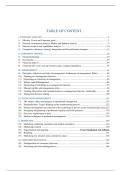
TABLE OF CONTENT
I. STRATEGIC ANALYSIS .................................................................................................... 2
1) Mission, Vision and Corporate goals ..............................................................................................2
2) External environment analysis, Market and Industry analysis .......................................................4
3) Internal resources and capabilities analysis ..................................................................................10
4) Competitive (business) strategy, integration and diversification strategies ..................................15
II. CORPORATE FINANCE................................................................................................. 20
5) Financial planning ........................................................................................................................20
6) Investments ...................................................................................................................................29
7) Financial analysis..........................................................................................................................44
8) Corporate life cycle: start-up, business plan, company liquidation ..............................................58
III. MANAGEMENT ......................................................................................................... 69
9) Principles, objectives and tasks of management, fundaments of management. Ethics.................69
10) Planning as a management function............................................................................................79
11) Organizing as a function of management....................................................................................84
12) Human capital Management .......................................................................................................88
13) Monitoring (Controlling) as a management function..................................................................93
14) Manager profile and management styles ....................................................................................94
15) Leading, Motivation and Communication as a management function. Leadership ....................98
16) Managerial decision making .....................................................................................................108
IV. OPERATIONS MANAGEMENT .................................................................................. 112
17) The subject, object and purpose of operational management ...................................................112
18) Standardization, Target, Binding on the manufacturing process ..............................................122
19) Product development and selection of the technological process in the manufacturing sector 127
20) Designing and planning of production capacity and work practices ........................................130
21) Processes organization in time ..................................................................................................134
22) Modern techniques of production management ........................................................................139
V. MARKETING ........................................................................................................... 144
23) Marketing, marketing conception and market orientation .......................................................144
24) Marketing research ...................................................................................................................146
25) Segmentation and targeting ........................................................ Error! Bookmark not defined.
26) Branding ...................................................................................................................................151
27) Marketing mix: product, price, promotion, place ....................................................................154
VI. CONSUMER BEHAVIOUR ......................................................................................... 165
28) Predisposition of consumer behaviour .....................................................................................165
29) Purchasing decision-making process ........................................................................................165
, STATE EXAMS
I. STRATEGIC ANALYSIS
Strategy is the pattern of decisions in a company that 1) determines and reveals its objectives, purposes, or
goals, 2) produces the principal policies and plans for achieving those goals and 3) defines the range of
business the company is to pursue, 4) the kind of economic and human organization it is or intends to be and
5) the nature of the economic and noneconomic contribution it intends to make to its shareholders,
employees, customers, and communities.
Competitive strategy is about being different. It means consciously choose a different set of activities and using
them to create a unique combination of values.“ (Porter)
1) Mission, Vision and Corporate goals
Mission Statement
− Describes what is the company purpose (what and for whom) - focus is on today
− Answers the questions:
o What exactly do we do?
o What business are we in?
o For whom we do it?
o Where we want to be in 5,10,15 years?
− No more than 20 words.
Examples:
“To Bring Inspiration and innovation to every athlete in the world.” - Nike
Vision
− What the company aspires to be - focus on the future, the desired end state:
− Question: What do we want to achieve?
− Corporate ideology = key values, main reason of the existence
− Future vision: what do we want to achieve, what we want to be
, − Types:
o Quantitative formulation:
▪ We would like to be market leader or number 2 on the Czech market within next 5 years
▪ Within next three years we would like to achieve a turnover of more than 3 mil CZK
o Qualitative formulation
▪ There will not be anybody who does not know our company in next 5 years.
− Vision should be:
Imaginable Clearly demonstrates the desirable future development of the
company and its market position
Desirable It meets all stakeholder expectations, appeals to the long term
interests
Accessible Takes into account the capabilities and resources of the company, it
sets realistic and attainable goals
Specific It focuses on specific success factors, clear enough to provide
guidance
Flexible Allows adjustment to changing market conditions
Communicable It could be communicated in 10-15 minutes, easily and successfully
explained
Example:
“Become the most competitive company in the world to become a leader or number two in every market in
which we operate.”
“We bring good thing to life!”
“To be the global organization which delivers to all the inhabitants of our planet news from the economy”
Corporate goals
− Corporate Goals are targets set by an organization as specific, quantifiable outcomes that it commits to
attain in order to achieve its corporate mission and objectives.
o eg. Increase profitability, market share, expanding current product line
− Not always it is just to make profit, but mainly increasing value of the company
o Value = worth of assets, value of future incomes, value for shareholders, etc..
o Profit is just one-year income less costs: rather short term
o Corporate goals can be:
▪ Complementary
▪ Independent
▪ Conflicting
• Goals should not be conflicting:
• Example: increase employees’ salaries while being profitable
• Employ new environment protection measure while stay profitable
• In the shorter run the goals are usually conflicting but in the longer run they
are complimentary
, How Czech companies measure their success
Remember to use SMART = specific, measurable, achievable, relevant, time-based method, to when forming
mission, vision and corporate goals.
2) External environment analysis, Market and Industry analysis
Macro External environment analysis
External environment (or Macro environment) includes all the factors which can affect the business but which
the business cannot control itself (e.g. business's industry, competition, political, social environments,..)
− The analysis discusses opportunities the business can pursue and threats that could negatively impact it.
− Goal is to find out how the business can take advantage of opportunities and either overcome or minimize
its threats (constant moitoring of the environment is thus required)
Example of Macro analysis
I. STRATEGIC ANALYSIS .................................................................................................... 2
1) Mission, Vision and Corporate goals ..............................................................................................2
2) External environment analysis, Market and Industry analysis .......................................................4
3) Internal resources and capabilities analysis ..................................................................................10
4) Competitive (business) strategy, integration and diversification strategies ..................................15
II. CORPORATE FINANCE................................................................................................. 20
5) Financial planning ........................................................................................................................20
6) Investments ...................................................................................................................................29
7) Financial analysis..........................................................................................................................44
8) Corporate life cycle: start-up, business plan, company liquidation ..............................................58
III. MANAGEMENT ......................................................................................................... 69
9) Principles, objectives and tasks of management, fundaments of management. Ethics.................69
10) Planning as a management function............................................................................................79
11) Organizing as a function of management....................................................................................84
12) Human capital Management .......................................................................................................88
13) Monitoring (Controlling) as a management function..................................................................93
14) Manager profile and management styles ....................................................................................94
15) Leading, Motivation and Communication as a management function. Leadership ....................98
16) Managerial decision making .....................................................................................................108
IV. OPERATIONS MANAGEMENT .................................................................................. 112
17) The subject, object and purpose of operational management ...................................................112
18) Standardization, Target, Binding on the manufacturing process ..............................................122
19) Product development and selection of the technological process in the manufacturing sector 127
20) Designing and planning of production capacity and work practices ........................................130
21) Processes organization in time ..................................................................................................134
22) Modern techniques of production management ........................................................................139
V. MARKETING ........................................................................................................... 144
23) Marketing, marketing conception and market orientation .......................................................144
24) Marketing research ...................................................................................................................146
25) Segmentation and targeting ........................................................ Error! Bookmark not defined.
26) Branding ...................................................................................................................................151
27) Marketing mix: product, price, promotion, place ....................................................................154
VI. CONSUMER BEHAVIOUR ......................................................................................... 165
28) Predisposition of consumer behaviour .....................................................................................165
29) Purchasing decision-making process ........................................................................................165
, STATE EXAMS
I. STRATEGIC ANALYSIS
Strategy is the pattern of decisions in a company that 1) determines and reveals its objectives, purposes, or
goals, 2) produces the principal policies and plans for achieving those goals and 3) defines the range of
business the company is to pursue, 4) the kind of economic and human organization it is or intends to be and
5) the nature of the economic and noneconomic contribution it intends to make to its shareholders,
employees, customers, and communities.
Competitive strategy is about being different. It means consciously choose a different set of activities and using
them to create a unique combination of values.“ (Porter)
1) Mission, Vision and Corporate goals
Mission Statement
− Describes what is the company purpose (what and for whom) - focus is on today
− Answers the questions:
o What exactly do we do?
o What business are we in?
o For whom we do it?
o Where we want to be in 5,10,15 years?
− No more than 20 words.
Examples:
“To Bring Inspiration and innovation to every athlete in the world.” - Nike
Vision
− What the company aspires to be - focus on the future, the desired end state:
− Question: What do we want to achieve?
− Corporate ideology = key values, main reason of the existence
− Future vision: what do we want to achieve, what we want to be
, − Types:
o Quantitative formulation:
▪ We would like to be market leader or number 2 on the Czech market within next 5 years
▪ Within next three years we would like to achieve a turnover of more than 3 mil CZK
o Qualitative formulation
▪ There will not be anybody who does not know our company in next 5 years.
− Vision should be:
Imaginable Clearly demonstrates the desirable future development of the
company and its market position
Desirable It meets all stakeholder expectations, appeals to the long term
interests
Accessible Takes into account the capabilities and resources of the company, it
sets realistic and attainable goals
Specific It focuses on specific success factors, clear enough to provide
guidance
Flexible Allows adjustment to changing market conditions
Communicable It could be communicated in 10-15 minutes, easily and successfully
explained
Example:
“Become the most competitive company in the world to become a leader or number two in every market in
which we operate.”
“We bring good thing to life!”
“To be the global organization which delivers to all the inhabitants of our planet news from the economy”
Corporate goals
− Corporate Goals are targets set by an organization as specific, quantifiable outcomes that it commits to
attain in order to achieve its corporate mission and objectives.
o eg. Increase profitability, market share, expanding current product line
− Not always it is just to make profit, but mainly increasing value of the company
o Value = worth of assets, value of future incomes, value for shareholders, etc..
o Profit is just one-year income less costs: rather short term
o Corporate goals can be:
▪ Complementary
▪ Independent
▪ Conflicting
• Goals should not be conflicting:
• Example: increase employees’ salaries while being profitable
• Employ new environment protection measure while stay profitable
• In the shorter run the goals are usually conflicting but in the longer run they
are complimentary
, How Czech companies measure their success
Remember to use SMART = specific, measurable, achievable, relevant, time-based method, to when forming
mission, vision and corporate goals.
2) External environment analysis, Market and Industry analysis
Macro External environment analysis
External environment (or Macro environment) includes all the factors which can affect the business but which
the business cannot control itself (e.g. business's industry, competition, political, social environments,..)
− The analysis discusses opportunities the business can pursue and threats that could negatively impact it.
− Goal is to find out how the business can take advantage of opportunities and either overcome or minimize
its threats (constant moitoring of the environment is thus required)
Example of Macro analysis


