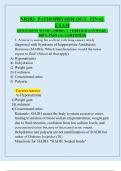
Nr283- Pathophysiology- Final Exam Questions With Correct Verified Answers | 100% Pass (A+ Certified)
NR283- PATHOPHYSIOLOGY- FINAL EXAM QUESTIONS WITH CORRECT VERIFIED ANSWERS | 100% PASS (A+ CERTIFIED) 1. A nurse is caring for a client with lung cancer newly diagnosed with Syndrome of Inappropriate Antidiuretic Hormone (SIADH). Which manifestations would the nurse expect to find? (Select all that apply) A) Hyponatremia B) Dehydration C) Weight gain D) Confusion E) Concentrated urine F) Polyuria Correct Answer A) Hyponatremia C) Weight gain D) Confusion E) Concentrated urine Rationale: SIADH causes the body to retain excessive water, leading to dilution of blood sodium (hyponatremia), weight gain due to fluid retention, confusion from low sodium levels, and concentrated urine because of decreased urine output. Dehydration and polyuria are not manifestations of SIADH but rather of Diabetes Insipidus (DI). Mnemonic for SIADH: "SIADH: Soaked Inside" Swelling (edema) Increased weight (water gain) Altered urine output (decreased urination) Diluted blood Hyperhydration 2. A nurse is assessing a patient with Diabetes Insipidus (DI). Which of the following manifestations would the nurse expect to find? (Select all that apply) A) Dehydration B) Edema C) Sudden weight loss D) Increased urination (very watery/diluted)- polyuria E) Weight gain Correct Answer A) Dehydration C) Sudden weight loss D) Increased urination (very watery/diluted)- polyuria Rationale: DI is characterized by a deficiency of antidiuretic hormone (ADH), leading to excessive urination (polyuria) of very diluted urine, dehydration, and sudden weight loss due to water loss. Edema and weight gain are associated with SIADH. Mnemonic for DI: "DI: Dry Inside" Dehydration Rapid weight loss (water loss) Yearly thirst (persistent thirst) 3. A nurse is assessing a patient for hypothyroidism. Which of the following manifestations would the nurse expect to find? (Select all that apply) A) Thin, silky hair B) Weight gain C) Fatigue D) Shakiness E) Puffy eyes and face F) Increased metabolism Correct Answer B) Weight gain C) Fatigue E) Puffy eyes and face Rationale: Hypothyroidism is characterized by a decrease in thyroid hormone production, leading to symptoms such as weight gain, fatigue, and puffy eyes and face. Thin, silky hair and increased metabolism are more indicative of hyperthyroidism.
Document information
- Uploaded on
- October 22, 2025
- Number of pages
- 14
- Written in
- 2025/2026
- Type
- Exam (elaborations)
- Contains
- Questions & answers