
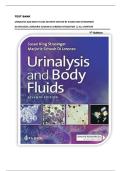
TEST BANK
URINALYSIS AND BODY FLUIDS SEVENTH EDITION BY SUSAN KING STRASINGER
DA MT(ASCP), MARJORIE SCHAUB DI LORENZO MT(ASCP)SH || ALL CHAPTERS
7th Edition
,Table Of Contents
Part One: Basic Principles ............................................................................................................... 3
Chapter 1: Safety And Quality Management .............................................................................. 3
Chapter 2: Urine And Body Fluid Analysis Automation ............................................................ 34
Chapter 3: Introduction To Urinalysis ....................................................................................... 44
Chapter 4: Renal Function......................................................................................................... 69
Part Two: Urinalysis ..................................................................................................................... 111
Chapter 5: Physical Examination Of Urine .............................................................................. 111
Chapter 6: Chemical Examination Of Urine ............................................................................ 132
Chapter 7: Microscopic Examination Of Urine........................................................................ 183
Chapter 8: Renal Disease ........................................................................................................ 245
Chapter 9: Urine Screening For Metabolic Disorders ............................................................. 277
Part Three: Other Body Fluids ..................................................................................................... 315
Chapter 10: Cerebrospinal Fluid ............................................................................................. 315
Chapter 11: Semen.................................................................................................................. 359
Chapter 12: Synovial Fluid....................................................................................................... 395
Chapter 13: Serous Fluid ......................................................................................................... 420
Chapter 14: Bronchoalveolar Lavage Fluid ............................................................................. 443
Chapter 15: Amniotic Fluid ..................................................................................................... 452
Chapter 16: Fecal Analysis ...................................................................................................... 474
Chapter 17: Vaginal Secretions ............................................................................................... 498
,Part One: Basic Principles
Chapter 1: Safety And Quality Management
Multiple Choice
1. An Example Of A Chemical Hazard Is:
A. Carcinogen Exposure
B. Strained Back
C. Viral Infection
D. Shock
Correct Ans>>A
Dif: Level 1
Obj: 1-1
Top: Safety Hazards
2. Centrifuging An Uncapped Tube Of Urine Is Most Likely To Produce A/An:
A. Electrical Shock
B. Broken Tube
C. Unbalancing
D. Aerosol
Correct Ans>>D
Dif: Level 2
Obj: 1-1
Top: Safety Hazards
, 3. Laboratory Equipment And Other Inanimate Objects Serve As What In The Chain Of
Infection?
A. Host
B. Reservoir
C. Point Of Entry
D. Point Of Exit
Correct Ans>>B
Dif: Level 1
Obj: 1-2
Top: Chain Of Infection
4. The Chain Of Infection Includes All Of The Following Except A:
A. Source
B. Host
C. Disinfectant
D. Transmission Method
Correct Ans>>C
Dif: Level 1
Obj: 1-2
Top: Chain Of Infection
URINALYSIS AND BODY FLUIDS SEVENTH EDITION BY SUSAN KING STRASINGER
DA MT(ASCP), MARJORIE SCHAUB DI LORENZO MT(ASCP)SH || ALL CHAPTERS
7th Edition
,Table Of Contents
Part One: Basic Principles ............................................................................................................... 3
Chapter 1: Safety And Quality Management .............................................................................. 3
Chapter 2: Urine And Body Fluid Analysis Automation ............................................................ 34
Chapter 3: Introduction To Urinalysis ....................................................................................... 44
Chapter 4: Renal Function......................................................................................................... 69
Part Two: Urinalysis ..................................................................................................................... 111
Chapter 5: Physical Examination Of Urine .............................................................................. 111
Chapter 6: Chemical Examination Of Urine ............................................................................ 132
Chapter 7: Microscopic Examination Of Urine........................................................................ 183
Chapter 8: Renal Disease ........................................................................................................ 245
Chapter 9: Urine Screening For Metabolic Disorders ............................................................. 277
Part Three: Other Body Fluids ..................................................................................................... 315
Chapter 10: Cerebrospinal Fluid ............................................................................................. 315
Chapter 11: Semen.................................................................................................................. 359
Chapter 12: Synovial Fluid....................................................................................................... 395
Chapter 13: Serous Fluid ......................................................................................................... 420
Chapter 14: Bronchoalveolar Lavage Fluid ............................................................................. 443
Chapter 15: Amniotic Fluid ..................................................................................................... 452
Chapter 16: Fecal Analysis ...................................................................................................... 474
Chapter 17: Vaginal Secretions ............................................................................................... 498
,Part One: Basic Principles
Chapter 1: Safety And Quality Management
Multiple Choice
1. An Example Of A Chemical Hazard Is:
A. Carcinogen Exposure
B. Strained Back
C. Viral Infection
D. Shock
Correct Ans>>A
Dif: Level 1
Obj: 1-1
Top: Safety Hazards
2. Centrifuging An Uncapped Tube Of Urine Is Most Likely To Produce A/An:
A. Electrical Shock
B. Broken Tube
C. Unbalancing
D. Aerosol
Correct Ans>>D
Dif: Level 2
Obj: 1-1
Top: Safety Hazards
, 3. Laboratory Equipment And Other Inanimate Objects Serve As What In The Chain Of
Infection?
A. Host
B. Reservoir
C. Point Of Entry
D. Point Of Exit
Correct Ans>>B
Dif: Level 1
Obj: 1-2
Top: Chain Of Infection
4. The Chain Of Infection Includes All Of The Following Except A:
A. Source
B. Host
C. Disinfectant
D. Transmission Method
Correct Ans>>C
Dif: Level 1
Obj: 1-2
Top: Chain Of Infection


