10/21/25, 11:31 AM NUR 356 Exam 1
NUR 356 Exam 1 NEWEST VERSION | COMPLETE
QUESTIONS AND CORRECT ANSWERS | GRADED A+ |
LATEST EXAM | VERIFIED ANSWERS \2025-2026
Terms in this set (105)
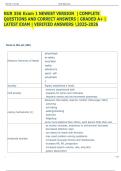
physiologic
al safety
Maslow's Hierarchy of Needs love/belo
nging
esteem/re
spect self-
actualizatio
n
anxiety Paplau established 4 levels
- tensions experienced daily
mild anxiety - prepares for action and motivates
- sharpens senses and environmental awareness
behaviors that satisfy need for comfort (Menninger 1963)
- yawning
- nail biting
- eating/drinking
coping mechanisms (1)
- exercise
- fidgeting
some more adaptive than others, each person finds their own
- as anxiety increases, awareness to environment decreases
- decreased attention span
- can attend to needs with direction
- may need problem-solving assistance
moderate anxiety
- increased muscular tension and restlessness
- increases HR, RR, perspiration
- increased speech volume, rate, and pitch
- gastric discomfort
/ 1/19
,10/21/25, 11:31 AM NUR 356 Exam 1
(mechanisms employed by ego in the face of threat)
- compensation
- rationalization
- denial
- reaction formation
- displacement
- regression
- identification
Ego Defense Mechanisms (2)
- repression
- intellectualization
- introjection
- suppression
- isolation
- undoing
- projection
- anxiety remains unresolved
psycho-physiological - extended period may exacerbate symptoms,
responses (3) delay recovery, interfere with treatment of
medical condition
- awareness greatly diminished
- concentration on one detail
- diminished attention span
- overt behavior aimed at relieving anxiety
severe anxiety
- physical symptoms: headache, palpitations,
insomnia, trembling, dizziness, tachycardia,
hyperventilation, urinary frequency, diarrhea,
palpitations
- emotional symptoms: confusion, dread, horror
- aware of stress and maladaptive behaviors
- unaware of possible psychological causes of distress
psychoneurotic behavior - helpless feeling
patterns (4) - experiences no loss of contact with reality
- ex) anxiety disorders, somatic symptom disorders, dissociative
disorders
/ 2/19
, 10/21/25, 11:31 AM NUR 356 Exam 1
- most intense state of anxiety
- prolonged can lead to physical and emotional exhaustion,
maybe life-threatening
- inability to focus on one detail
- experience hallucinations or delusions
panic anxiety
- may display wild or desperate actions or extreme withdraw
- ineffective human functioning and communication
- feeling of terror
- characteristics: dilated pupils, labored breathing, severe
trembling, sleepless,
palpitations, diaphoresis, m. incoordination, immobility or
hyperactivity, incoherent
- significant thought disturbance where reality
testing is impaired, resulting in delusions,
psychotic response (5) hallucinations, disorganized speech, and
cationic behavior
- characteristics: shows minimal distress, unaware of
maladaptive behaviors, anosognosia, flight from
reality in an attempt to adapt
- ex) schizophrenia, schizoaffective disorder, delusional disorder
- subjective feeling of sorrow and sadness accompanied
grief
by physical and social responses to the loss of a
person or thing
- real loss
- perceived loss
losses
- any situation that creates change
- failure can be considered loss
/ 3/19
NUR 356 Exam 1 NEWEST VERSION | COMPLETE
QUESTIONS AND CORRECT ANSWERS | GRADED A+ |
LATEST EXAM | VERIFIED ANSWERS \2025-2026
Terms in this set (105)
physiologic
al safety
Maslow's Hierarchy of Needs love/belo
nging
esteem/re
spect self-
actualizatio
n
anxiety Paplau established 4 levels
- tensions experienced daily
mild anxiety - prepares for action and motivates
- sharpens senses and environmental awareness
behaviors that satisfy need for comfort (Menninger 1963)
- yawning
- nail biting
- eating/drinking
coping mechanisms (1)
- exercise
- fidgeting
some more adaptive than others, each person finds their own
- as anxiety increases, awareness to environment decreases
- decreased attention span
- can attend to needs with direction
- may need problem-solving assistance
moderate anxiety
- increased muscular tension and restlessness
- increases HR, RR, perspiration
- increased speech volume, rate, and pitch
- gastric discomfort
/ 1/19
,10/21/25, 11:31 AM NUR 356 Exam 1
(mechanisms employed by ego in the face of threat)
- compensation
- rationalization
- denial
- reaction formation
- displacement
- regression
- identification
Ego Defense Mechanisms (2)
- repression
- intellectualization
- introjection
- suppression
- isolation
- undoing
- projection
- anxiety remains unresolved
psycho-physiological - extended period may exacerbate symptoms,
responses (3) delay recovery, interfere with treatment of
medical condition
- awareness greatly diminished
- concentration on one detail
- diminished attention span
- overt behavior aimed at relieving anxiety
severe anxiety
- physical symptoms: headache, palpitations,
insomnia, trembling, dizziness, tachycardia,
hyperventilation, urinary frequency, diarrhea,
palpitations
- emotional symptoms: confusion, dread, horror
- aware of stress and maladaptive behaviors
- unaware of possible psychological causes of distress
psychoneurotic behavior - helpless feeling
patterns (4) - experiences no loss of contact with reality
- ex) anxiety disorders, somatic symptom disorders, dissociative
disorders
/ 2/19
, 10/21/25, 11:31 AM NUR 356 Exam 1
- most intense state of anxiety
- prolonged can lead to physical and emotional exhaustion,
maybe life-threatening
- inability to focus on one detail
- experience hallucinations or delusions
panic anxiety
- may display wild or desperate actions or extreme withdraw
- ineffective human functioning and communication
- feeling of terror
- characteristics: dilated pupils, labored breathing, severe
trembling, sleepless,
palpitations, diaphoresis, m. incoordination, immobility or
hyperactivity, incoherent
- significant thought disturbance where reality
testing is impaired, resulting in delusions,
psychotic response (5) hallucinations, disorganized speech, and
cationic behavior
- characteristics: shows minimal distress, unaware of
maladaptive behaviors, anosognosia, flight from
reality in an attempt to adapt
- ex) schizophrenia, schizoaffective disorder, delusional disorder
- subjective feeling of sorrow and sadness accompanied
grief
by physical and social responses to the loss of a
person or thing
- real loss
- perceived loss
losses
- any situation that creates change
- failure can be considered loss
/ 3/19