

EMR AHASTI DAYS
Study online at https://quizlet.com/_hq8ac4
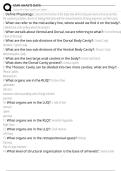
1. Define Physiology: Concerns the function of the body, how all the body parts work and carry out their
life-sustaining activities. Branch of biology that deals with the normal functions of living organisms and their parts.
2. When we refer to the mid-axillary line, where would we find it on the body?-
: Medial line at the axillary where the armpit is
3. When we talk about Ventral and Dorsal, we are referring to what?: Front of the body
/ Back of the body
4. What are the two sub-divisions of the Dorsal Body Cavity?: Cranial Cavity
Vertebral / Spinal Cavity
5. What are the two sub-divisions of the Ventral Body Cavity?: Thoracic Cavity
Abdominopelvic Cavity
6. What are the two large axial cavities in the body?: Ventral and Dorsal
7. What does the Dorsal Cavity protect?: nervous system
8. The Thoracic Cavity can be divided into two more cavities, what are they?: -
Pleural Cavities
Mediastinum
9. What organs are in the RUQ?: R-lobe of liver
gallbladder
bile duct
transverse colon/ascending colon of large intestine
pancreas
10. What organs are in the LUQ?: L-lobe of liver
stomach
spleen
pancreas
11. What organs are in the RLQ?: Vermiform Appendix
Right Ovary
12. What organs are in the LLQ?: Small intestine
Left Ovary
13. What organs are in the retroperitoneal space?: Kidneys
Pancreas
Part of Large instestine
14. What level of structural organization is the base of all levels?: chemical level
1/6
, EMR AHASTI DAYS
Study online at https://quizlet.com/_hq8ac4
15. What are the four different types of tissues in the tissue level?: Epithelial
Muscle
Connective
Nervous
16. What three organs function to turn nutrients ingested into useable energy
as well as dispose of waste?: Small Intestine
Large Intestine
Stomach
17. Which organ in the abdomen processes blood, acts as a filter by separating
waste products from nutrients?: Liver
18. What is the function of the gallbladder?: holds excess bile from the liver
19. What is the function of bile in our liver and gallbladder?: helps break down fats
20. What is the function of the spleen?: filter, stores blood cells and platelets, and helps fight certain
bacteria
21. The pancreas produces about how much of the enzymes to help our body
digest proteins, carbohydrates, and fats?: 95%
22. Pancreatic Proteases vs Pancreatic Amylase vs Pancreatic Lipases: Proteases -
digest proteins, nutrients from the intestines
Amylase - helps digest sugars and carbohydrates
Lipases - digest fats
23. What two Islet cells are responsible for metablism?: Islet of Langerhans cells
B cells
24. Islet of Langerhans Cells vs B Cells: Langerhans Cells - A cells-Produce Glucagon
B Cells - Produce Insulin
25. What are two solid Organs?: Liver and Spleen
26. What are four Hollow Organs?: Large Intestine
Small Intestine
Gallbladder
Stomach
27. What are three functions of the Integumentary System?: Protects the body from the
environment
2/6
Study online at https://quizlet.com/_hq8ac4
1. Define Physiology: Concerns the function of the body, how all the body parts work and carry out their
life-sustaining activities. Branch of biology that deals with the normal functions of living organisms and their parts.
2. When we refer to the mid-axillary line, where would we find it on the body?-
: Medial line at the axillary where the armpit is
3. When we talk about Ventral and Dorsal, we are referring to what?: Front of the body
/ Back of the body
4. What are the two sub-divisions of the Dorsal Body Cavity?: Cranial Cavity
Vertebral / Spinal Cavity
5. What are the two sub-divisions of the Ventral Body Cavity?: Thoracic Cavity
Abdominopelvic Cavity
6. What are the two large axial cavities in the body?: Ventral and Dorsal
7. What does the Dorsal Cavity protect?: nervous system
8. The Thoracic Cavity can be divided into two more cavities, what are they?: -
Pleural Cavities
Mediastinum
9. What organs are in the RUQ?: R-lobe of liver
gallbladder
bile duct
transverse colon/ascending colon of large intestine
pancreas
10. What organs are in the LUQ?: L-lobe of liver
stomach
spleen
pancreas
11. What organs are in the RLQ?: Vermiform Appendix
Right Ovary
12. What organs are in the LLQ?: Small intestine
Left Ovary
13. What organs are in the retroperitoneal space?: Kidneys
Pancreas
Part of Large instestine
14. What level of structural organization is the base of all levels?: chemical level
1/6
, EMR AHASTI DAYS
Study online at https://quizlet.com/_hq8ac4
15. What are the four different types of tissues in the tissue level?: Epithelial
Muscle
Connective
Nervous
16. What three organs function to turn nutrients ingested into useable energy
as well as dispose of waste?: Small Intestine
Large Intestine
Stomach
17. Which organ in the abdomen processes blood, acts as a filter by separating
waste products from nutrients?: Liver
18. What is the function of the gallbladder?: holds excess bile from the liver
19. What is the function of bile in our liver and gallbladder?: helps break down fats
20. What is the function of the spleen?: filter, stores blood cells and platelets, and helps fight certain
bacteria
21. The pancreas produces about how much of the enzymes to help our body
digest proteins, carbohydrates, and fats?: 95%
22. Pancreatic Proteases vs Pancreatic Amylase vs Pancreatic Lipases: Proteases -
digest proteins, nutrients from the intestines
Amylase - helps digest sugars and carbohydrates
Lipases - digest fats
23. What two Islet cells are responsible for metablism?: Islet of Langerhans cells
B cells
24. Islet of Langerhans Cells vs B Cells: Langerhans Cells - A cells-Produce Glucagon
B Cells - Produce Insulin
25. What are two solid Organs?: Liver and Spleen
26. What are four Hollow Organs?: Large Intestine
Small Intestine
Gallbladder
Stomach
27. What are three functions of the Integumentary System?: Protects the body from the
environment
2/6


