
NASM: Flexibility Exercises
Study online at https://quizlet.com/_hqvoju
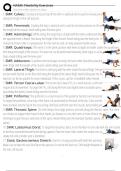
1. SMR: Calves: Crossing one leg on top of the other is optional and is used to increase pressure to the calf. Rol
along the length of the calf muscles.
2. SMR: Peroneals: Stacking the legs is optional and is used to increase pressure on the peroneals. Roll along
the length of the muscle. Avoid rolling over the knee joint
3. SMR: Hamstrings: While sitting, the target leg is straight with the roller underneath the posterior thigh, and
the opposite knee is flexed. Roll along the length of the muscle. Avoid rolling over the knee joint. Using a massage bal
instead of a foam roller is a progression for this exercise and can help pinpoint tender areas.
4. SMR: Quadriceps: The client is in the plank position with knees straight and roller under the quadriceps.
Roll along the length of the muscle. This exercise can be performed bilaterally (both legs) or unilaterally (one leg at a
time). Avoid rolling over the knee joint.
5. SMR: Adductors: To perform this technique correctly, the foam roller should be placed perpendicular to the
inner thigh. Roll the length of the muscle. Avoid rolling over the knee joint.
6. SMR: Lateral Thigh: The client is side-lying with the roller under the lateral thigh. The opposite hip and knee
are bent with foot flat on the floor. Roll along the length of the lateral thigh. Avoid rolling over the hip or knee joint. This
exercise can be too painful for some individuals. If this occurs, opt for a handheld roller instead.
7. SMR: Tensor Fascia Latae: The tensor fascia latae (TFL) is a small muscle, so this technique does not
require lots of movement. To target the TFL, roll along the front and slightly lateral (outside) part of the upper thigh
(just below the pelvis). Avoid rolling over the hip bone.
8. SMR: Piriformis: The piriformis is a small muscle of the posterior hip that runs horizontally across the pelvis.
To target the piriformis, sit on top of the foam roll, positioned on the back of the hip. Cross one foot to the opposite
knee and lean into the hip of the crossed leg. Roll back and forth over the muscle. Avoid rolling over the hip bone.
9. SMR: Thoracic Spine: The client keeps the bridge position and rolls along the thoracic spine. The client
can choose to support their head in their hands (as shown) or cross their arms in front of their chest. This is a good
technique to gain thoracic extension of the spine. Avoid rolling over the low-back (lumbar spine) and neck (cervical
spine).
10. SMR: Latissimus Dorsi: To target the latissimus dorsi, lie on the floor on one side with the arm closest
to the floor outstretched and thumb facing upward. Place the foam roller under the armpit area (axillary region) and
slowly roll until a tender spot is identified.
11. Static Gastrocnemius Stretch: Stand in a lunge position with both feet pointing straight forward.
Make sure to keep the rear foot flat on the ground. Do not let the heel rise. Shift weight forward until a stretch is felt in
the rear calf muscle.
1/7
, NASM: Flexibility Exercises
Study online at https://quizlet.com/_hqvoju
12. Static Soleus Stretch: Stand in a lunge position with both feet pointing straight forward and back knee
slightly flexed. Make sure to keep the rear foot flat on the ground. Do not let the heel rise up. Shift weight forward unti
a stretch is felt in the rear calf muscle.
13. Static 90/90 Hamstring Stretch: Lie supine with one hip flexed 90 degrees (target leg) and the
opposite leg straight and flat on the floor. Straighten the target leg until a mild stretch is felt in the hamstrings. The use
of a rope or band is suggested. The stretch should not cause pain or extreme discomfort.
14. Static Supine Biceps Femoris Stretch: Lie supine with one hip flexed 90 degrees (target leg) and
the opposite leg straight and flat on the floor. Next, adduct the target leg across the body and extend the knee until
a mild stretch is felt in the lateral hamstrings. The stretch should not cause pain or extreme discomfort. Keep both
shoulders flat on the ground during this stretch. Avoid rotating the torso toward the stretched leg.
15. Static Standing Biceps Femoris Stretch: Use a low box or step to perform this stretch. Place one
leg on top of the box in an adducted and internally rotated position. Then, locking the hands together, slowly rotate
the torso in the opposite direction. The stretched leg does not need to be elevated above hip height. This stretch
emphasizes the lateral hamstring.
16. Static Seated Ball Adductor Stretch: Sit on a stability ball in a lateral lunge position until a stretch
is felt in the inner thigh area. Posteriorly rotate the pelvis and draw in the abdominals when performing this stretch.
17. Static Standing Adductor Stretch: Stand with legs apart and shift weight to one side (lateral lunge
position) until a stretch is felt in the inner thigh of the target leg. Posteriorly rotate the pelvis and draw in the abdominals
when performing this stretch.
18. Static Adductor Magnus Stretch: While standing with one foot on a bench or plyo box, reach down
to a comfortable position without excessively rounding the spine until a stretch is felt.
19. Static Standing TFL Stretch: Stand in a staggered stance with the front leg slightly bent and rear leg
straight. Externally rotate the rear foot, draw in the navel, and posteriorly rotate the pelvis. Squeeze the gluteal muscles
of the side being stretched. As a progression, raise the arm (on the same side as the back leg) up and over to the
opposite side while maintaining pelvis position. Hold side bend position as illustrated.
2/7
Study online at https://quizlet.com/_hqvoju
1. SMR: Calves: Crossing one leg on top of the other is optional and is used to increase pressure to the calf. Rol
along the length of the calf muscles.
2. SMR: Peroneals: Stacking the legs is optional and is used to increase pressure on the peroneals. Roll along
the length of the muscle. Avoid rolling over the knee joint
3. SMR: Hamstrings: While sitting, the target leg is straight with the roller underneath the posterior thigh, and
the opposite knee is flexed. Roll along the length of the muscle. Avoid rolling over the knee joint. Using a massage bal
instead of a foam roller is a progression for this exercise and can help pinpoint tender areas.
4. SMR: Quadriceps: The client is in the plank position with knees straight and roller under the quadriceps.
Roll along the length of the muscle. This exercise can be performed bilaterally (both legs) or unilaterally (one leg at a
time). Avoid rolling over the knee joint.
5. SMR: Adductors: To perform this technique correctly, the foam roller should be placed perpendicular to the
inner thigh. Roll the length of the muscle. Avoid rolling over the knee joint.
6. SMR: Lateral Thigh: The client is side-lying with the roller under the lateral thigh. The opposite hip and knee
are bent with foot flat on the floor. Roll along the length of the lateral thigh. Avoid rolling over the hip or knee joint. This
exercise can be too painful for some individuals. If this occurs, opt for a handheld roller instead.
7. SMR: Tensor Fascia Latae: The tensor fascia latae (TFL) is a small muscle, so this technique does not
require lots of movement. To target the TFL, roll along the front and slightly lateral (outside) part of the upper thigh
(just below the pelvis). Avoid rolling over the hip bone.
8. SMR: Piriformis: The piriformis is a small muscle of the posterior hip that runs horizontally across the pelvis.
To target the piriformis, sit on top of the foam roll, positioned on the back of the hip. Cross one foot to the opposite
knee and lean into the hip of the crossed leg. Roll back and forth over the muscle. Avoid rolling over the hip bone.
9. SMR: Thoracic Spine: The client keeps the bridge position and rolls along the thoracic spine. The client
can choose to support their head in their hands (as shown) or cross their arms in front of their chest. This is a good
technique to gain thoracic extension of the spine. Avoid rolling over the low-back (lumbar spine) and neck (cervical
spine).
10. SMR: Latissimus Dorsi: To target the latissimus dorsi, lie on the floor on one side with the arm closest
to the floor outstretched and thumb facing upward. Place the foam roller under the armpit area (axillary region) and
slowly roll until a tender spot is identified.
11. Static Gastrocnemius Stretch: Stand in a lunge position with both feet pointing straight forward.
Make sure to keep the rear foot flat on the ground. Do not let the heel rise. Shift weight forward until a stretch is felt in
the rear calf muscle.
1/7
, NASM: Flexibility Exercises
Study online at https://quizlet.com/_hqvoju
12. Static Soleus Stretch: Stand in a lunge position with both feet pointing straight forward and back knee
slightly flexed. Make sure to keep the rear foot flat on the ground. Do not let the heel rise up. Shift weight forward unti
a stretch is felt in the rear calf muscle.
13. Static 90/90 Hamstring Stretch: Lie supine with one hip flexed 90 degrees (target leg) and the
opposite leg straight and flat on the floor. Straighten the target leg until a mild stretch is felt in the hamstrings. The use
of a rope or band is suggested. The stretch should not cause pain or extreme discomfort.
14. Static Supine Biceps Femoris Stretch: Lie supine with one hip flexed 90 degrees (target leg) and
the opposite leg straight and flat on the floor. Next, adduct the target leg across the body and extend the knee until
a mild stretch is felt in the lateral hamstrings. The stretch should not cause pain or extreme discomfort. Keep both
shoulders flat on the ground during this stretch. Avoid rotating the torso toward the stretched leg.
15. Static Standing Biceps Femoris Stretch: Use a low box or step to perform this stretch. Place one
leg on top of the box in an adducted and internally rotated position. Then, locking the hands together, slowly rotate
the torso in the opposite direction. The stretched leg does not need to be elevated above hip height. This stretch
emphasizes the lateral hamstring.
16. Static Seated Ball Adductor Stretch: Sit on a stability ball in a lateral lunge position until a stretch
is felt in the inner thigh area. Posteriorly rotate the pelvis and draw in the abdominals when performing this stretch.
17. Static Standing Adductor Stretch: Stand with legs apart and shift weight to one side (lateral lunge
position) until a stretch is felt in the inner thigh of the target leg. Posteriorly rotate the pelvis and draw in the abdominals
when performing this stretch.
18. Static Adductor Magnus Stretch: While standing with one foot on a bench or plyo box, reach down
to a comfortable position without excessively rounding the spine until a stretch is felt.
19. Static Standing TFL Stretch: Stand in a staggered stance with the front leg slightly bent and rear leg
straight. Externally rotate the rear foot, draw in the navel, and posteriorly rotate the pelvis. Squeeze the gluteal muscles
of the side being stretched. As a progression, raise the arm (on the same side as the back leg) up and over to the
opposite side while maintaining pelvis position. Hold side bend position as illustrated.
2/7


