

Nurs 257 (Exam #2)
Study online at https://quizlet.com/_33ya4v
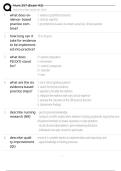
1. what does ev- 1. evidence (published research)
idence- based 2. clinician expertise
practice com- 3. pt preferences & values to answer a practical, clinical question
bine?
2. how long can it 15 to 20 years
take for evidence
to be implement-
ed into practice?
3. what does P= patient/ population
PICO(T) stand I= intervention
for? C= control/ comparison
O= outcome
T= time
4. what are the six 1. ask a clinical guiding question
evidence based 2. search for the best evidence
practice steps? 3. appraise (critically) the evidence
4. integrate the evidence with ones clinical expertise
5. evaluate the outcomes of the EBP practice decision
6. disseminate findings
5. describe nursing - goal to generate knowledge
research (NR) - conducts scientific studies when evidence is lacking (systematic inquiry that uses
disciplined methods to answer questions or solve problems
- results disseminated widely in peer-reviewed publications
- individuals must give consent to participate
6. describe quali- research is complete (works on implementation and improving care)
ty improvement - apply knowledge to existing processes
(QI)
, Nurs 257 (Exam #2)
Study online at https://quizlet.com/_33ya4v
7. improvement vs improvement: aim for improvement in care, real world observation with before/
research studies after comparison, accept consistent bias, sample size just enough data (small
sequential samples), hypothesis is flexible & changes as testing takes place, several
sequential test, run charts, data used only by those involved in improvement
research: aim for new knowledge, trial is blinded or controlled, designed to elim-
inate bias, enough data to demonstrate statistical significance, fixed hypothesis,
one large test, hypothesis testing and statistical analysis, reattach subjects identity
is protected
8. therapy PICO is this intervention more effective than another? = use randomized controlled trial
question (RCT)
9. diagnostic test how accurate is this diagnostic test?= use prospective, blinded controlled test
PICO question compared to gold standard test
10. prognosis PICO what is the likely outcome, progression, or survival time for this condition?= cohort
question study> case-control> case series
11. causa- what are the causes of this condition or state of affairs? = use RCT> cohort study>
tion/harm/etiolo- case-control> case series
gy PICO question
12. prevention PICO How to reduce the risk of this disease?
question - RCT> cohort studies> case-control
13. cost-effective- Is intervention X more cost effective than intervention Y?= use economic analysis
ness PICO
question
14. quality of life what will the quality of life for the pt following this intervention?= qualitative study,
PICO question validated survey measurement of quality of life
15.
Study online at https://quizlet.com/_33ya4v
1. what does ev- 1. evidence (published research)
idence- based 2. clinician expertise
practice com- 3. pt preferences & values to answer a practical, clinical question
bine?
2. how long can it 15 to 20 years
take for evidence
to be implement-
ed into practice?
3. what does P= patient/ population
PICO(T) stand I= intervention
for? C= control/ comparison
O= outcome
T= time
4. what are the six 1. ask a clinical guiding question
evidence based 2. search for the best evidence
practice steps? 3. appraise (critically) the evidence
4. integrate the evidence with ones clinical expertise
5. evaluate the outcomes of the EBP practice decision
6. disseminate findings
5. describe nursing - goal to generate knowledge
research (NR) - conducts scientific studies when evidence is lacking (systematic inquiry that uses
disciplined methods to answer questions or solve problems
- results disseminated widely in peer-reviewed publications
- individuals must give consent to participate
6. describe quali- research is complete (works on implementation and improving care)
ty improvement - apply knowledge to existing processes
(QI)
, Nurs 257 (Exam #2)
Study online at https://quizlet.com/_33ya4v
7. improvement vs improvement: aim for improvement in care, real world observation with before/
research studies after comparison, accept consistent bias, sample size just enough data (small
sequential samples), hypothesis is flexible & changes as testing takes place, several
sequential test, run charts, data used only by those involved in improvement
research: aim for new knowledge, trial is blinded or controlled, designed to elim-
inate bias, enough data to demonstrate statistical significance, fixed hypothesis,
one large test, hypothesis testing and statistical analysis, reattach subjects identity
is protected
8. therapy PICO is this intervention more effective than another? = use randomized controlled trial
question (RCT)
9. diagnostic test how accurate is this diagnostic test?= use prospective, blinded controlled test
PICO question compared to gold standard test
10. prognosis PICO what is the likely outcome, progression, or survival time for this condition?= cohort
question study> case-control> case series
11. causa- what are the causes of this condition or state of affairs? = use RCT> cohort study>
tion/harm/etiolo- case-control> case series
gy PICO question
12. prevention PICO How to reduce the risk of this disease?
question - RCT> cohort studies> case-control
13. cost-effective- Is intervention X more cost effective than intervention Y?= use economic analysis
ness PICO
question
14. quality of life what will the quality of life for the pt following this intervention?= qualitative study,
PICO question validated survey measurement of quality of life
15.


