
PSYCH 643 Psychopharm Study Guide, Latest Update
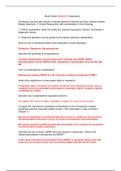
Study Guide Module 5: Depression Familiarize yourself with theories of bipolar spectrum disorder and their criticism (Article: Bipolar Spectrum: A Critical Perspective) with consideration of the following: 1. Patient presentation rarely fits neatly into unipolar depression, bipolar I and bipolar II diagnostic criteria. 2. Treatment decisions can be guided by the bipolar spectrum classification. What are the 3 neurotransmitters most implicated in mood disorders? Serotonin, Dopamine, Norepinephrine Describe the synthesis of norepinephrine. Tyrosine Hydroxylase convert amino acid Tyrosine into DOPA, DOPA decarboxylase convert DOPA to DA, Dopamine b hydroxylase converts DA into NE How is norepinephrine metabolized? Monoamine oxidase (MAO) A or B, Catechol-o-methyl-transferase (COMT) What is the significance of presynaptic alpha-2 receptors? Presynaptic alpha 2 receptors are located in both the axon terminal and soma. Only a2 receptors can act as presynaptic autoreceptors, presynaptic alpha 2 receptors regulate norepinephrine release Describe how norepinephrine regulates serotonin. NE regulates 5HT neuros via alpha 1 and alpha 2 receptors, a1 accelerate and a2 brake Compare the monoamine hypothesis of depression to the monoamine receptor hypothesis and the proposed validity of each. (This information is also covered in Chapter 7.) Monoamine hypothesis conclude that depression is due to a deficiency of monoamine neurotransmitters and mania is due to an excess of monoamine neurotransmitters. Monoamine receptor hypothesis posits that abnormality in the receptors for monoamine neurotransmitters leads to depression. Describe the role of stress, BDNF and brain atrophy in depression. What is the relationship between monoamines and BDNF? Under stress brain-derived neurotrophic factor (BDNF) is repressed. Stress lower 5HT levels and can acutely increase, then chronically deplete both NE and DA. These monoamine neurotransmitters changes together with deficient amounts of BDNF may lead to atrophy of neurons in the hippocampus and other brain areas like the prefrontal cortex. What is stress sensitization and its presumed role in depression? Certain types of stress such as child abuse can sensitize brain circuits and render them vulnerable to future stressors. Patients with vulnerable brain circuits who become exposed ti multiple life stressors can result in development of depression. What is the significance of neural circuits in depression? Inefficient information processing in neural circuits leads to depression Stahl Chapter 7 + Supplemental Materials Define treatment response, remission, relapse and recovery in depression. According to the Star D study, which symptoms are most likely to respond to antidepressant treatment? Depressed mood, suicidal ideation and psychomotor retardation Describe the mechanism of action of SSRIs. For the following SSRIS, how do their secondary mechanisms of action differ? What is the clinical significance of these differences? Are their particular patient profiles that are best matched to these medications? Describe the unique mechanism of action of vilazodone. Vilazodone SERT inhibition + 5HT1a partial agonisim Describe the mechanism of action of trazodone. How does treatment effect differ for dose strengths? What are the clinical findings for the 4 newest antidepressants, vilazodone, Describe the mechanism of action of MAO-inhibitors? Describe the mechanism of action of hypertensive crisis in MAOIs. Describe symptoms associated with hypertensive crisis and describe its treatment. Identify foods that are contraindicated while taking MAO-I. What are the roles of folate, SAMe and thyroid in depression? (Brain stimulation will be covered in the next module.) How does symptom presentation guide antidepressant selection? Know, understand and apply the implications of all warnings and safety risks associated with antidepressants including: Suicide risk Mania Switch Serotonin Syndrome Discontinuation Syndrome What clinical symptoms differentiate serotonin syndrome from hypertensive crisis? Identify unique clinical features/uses of individual antidepressants. Use quizlet flashcards to support your learning. • Review sexual side effects of antidepressant medications • Review augmentation agents used to treat depression Buspirone +SSRI Quetipine +SSRI Aripiprazole +SSRI • Review antidepressant augmentation with atypical antipsychotics • Review length of time treatment is continued in the remission of depression • Review side effects that may improve in regards to dose timing or formulation change • Review mechanism of action for selective serotonin reuptake inhibitors • Review hyponatremia regarding antidepressants • Review antidepressant least likely to cause sexual side effects
Document information
- Uploaded on
- January 10, 2021
- Number of pages
- 60
- Written in
- 2020/2021
- Type
- Other
- Person
- Unknown


