

08 Respiration
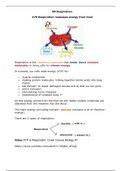
#79 Respiration realeases energy from food
Respiration is the chemical reactions that break down nutrient
molecules in living cells to release energy.
In humans, our cells need energy (ATP) for:
muscle contraction
making protein molecules: linking together amino acids into long
chains
cell division: to repair damaged tissues and so that we can grow
active transport
transmitting nerve impulses
maintenance of constant body t°
All this energy comes from the food we eat. Water soluble molecules are
absorbed from the intestine into the blood.
The main energy–providing nutrient: glucose (contains a lot of chemical
energy).
There are 2 types of respiration:
Video ATP & Respiration: Crash Course Biology #7
https://www.youtube.com/watch?v=00jbG_cfGuQ
, #80 Aerobic and anaerobic respiration
Respiration releases energy from food.
There are 2 kinds of
respiration: Aerobic and Anearobic. The main
difference between them is that aerobic respiration
involves oxygen and anaerobic respiration does not!
A. Aerobic respiration
The release of a relatively large amount of energy in
cells by the breakdown of food substances in
the presence of O2.
B. Anaerobic respiration
Anaerobic respiration: the release of a relatively small amount of
energy by the breakdown of food substances in the absence of O2.
Anaerobic respiration in muscles during exercise:
Anaerobic respiration in yeast:
Muscles respire anaerobically when exercising vigorously, because the blood
cannot supply enough oxygen to maintain aerobic respiration. Howerver, the
formation and build-up of lactic acid in muscles causes cramp (muscle
fatigue).
#79 Respiration realeases energy from food
Respiration is the chemical reactions that break down nutrient
molecules in living cells to release energy.
In humans, our cells need energy (ATP) for:
muscle contraction
making protein molecules: linking together amino acids into long
chains
cell division: to repair damaged tissues and so that we can grow
active transport
transmitting nerve impulses
maintenance of constant body t°
All this energy comes from the food we eat. Water soluble molecules are
absorbed from the intestine into the blood.
The main energy–providing nutrient: glucose (contains a lot of chemical
energy).
There are 2 types of respiration:
Video ATP & Respiration: Crash Course Biology #7
https://www.youtube.com/watch?v=00jbG_cfGuQ
, #80 Aerobic and anaerobic respiration
Respiration releases energy from food.
There are 2 kinds of
respiration: Aerobic and Anearobic. The main
difference between them is that aerobic respiration
involves oxygen and anaerobic respiration does not!
A. Aerobic respiration
The release of a relatively large amount of energy in
cells by the breakdown of food substances in
the presence of O2.
B. Anaerobic respiration
Anaerobic respiration: the release of a relatively small amount of
energy by the breakdown of food substances in the absence of O2.
Anaerobic respiration in muscles during exercise:
Anaerobic respiration in yeast:
Muscles respire anaerobically when exercising vigorously, because the blood
cannot supply enough oxygen to maintain aerobic respiration. Howerver, the
formation and build-up of lactic acid in muscles causes cramp (muscle
fatigue).


