

Chapter 21 Recombinant DNA technology
21.1 Producing DNA fragments
Recombinant DNA: DNA that has been formed artificially by combining constituents from different organisms. This
results in the organism being transgenic / a genetically modified organism (GMO)
The process of making a protein using the DNA technology of gene transfer and cloning involves a number of
stages:
1. Isolation of the DNA fragments that have the gene for the desired protein
2. Insertion of the DNA fragment into a vector
3. Transformation of the host cells that have successfully taken up the gene by use of gene markers
4. Growth/cloning of the population of host cells.
Before a gene can be transplanted it must be identified and isolated from the rest of the DNA. Ways to produce
DNA fragments:
- Conversion of mRNA to cDNA using reverse transcriptase
- Using restriction endonucleases to cut fragments containing the desired gene from DNA
- Creating the gene in a gene machine, usually based on a known protein structure
Using reverse transcriptase to isolate a gene:
Genetic information of a retroviruses is in form of RNA, but once they’re in a host cell they’re able to synthesis DNA
from their RNA with the help of enzyme reverse transcriptase.
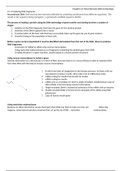
1. B-cells from islets of Langerhans in the human pancreas. As these cells are
specialised to produce insulin, they make a lot of mRNA that codes
2. mRNA coding for insulin from B-cells for insulin
3. mRNA coding for insulin
4. mRNA acts as a template on which a single-stranded complimentary copy of
DNA (cDNA) is formed using reverse transcriptase
5. Single-stranded cDNA is isolated by hydrolysis of the mRNA with an enzyme
6. Double-stranded DNA is formed on the template of the cDNA using DNA
polymerase
7. Copy of human insulin gene
Using restriction endonuclease:
Bacteria are often infected by viruses that inject their DNA into them to take over the cell. When this
happens, some bacteria produce enzymes that cut up the viral DNA – restriction endonuclease.
21.1 Producing DNA fragments
Recombinant DNA: DNA that has been formed artificially by combining constituents from different organisms. This
results in the organism being transgenic / a genetically modified organism (GMO)
The process of making a protein using the DNA technology of gene transfer and cloning involves a number of
stages:
1. Isolation of the DNA fragments that have the gene for the desired protein
2. Insertion of the DNA fragment into a vector
3. Transformation of the host cells that have successfully taken up the gene by use of gene markers
4. Growth/cloning of the population of host cells.
Before a gene can be transplanted it must be identified and isolated from the rest of the DNA. Ways to produce
DNA fragments:
- Conversion of mRNA to cDNA using reverse transcriptase
- Using restriction endonucleases to cut fragments containing the desired gene from DNA
- Creating the gene in a gene machine, usually based on a known protein structure
Using reverse transcriptase to isolate a gene:
Genetic information of a retroviruses is in form of RNA, but once they’re in a host cell they’re able to synthesis DNA
from their RNA with the help of enzyme reverse transcriptase.
1. B-cells from islets of Langerhans in the human pancreas. As these cells are
specialised to produce insulin, they make a lot of mRNA that codes
2. mRNA coding for insulin from B-cells for insulin
3. mRNA coding for insulin
4. mRNA acts as a template on which a single-stranded complimentary copy of
DNA (cDNA) is formed using reverse transcriptase
5. Single-stranded cDNA is isolated by hydrolysis of the mRNA with an enzyme
6. Double-stranded DNA is formed on the template of the cDNA using DNA
polymerase
7. Copy of human insulin gene
Using restriction endonuclease:
Bacteria are often infected by viruses that inject their DNA into them to take over the cell. When this
happens, some bacteria produce enzymes that cut up the viral DNA – restriction endonuclease.


