

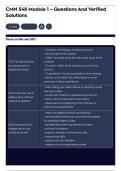
CMN 548 Module 1 – Questions And Verified
Solutions
Save
Terms in this set (167)
-"Feelings": pt's feelings, including fears and
concerns about the problem
-"Ideas": pt's ideas about the nature and cause of the
"FIFE" for exploring the problem
pt's perspective on -"Function": effect of the problem on pt's life and
disease and illness function
-"Expectations": the pt's expectations of the disease,
clinician, or of health care, often based on prior
personal or family experiences
-After stating your name, ask the pt what they would
like to be called
What is the best way to
-except with children or adolescents, avoid first
obtain a pt's preferred
names until you have specific permission
method of address?
-ideally ask at the beginning of the interview or
before via a questionnaire
-reflect on patterns emotion and behavior
-paused before starting an encounter and prepare
for potential triggers of bias
Skills and practices to -generate alternative hypotheses for biases
mitigate bias in your anchored in behavior
clinical encounter -practice universal communication and
interpersonal skills
-explore your pt's identities
-explore your pt's experiences of bias
, Reflection
Respect
5 R's of cultural humility Regard
Relevance
Resiliency
standards we use to measure our own and other's
values
beliefs and behaviors
attitudes or feelings that we attach to perceived
biases
differences
Do no harm; physician has responsibility to avoid
nonmaleficence treatments or interventions in which the potential for
harm outweighs the potential for benefit
clinicians are to act for the pts good by preventing
beneficence
or treating disease
commitment to accept the choices pts with
respect for autonomy decisional capacity make about which tx to undergo
including rejecting treatment
ability to make an autonomous choice that clinicians
decisional capacity
should respect
duty to prevent the disclosure of pts personal info
confidentiality
to parties whoa re not authorized to learn that info
clinicians must elicit pts voluntary and informed
authorization to test of tx for for illness injury
o Required elements:
- Nature of the procedure or tx
informed consent
- Risks and benefits
- Reasonable alternatives
- Risks and benefits of alternatives
- Assessment of the pt's understanding of the first 4
elements
clinicians should disclose information beyond that
truth telling required by informed consent that may be relevant
to pts
, value that all pts w/ similar medical needs should
justice receive similar medical tx and should be treated
fairly by clinicians
-moving from open ended to focused questions
-using q's that elicit a graded response
-ask a serious of q's one at a time
techniques of guided offering multiple choices for answers
questioning -clarifying what the pt means
encouraging with continuers (nonverbal
encouragements, neutral utterances)
-using echoing/repetition
"people-first language"
Non-stigmatizing
language -ex: "person who uses drugs; person with a
substance use disorder"
low literacy low ability to read
leads to poor health outcomes and impaired use of
low health literacy
health services
-initial info (pt's initial, age, gender)
-CC (pt's primary problem prompting the reason for
visit)
-HPI
What are the
components of an adult -PMH (childhood & adult illnesses; 4 areas: medical,
health history? surgical, psychiatric, ob/gyn)
-Family hx
-Social & personal hx
-ROS
Solutions
Save
Terms in this set (167)
-"Feelings": pt's feelings, including fears and
concerns about the problem
-"Ideas": pt's ideas about the nature and cause of the
"FIFE" for exploring the problem
pt's perspective on -"Function": effect of the problem on pt's life and
disease and illness function
-"Expectations": the pt's expectations of the disease,
clinician, or of health care, often based on prior
personal or family experiences
-After stating your name, ask the pt what they would
like to be called
What is the best way to
-except with children or adolescents, avoid first
obtain a pt's preferred
names until you have specific permission
method of address?
-ideally ask at the beginning of the interview or
before via a questionnaire
-reflect on patterns emotion and behavior
-paused before starting an encounter and prepare
for potential triggers of bias
Skills and practices to -generate alternative hypotheses for biases
mitigate bias in your anchored in behavior
clinical encounter -practice universal communication and
interpersonal skills
-explore your pt's identities
-explore your pt's experiences of bias
, Reflection
Respect
5 R's of cultural humility Regard
Relevance
Resiliency
standards we use to measure our own and other's
values
beliefs and behaviors
attitudes or feelings that we attach to perceived
biases
differences
Do no harm; physician has responsibility to avoid
nonmaleficence treatments or interventions in which the potential for
harm outweighs the potential for benefit
clinicians are to act for the pts good by preventing
beneficence
or treating disease
commitment to accept the choices pts with
respect for autonomy decisional capacity make about which tx to undergo
including rejecting treatment
ability to make an autonomous choice that clinicians
decisional capacity
should respect
duty to prevent the disclosure of pts personal info
confidentiality
to parties whoa re not authorized to learn that info
clinicians must elicit pts voluntary and informed
authorization to test of tx for for illness injury
o Required elements:
- Nature of the procedure or tx
informed consent
- Risks and benefits
- Reasonable alternatives
- Risks and benefits of alternatives
- Assessment of the pt's understanding of the first 4
elements
clinicians should disclose information beyond that
truth telling required by informed consent that may be relevant
to pts
, value that all pts w/ similar medical needs should
justice receive similar medical tx and should be treated
fairly by clinicians
-moving from open ended to focused questions
-using q's that elicit a graded response
-ask a serious of q's one at a time
techniques of guided offering multiple choices for answers
questioning -clarifying what the pt means
encouraging with continuers (nonverbal
encouragements, neutral utterances)
-using echoing/repetition
"people-first language"
Non-stigmatizing
language -ex: "person who uses drugs; person with a
substance use disorder"
low literacy low ability to read
leads to poor health outcomes and impaired use of
low health literacy
health services
-initial info (pt's initial, age, gender)
-CC (pt's primary problem prompting the reason for
visit)
-HPI
What are the
components of an adult -PMH (childhood & adult illnesses; 4 areas: medical,
health history? surgical, psychiatric, ob/gyn)
-Family hx
-Social & personal hx
-ROS


