
KHALED ULLAH
Traditionally in economics, it is assumed that firms have the main aim of profit
maximisation. This is because profit is the measure of a firm's welfare. Nevertheless,
firms may have other objectives, such as revenue maximisation and sales
maximisation. Many other objectives such as improving corporate image and
increasing market share can be a way to maximise profits in long-term. Overall, firms
do not want maximise profits from the beginning as they would want their size to
increase and they do this via other objectives. Therefore, the assumption is invalid to
some degree.
Profit is the total revenue minus the total cost. Firms wish to maximise profits so that
they can improve efficiency, re-invest in the firm (so that they do not have to take
more loans) and keep the shareholders satisfied. Higher profits enable a firm to pay
higher wages, more dividends to shareholders and survive an economic downturn.
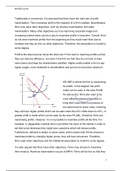
MC=MR is where the firm is maximising
its profits. In the diagram the profit
made can be seen in the area PCAB.
As well as this, firms also want to be
more efficient meaning they want to
bring their costs down but produce at
the same level for lower costs, meaning
they will have higher profits which can be seen when the ATC shifts down to ATC 2. A
greater profit is made which can be seen by the area PC 2AB2. Therefore, firms are
maximising profits. However, it is not possible to maximise profits all the time. For
example, in oligopolistic markets firms must follow the trend of the market in order to
set their price otherwise they might lose customers which will reduce profits.
Furthermore, demand is elastic in some cases, which means that if firms choose to
maximise profits by charging higher prices, they will lose consumers. Therefore,
firms seek other objectives and the traditional assumption is invalid to some degree.
It is also argued that firms have other objectives. Firms may choose to maximise
their revenue. Revenue maximisation occurs at MR=0. Firms will do this so that they
1
Traditionally in economics, it is assumed that firms have the main aim of profit
maximisation. This is because profit is the measure of a firm's welfare. Nevertheless,
firms may have other objectives, such as revenue maximisation and sales
maximisation. Many other objectives such as improving corporate image and
increasing market share can be a way to maximise profits in long-term. Overall, firms
do not want maximise profits from the beginning as they would want their size to
increase and they do this via other objectives. Therefore, the assumption is invalid to
some degree.
Profit is the total revenue minus the total cost. Firms wish to maximise profits so that
they can improve efficiency, re-invest in the firm (so that they do not have to take
more loans) and keep the shareholders satisfied. Higher profits enable a firm to pay
higher wages, more dividends to shareholders and survive an economic downturn.
MC=MR is where the firm is maximising
its profits. In the diagram the profit
made can be seen in the area PCAB.
As well as this, firms also want to be
more efficient meaning they want to
bring their costs down but produce at
the same level for lower costs, meaning
they will have higher profits which can be seen when the ATC shifts down to ATC 2. A
greater profit is made which can be seen by the area PC 2AB2. Therefore, firms are
maximising profits. However, it is not possible to maximise profits all the time. For
example, in oligopolistic markets firms must follow the trend of the market in order to
set their price otherwise they might lose customers which will reduce profits.
Furthermore, demand is elastic in some cases, which means that if firms choose to
maximise profits by charging higher prices, they will lose consumers. Therefore,
firms seek other objectives and the traditional assumption is invalid to some degree.
It is also argued that firms have other objectives. Firms may choose to maximise
their revenue. Revenue maximisation occurs at MR=0. Firms will do this so that they
1




