

Aeromedical: TC 3-04.93 UPDATED ACTUAL Questions and CORRECT
Answers
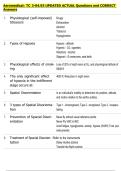
1. Physiological (self-imposed) Drugs
Stressors Exhaustion
Alcohol
Tobacco
Hypoglycemia
2. Types of Hypoxia Hypoxic - altitude
Hypemic - CO, cigarettes
Histotoxic - alcohol
Stagnant - G maneuvers, seat belts
3. Physiological effects of smok- Loss of 20% of night vision at SL, and physiological altitude of
ing 5000 ft
4. The only significant effect 4000 ft. Reduction in night vision.
of hypoxia in the indifferent
stage occurs at:
5. Spatial Disorientation Is an individual's inability to determine his position, attitude,
and motion relative to the earths surface.
6. 3 types of Spatial Disorienta- Type 1 - Unrecognized, Type 2 - recognized, Type 3 - incapaci-
tion tating.
7. Prevention of Spacial Disori- Never fly without visual reference points
entation Never Fly VMC in IMC
Avoid fatigue, hypoglycemia, anxiety, hypoxia (HASH) Trust your
instruments
8. Treatment of Spacial Disorien- Refer to the instruments
tation Delay intuitive actions
Transfer the flight controls
Answers
1. Physiological (self-imposed) Drugs
Stressors Exhaustion
Alcohol
Tobacco
Hypoglycemia
2. Types of Hypoxia Hypoxic - altitude
Hypemic - CO, cigarettes
Histotoxic - alcohol
Stagnant - G maneuvers, seat belts
3. Physiological effects of smok- Loss of 20% of night vision at SL, and physiological altitude of
ing 5000 ft
4. The only significant effect 4000 ft. Reduction in night vision.
of hypoxia in the indifferent
stage occurs at:
5. Spatial Disorientation Is an individual's inability to determine his position, attitude,
and motion relative to the earths surface.
6. 3 types of Spatial Disorienta- Type 1 - Unrecognized, Type 2 - recognized, Type 3 - incapaci-
tion tating.
7. Prevention of Spacial Disori- Never fly without visual reference points
entation Never Fly VMC in IMC
Avoid fatigue, hypoglycemia, anxiety, hypoxia (HASH) Trust your
instruments
8. Treatment of Spacial Disorien- Refer to the instruments
tation Delay intuitive actions
Transfer the flight controls


