
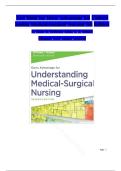
Test Bank for Davis Advantage for Underst
KL KL KL KL KL KL
anding Medical-Surgical Nursing 7th Edition
KL KL KL KL
by Paula D. Williams, Linda S. & Hopper
KL KL KL KL KL KL KL
Chapter 1-51 expert verified
KL KL KL
PageKL|KL
1
, CHAPTER 1 KL
1. TheKLnurseKLisKLcaringKLforKLfourKLclientsKLonKLaKLmedical–
surgicalKLunit.KLWhichKLclientKLshouldKLtheKLnurseKLseeKLinitially?
1.KLAKLclientKLadmittedKLwithKLhepatitisKLAKLwhoKLhasKLhadKLsevereKLdiarrheaKLforKLtheKLlastKL24KLhours
2. AKLclientKLadmittedKLwithKLpneumoniaKLwhoKLisKLhasKLsmallKLamountsKLofKLyellowKLproductiveKLsputum
3. AKLclientKLadmittedKLwithKLfeverKLofKLunknownKLoriginKL(FUO)KLwhoKLhasKLbeenKLwithoutKLfeverKLforKLtheKLlastKL48K
Lhours
4. AKLclientKLadmittedKLwithKLaKLwoundKLinfectionKLwhoseKLWBCKLisKL8,
500KLmm3KLAnswer:KL1
Rationale:KLTheKLnurseKLmustKLdecideKLwhichKLclientKLshouldKLbeKLseenKLonKLtheKLinitialKLroundsKLofKLtheKLday.KLTheK
LnurseKLmustKLrememberKLthatKLtheKLfirstKLclientKLtoKLbeKLseenKLshouldKLbeKLtheKLclientKLwhoKLneedsKLtheKLattentionKLo
fKLtheKLnurseKLinitially.KLAKLclientKLwithKLhepatitisKLAKLdoesKLexperienceKLdiarrhea,KLbutKLdiarrheaKLforKLtheKLlastKL24KL
hoursKLcouldKLcauseKLtheKLclientKLtoKLhaveKLaKLproblemKLwithKLdehydrationKLandKLexperienceKLaKLstateKLofKLfluidKLvol
umeKLdeficit.
CognitiveKLLevel:KLApplication
ClientKLNeeds:KLSafe,KLEffectiveKLCareKLEnvironmentKLNursingKLProcess:KLPlanning
2.KLTheKLnurseKLisKLpreparingKLtoKLadministerKLinfluenzaKLvaccinesKLtoKLaKLmassKLdrive-
throughKLclinic.KLWhichKLstatementKLbyKLaKLclientKLwouldKLindicateKLfurtherKLquestioningKLpriorKLtoKLgivingKLtheKLcli
entKLtheKLinfluenzaKLvaccine?
1. ―IKLamKLallergicKLtoKLhorseKLhair.‖
2. ―IKLtryKLtoKLgetKLmyKLvaccineKLeveryKLyear.‖
3. ―IKLamKLnotKLallergicKLtoKLanythingKLexceptKLeggs.‖
4. ―MyKLhusbandKLhadKLaKLsevereKLallergicKLreactionKLafterKLheKLreceivedKLhisKLinfluenzaKLvaccine.‖
Answer:KL3
Rationale:KLInfluenzaKLvaccinesKLareKLrecommendedKLforKLpersonKLatKLhighKLriskKLforKLseriousKLsequelaeKLofKLinfluen
za.KLTheKLnurseKLshouldKLbeKLawareKLthatKLclientKLwithKLaKLsensitivityKLtoKLeggsKLshouldKLnotKLreceiveKLtheKLvaccine.KL
VaccinesKLpreparedKLfromKLchickenKLorKLduckKLembryosKLareKLcontraindicatedKLinKLclientsKLwhoKLareKLallergicKLtoKLeg
gs.
CognitiveKLLevel:KLApplication
ClientKLNeeds:KLSafe,KLEffectiveKLCareKLEnvironmentKLNursingKLProcess:KLAssessment
PageKL|KL
2
,3.KLTheKLnurseKLisKLcaringKLforKLfourKLclientsKLonKLaKLmedical–
surgicalKLunit.KLTheKLsecretaryKLgivesKLtheKLnurseKLtheKLmorningKLlabs.KLWhichKLofKLtheKLfollowingKLlabsKLwouldKLreq
uireKLthatKLtheKLnurseKLcallKLtheKLphysicianKLandKLinformKLtheKLhealthcareKLproviderKLaboutKLtheKLclient‘sKLabnormaliti
es?
1. WBCKL14,600KLmm3
2. SerumKLproteinKL6.9KLg/dL
3. IKL&KLDKL(incisionKLandKLdrainage)KLshowingKLnoKLgrowthKLforKLtheKLlastKL24KLhours
4. AlbuminKL4.2KLg/dL
Answer:KL1
Rationale:KLWhenKLtheKLnurseKLisKLcaringKLforKLseveralKLclients,KLallKLofKLtheKLlabsKLshouldKLbeKLcheckedKLfrequentlyK
LthroughoutKLtheKLshiftKLtoKLassessKLforKLanyKLabnormalities.KLTheKLWBCKLinKLoptionKL1KLisKLabnormal.KL(NormalKLW
BCKL4,000–
10,000KLmm3.)KLAllKLofKLtheKLotherKLlabKLresultsKLareKLwithinKLacceptableKLrange;KLtherefore,KLtheKLresultsKLshouldKLn
otKLbeKLcalledKLinKLtoKLtheKLphysician.
CognitiveKLLevel:KLApplicationKLClientKLNeeds:KLPhysiologicKLIntegrityKLNursingKLProcess:KLAssessment
4.KLTheKLnurseKLisKLorientingKLaKLnewKLgraduate.KLTheKLnurseKLisKLreinforcingKLtheKLimportanceKLofKLstandardKLprecauti
ons.KLWhichKLofKLtheKLfollowingKLobservationsKLbyKLtheKLnurseKLwouldKLrequireKLfurtherKLeducationKLregardingKLstan
dardKLprecautions?
1. TheKLgraduateKLnurseKLunderstandsKLtoKLwashKLhandsKLwhenKLenteringKLandKLexitingKLtheKLclient‘sKLroom.
2. TheKLgraduateKLnurseKLwearsKLglovesKLwhenKLservingKLbreakfastKLtraysKLtoKLvariousKLclients.
3. TheKLgraduateKLnurseKLwearsKLaKLgown,KLgloves,KLandKLgogglesKLwhenKLsuctioningKLaKLclient.
4. TheKLgraduateKLnurseKLleavesKLallKLsuppliesKLinKLtheKLroomKLofKLaKLclientKLwhoKLisKLinKLcontactKLisolation.
Answer:KL2
Rationale:KLTheKLnurseKLmustKLhaveKLanKLunderstandingKLofKLstandardKLprecautions.KLPreventionKLisKLtheKLmostKLimp
ortantKLmeasureKLtoKLpreventKLnosocomialKLinfections.KLStandardKLprecautionsKLwereKLpublishedKLinKL1996KLthatKLpro
videKLguidelinesKLforKLtheKLhandlingKLofKLbloodKLandKLotherKLbodyKLfluids.KLTheseKLguidelinesKLareKLusedKLwithKLallKLc
lients,KLregardlessKLofKLwhetherKLtheyKLhaveKLaKLknownKLinfectiousKLdisease.KLStandardKLprecautionsKLareKLusedKLbyKL
allKLhealthcareKLworkersKLwhoKLhaveKLdirectKLcontactKLwithKLclientsKLorKLwithKLtheirKLbodyKLfluids.KLItKLisKLnotKLneces
saryKLforKLtheKLnurseKLtoKLwearKLglovesKLwhileKLdeliveringKLfoodKLtraysKLtoKLtheKLclient,KLbecauseKLthereKLisKLnotKLcon
tactKLwithKLtheKLclient.
CognitiveKLLevel:KLApplication
ClientKLNeeds:KLSafe,KLEffectiveKLCareKLEnvironmentKLNursingKLProcess:KLEvaluation
5. TheKLadmittingKLdepartmentKLalertsKLtheKLnurseKLonKLaKLmedical–
PageKL|KL
3
, surgicalKLunitKLthatKLaKLclientKLwithKLactiveKLtuberculosisKL(TB)KLis
beingKLadmittedKLtoKLtheKLunit.KLWhichKLtypeKLofKLisolationKLisKLappropriateKLbasedKLonKLtheKLclient‘sKLdiagnosis?
1. StandardKLprecautions
2. AirborneKLprecautions
PageKL|KL
4
KL KL KL KL KL KL
anding Medical-Surgical Nursing 7th Edition
KL KL KL KL
by Paula D. Williams, Linda S. & Hopper
KL KL KL KL KL KL KL
Chapter 1-51 expert verified
KL KL KL
PageKL|KL
1
, CHAPTER 1 KL
1. TheKLnurseKLisKLcaringKLforKLfourKLclientsKLonKLaKLmedical–
surgicalKLunit.KLWhichKLclientKLshouldKLtheKLnurseKLseeKLinitially?
1.KLAKLclientKLadmittedKLwithKLhepatitisKLAKLwhoKLhasKLhadKLsevereKLdiarrheaKLforKLtheKLlastKL24KLhours
2. AKLclientKLadmittedKLwithKLpneumoniaKLwhoKLisKLhasKLsmallKLamountsKLofKLyellowKLproductiveKLsputum
3. AKLclientKLadmittedKLwithKLfeverKLofKLunknownKLoriginKL(FUO)KLwhoKLhasKLbeenKLwithoutKLfeverKLforKLtheKLlastKL48K
Lhours
4. AKLclientKLadmittedKLwithKLaKLwoundKLinfectionKLwhoseKLWBCKLisKL8,
500KLmm3KLAnswer:KL1
Rationale:KLTheKLnurseKLmustKLdecideKLwhichKLclientKLshouldKLbeKLseenKLonKLtheKLinitialKLroundsKLofKLtheKLday.KLTheK
LnurseKLmustKLrememberKLthatKLtheKLfirstKLclientKLtoKLbeKLseenKLshouldKLbeKLtheKLclientKLwhoKLneedsKLtheKLattentionKLo
fKLtheKLnurseKLinitially.KLAKLclientKLwithKLhepatitisKLAKLdoesKLexperienceKLdiarrhea,KLbutKLdiarrheaKLforKLtheKLlastKL24KL
hoursKLcouldKLcauseKLtheKLclientKLtoKLhaveKLaKLproblemKLwithKLdehydrationKLandKLexperienceKLaKLstateKLofKLfluidKLvol
umeKLdeficit.
CognitiveKLLevel:KLApplication
ClientKLNeeds:KLSafe,KLEffectiveKLCareKLEnvironmentKLNursingKLProcess:KLPlanning
2.KLTheKLnurseKLisKLpreparingKLtoKLadministerKLinfluenzaKLvaccinesKLtoKLaKLmassKLdrive-
throughKLclinic.KLWhichKLstatementKLbyKLaKLclientKLwouldKLindicateKLfurtherKLquestioningKLpriorKLtoKLgivingKLtheKLcli
entKLtheKLinfluenzaKLvaccine?
1. ―IKLamKLallergicKLtoKLhorseKLhair.‖
2. ―IKLtryKLtoKLgetKLmyKLvaccineKLeveryKLyear.‖
3. ―IKLamKLnotKLallergicKLtoKLanythingKLexceptKLeggs.‖
4. ―MyKLhusbandKLhadKLaKLsevereKLallergicKLreactionKLafterKLheKLreceivedKLhisKLinfluenzaKLvaccine.‖
Answer:KL3
Rationale:KLInfluenzaKLvaccinesKLareKLrecommendedKLforKLpersonKLatKLhighKLriskKLforKLseriousKLsequelaeKLofKLinfluen
za.KLTheKLnurseKLshouldKLbeKLawareKLthatKLclientKLwithKLaKLsensitivityKLtoKLeggsKLshouldKLnotKLreceiveKLtheKLvaccine.KL
VaccinesKLpreparedKLfromKLchickenKLorKLduckKLembryosKLareKLcontraindicatedKLinKLclientsKLwhoKLareKLallergicKLtoKLeg
gs.
CognitiveKLLevel:KLApplication
ClientKLNeeds:KLSafe,KLEffectiveKLCareKLEnvironmentKLNursingKLProcess:KLAssessment
PageKL|KL
2
,3.KLTheKLnurseKLisKLcaringKLforKLfourKLclientsKLonKLaKLmedical–
surgicalKLunit.KLTheKLsecretaryKLgivesKLtheKLnurseKLtheKLmorningKLlabs.KLWhichKLofKLtheKLfollowingKLlabsKLwouldKLreq
uireKLthatKLtheKLnurseKLcallKLtheKLphysicianKLandKLinformKLtheKLhealthcareKLproviderKLaboutKLtheKLclient‘sKLabnormaliti
es?
1. WBCKL14,600KLmm3
2. SerumKLproteinKL6.9KLg/dL
3. IKL&KLDKL(incisionKLandKLdrainage)KLshowingKLnoKLgrowthKLforKLtheKLlastKL24KLhours
4. AlbuminKL4.2KLg/dL
Answer:KL1
Rationale:KLWhenKLtheKLnurseKLisKLcaringKLforKLseveralKLclients,KLallKLofKLtheKLlabsKLshouldKLbeKLcheckedKLfrequentlyK
LthroughoutKLtheKLshiftKLtoKLassessKLforKLanyKLabnormalities.KLTheKLWBCKLinKLoptionKL1KLisKLabnormal.KL(NormalKLW
BCKL4,000–
10,000KLmm3.)KLAllKLofKLtheKLotherKLlabKLresultsKLareKLwithinKLacceptableKLrange;KLtherefore,KLtheKLresultsKLshouldKLn
otKLbeKLcalledKLinKLtoKLtheKLphysician.
CognitiveKLLevel:KLApplicationKLClientKLNeeds:KLPhysiologicKLIntegrityKLNursingKLProcess:KLAssessment
4.KLTheKLnurseKLisKLorientingKLaKLnewKLgraduate.KLTheKLnurseKLisKLreinforcingKLtheKLimportanceKLofKLstandardKLprecauti
ons.KLWhichKLofKLtheKLfollowingKLobservationsKLbyKLtheKLnurseKLwouldKLrequireKLfurtherKLeducationKLregardingKLstan
dardKLprecautions?
1. TheKLgraduateKLnurseKLunderstandsKLtoKLwashKLhandsKLwhenKLenteringKLandKLexitingKLtheKLclient‘sKLroom.
2. TheKLgraduateKLnurseKLwearsKLglovesKLwhenKLservingKLbreakfastKLtraysKLtoKLvariousKLclients.
3. TheKLgraduateKLnurseKLwearsKLaKLgown,KLgloves,KLandKLgogglesKLwhenKLsuctioningKLaKLclient.
4. TheKLgraduateKLnurseKLleavesKLallKLsuppliesKLinKLtheKLroomKLofKLaKLclientKLwhoKLisKLinKLcontactKLisolation.
Answer:KL2
Rationale:KLTheKLnurseKLmustKLhaveKLanKLunderstandingKLofKLstandardKLprecautions.KLPreventionKLisKLtheKLmostKLimp
ortantKLmeasureKLtoKLpreventKLnosocomialKLinfections.KLStandardKLprecautionsKLwereKLpublishedKLinKL1996KLthatKLpro
videKLguidelinesKLforKLtheKLhandlingKLofKLbloodKLandKLotherKLbodyKLfluids.KLTheseKLguidelinesKLareKLusedKLwithKLallKLc
lients,KLregardlessKLofKLwhetherKLtheyKLhaveKLaKLknownKLinfectiousKLdisease.KLStandardKLprecautionsKLareKLusedKLbyKL
allKLhealthcareKLworkersKLwhoKLhaveKLdirectKLcontactKLwithKLclientsKLorKLwithKLtheirKLbodyKLfluids.KLItKLisKLnotKLneces
saryKLforKLtheKLnurseKLtoKLwearKLglovesKLwhileKLdeliveringKLfoodKLtraysKLtoKLtheKLclient,KLbecauseKLthereKLisKLnotKLcon
tactKLwithKLtheKLclient.
CognitiveKLLevel:KLApplication
ClientKLNeeds:KLSafe,KLEffectiveKLCareKLEnvironmentKLNursingKLProcess:KLEvaluation
5. TheKLadmittingKLdepartmentKLalertsKLtheKLnurseKLonKLaKLmedical–
PageKL|KL
3
, surgicalKLunitKLthatKLaKLclientKLwithKLactiveKLtuberculosisKL(TB)KLis
beingKLadmittedKLtoKLtheKLunit.KLWhichKLtypeKLofKLisolationKLisKLappropriateKLbasedKLonKLtheKLclient‘sKLdiagnosis?
1. StandardKLprecautions
2. AirborneKLprecautions
PageKL|KL
4


