
NSG-316 Health Assessment Exam 1, Topics 1-4
Study online at https://quizlet.com/_f888lv
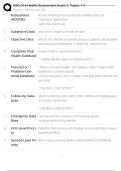
1. Assessment first step in nursing process to plan client and family nursing care
(ADOPIE) -Subjective vs Objective Data
-gather data, look for cues
2. Subjective Data what client or caregiver shares with one nurse
3. Objective Data what the nurse observes by inspection, percussion, palpation, and auscultation
when doing physical examination or "head to toe" assessment of pt
4. Complete Total complete health hx + physical examination
Health Database
**CURRENT AND PAST HEALTH IN PROVIDERS OFFICE**
5. Focused or - limited or short term problem. "mini" database, smaller in scope or more
Problem-Cen- targeted than a complete database.
tered Database -concerns one problem, one cue complex, or one body system. (like fever and
sore throat)
**USED IN ALL CLIENT SETTINGS**
6. Follow-Up Data- identify if problem has gotten better, chronic conditions are not getting worse,
base any changes in health status
**USED IN ALL CLIENT SETTINGS**
7. Emergency Data rapid data collection in emergency, life threatening situation
Base -ex allergic reaction or drug overdose
8. First-Level Priori- EMERGENT, life-threatening, and immediate, such as establishing an airway or
ty supporting breathing
9. Second-Level Pri- NEXT in urgency, requiring attention to AVOID FURTHER DETERIORATION
ority
, NSG-316 Health Assessment Exam 1, Topics 1-4
Study online at https://quizlet.com/_f888lv
10. Third-Level Prior- Important to patient's health but can be addressed AFTER more urgent problems
ity are addressed
11. Collaborative approach to treatment involves multiple disciplines
Problems
12. Evidence-Based **EBP is the "gold standard" of practice**
Assessment -integration of research evidence, physical assessment, patient values and pref-
erences
**Randomized Clinical Trials**
-current and best clinical practice based on research focused on systemic reviews
**Utilizing EBP**
-in conjunction with provider experience will lead to better health outcomes for
patients
13. High Level As- assessment requires hands-on expertise refined to a high level
sessment Skills
-first and often only healthcare individuals to see pts in many communities
-nurse is only health professional continually present at beside in hospitals
14. Assessment AGE-SPECIFIC charts for periodic health examinations are a positive approach to
through the Life health assessment
Cycle
-chart focuses on MAJOR RISK FACTORS for each age group based on lifestyle,
health needs, and problems
-incorporate health promotion and disease prevention at every health visit, not
just one annual physical examination
15. Health Promo- -INTERVAL of assessment
tion and Disease -varies with illness and wellness needs
Prevention -ill ppl seek care bc of pain or abnormal signs and symptoms
**HOSPITALIZED CLIENTS REQUIRE FREQUENTLY REPEATED HEAD TO TOE, FO-
, NSG-316 Health Assessment Exam 1, Topics 1-4
Study online at https://quizlet.com/_f888lv
CUSED, AND FOCUSED REASSESSMENT IN RESPONSE TO TX**
-gather a complete, episodic, follow-up, and emergency database
16. Frequency of As- routine periodic examination might include services for preventative health care
sessment
-screening hx for dietary intake, physical activity, counseling for injury prevention,
immunizations
17. General Survey study of the whole person, covering the general health state and any obvious
(study of whole physical characteristics
person)
-introduction for physical examination will follow
-overall impression of person
-objective parameters are used
-apple to whole person, not just one body system
18. Encounter: gen launch gen survey the moment you first encounter person
survey
-stand promptly when name is called?
-look sick, rise slowly with effort, slumped, converse without difficulty
-when shake hand is it warm, dry clammy?
-extend arm fully?
19. Physical Appear- age, sex, level of consciousness, skin color, facial features, sign of acute or distress?
ance
20. Body Structure Stature, nutrition, symmetry, posture
**Exception-older person stooped with KYPHOSIS**
Postion: person sits comfortably
Body build/contour: proportional s are correct
Study online at https://quizlet.com/_f888lv
1. Assessment first step in nursing process to plan client and family nursing care
(ADOPIE) -Subjective vs Objective Data
-gather data, look for cues
2. Subjective Data what client or caregiver shares with one nurse
3. Objective Data what the nurse observes by inspection, percussion, palpation, and auscultation
when doing physical examination or "head to toe" assessment of pt
4. Complete Total complete health hx + physical examination
Health Database
**CURRENT AND PAST HEALTH IN PROVIDERS OFFICE**
5. Focused or - limited or short term problem. "mini" database, smaller in scope or more
Problem-Cen- targeted than a complete database.
tered Database -concerns one problem, one cue complex, or one body system. (like fever and
sore throat)
**USED IN ALL CLIENT SETTINGS**
6. Follow-Up Data- identify if problem has gotten better, chronic conditions are not getting worse,
base any changes in health status
**USED IN ALL CLIENT SETTINGS**
7. Emergency Data rapid data collection in emergency, life threatening situation
Base -ex allergic reaction or drug overdose
8. First-Level Priori- EMERGENT, life-threatening, and immediate, such as establishing an airway or
ty supporting breathing
9. Second-Level Pri- NEXT in urgency, requiring attention to AVOID FURTHER DETERIORATION
ority
, NSG-316 Health Assessment Exam 1, Topics 1-4
Study online at https://quizlet.com/_f888lv
10. Third-Level Prior- Important to patient's health but can be addressed AFTER more urgent problems
ity are addressed
11. Collaborative approach to treatment involves multiple disciplines
Problems
12. Evidence-Based **EBP is the "gold standard" of practice**
Assessment -integration of research evidence, physical assessment, patient values and pref-
erences
**Randomized Clinical Trials**
-current and best clinical practice based on research focused on systemic reviews
**Utilizing EBP**
-in conjunction with provider experience will lead to better health outcomes for
patients
13. High Level As- assessment requires hands-on expertise refined to a high level
sessment Skills
-first and often only healthcare individuals to see pts in many communities
-nurse is only health professional continually present at beside in hospitals
14. Assessment AGE-SPECIFIC charts for periodic health examinations are a positive approach to
through the Life health assessment
Cycle
-chart focuses on MAJOR RISK FACTORS for each age group based on lifestyle,
health needs, and problems
-incorporate health promotion and disease prevention at every health visit, not
just one annual physical examination
15. Health Promo- -INTERVAL of assessment
tion and Disease -varies with illness and wellness needs
Prevention -ill ppl seek care bc of pain or abnormal signs and symptoms
**HOSPITALIZED CLIENTS REQUIRE FREQUENTLY REPEATED HEAD TO TOE, FO-
, NSG-316 Health Assessment Exam 1, Topics 1-4
Study online at https://quizlet.com/_f888lv
CUSED, AND FOCUSED REASSESSMENT IN RESPONSE TO TX**
-gather a complete, episodic, follow-up, and emergency database
16. Frequency of As- routine periodic examination might include services for preventative health care
sessment
-screening hx for dietary intake, physical activity, counseling for injury prevention,
immunizations
17. General Survey study of the whole person, covering the general health state and any obvious
(study of whole physical characteristics
person)
-introduction for physical examination will follow
-overall impression of person
-objective parameters are used
-apple to whole person, not just one body system
18. Encounter: gen launch gen survey the moment you first encounter person
survey
-stand promptly when name is called?
-look sick, rise slowly with effort, slumped, converse without difficulty
-when shake hand is it warm, dry clammy?
-extend arm fully?
19. Physical Appear- age, sex, level of consciousness, skin color, facial features, sign of acute or distress?
ance
20. Body Structure Stature, nutrition, symmetry, posture
**Exception-older person stooped with KYPHOSIS**
Postion: person sits comfortably
Body build/contour: proportional s are correct


