Examenvragen - Communicatieve Ontwikkeling (rood aangeduid voor vragen januari 2024)
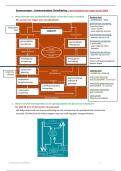
1. Watervalmodel voor spraakproductie (kader of meerdere leeg en invullen) Bovenste deel
EX: wat kan men zeggen over conceptualisatie = FONOLOGIE = TAAL
grammaticale encodering
(=morfosyntaxis)
FONOLOGIE - zinnen vormen
TAAL CONCEPT - juiste volgorde woorden
grammaticale decodering
- patronen vgl uit je LTG
grammaticale grammaticale fonologische encodering
encodering (= semantiek)
decodering
- juiste volgorde letters
- klemtoon
fonologische decodering
- patronen vgl uit je LTG
fonologische fonologische lemma: idee
encodering decodering lexicon: geheugenopslagplaats
lexeem: woord
motorische
onderste deel
FONETIEK planning = FONETIEK = SPRAAK
SPRAAK
taalverwerkings- motorische planning:
motorische structuurspecifiek - bv klemtoon
systeem &
programmering
geheugen motorische programmering:
somatosensorische spierspecifiek - bv. spanning
verwerking motorische uitvoering:
motorische
uitvoering gaan uitspreken
overt speech:
effectieve spraakklank
2. Waarin verschilt het babymodel van de spraakproductie met dat van een volwassene
EX: GEEF DE 3 (of 4?) kenmerken vh babymodel
Het babymodel heeft een directe verbinding van het concept naar de spraakproductie (motorische
executie). De baby kent de andere stappen nog niet, heeft nog geen voorgeschiedenis.
Communicatieve Ontwikkeling 1
, 3. Uitgeschreven spraakstaal analyseren obv een gegeven tekst en onderstaande theorie
- welk fonologisch proces komt aan bod
EX: fouten verbinden met bijhorende proces
klankniveau (= fonologisch niveau) -> SUBSTITUTIEPROCESSEN (10)
▪ devoicing: stemhebbende consonant wordt stemloze - (bv. boom -> poom) tem 2,6 à 3j
▪ backing: articulatieplaats naar achter - (bv. toe -> koe)
▪ fronting: articulatieplaats naar voor - (bv. ik ga -> it ta) tem 3 à 4j
▪ stopping: fricatief vervangen door explosief - (bv soep -> toep) tem 3 à 4j
▪ nasalisatie: orale klank wordt nasaal - (bv. bal -> ban)
▪ denasalisatie: nasale klank wordt oraal - (bv. noot -> toot)
▪ gliding: L en R vervangen door J en W (semi-vocalen) (bv. bjood - bwood) tem 4 à 5,6j
▪ lateralisatie: R vervangen door L - (bv. bloot ipv brood)
▪ aspiratie: h toevoegen voor de klinker - (bv. als -> hals)
▪ de-aspiratie: h weglaten voor de klinker - (bv. hesp -> esp)
syllabeniveau -> SYLLABESTRUCTUURPROCESSEN (5)
▪ clusterreductie: opeenvolgende conconanten vereenvoudigen bv school - sool tem 3 à 3,6j
▪ deletie eindconsonant: laatste consonant(en) weglaten - (bv. door -> doo) tem 3 à 4j
▪ epenthesis: sjwa (doffe e) toevoegen - (bv. melk - melek) opgelet voor dialect
▪ metathesis: volgorde consonanten wijzigen - (bv. arm -> ammer / hesp -> heps)
▪ coalescentie: vereniging/versmelten van aangrenzende syllaben - (bv. pantoffel -> poffel)
woordniveau -> ANDERE PROCESSEN (3) -> tem 2,6 à 3j
▪ Syllabereductie of -deletie: weglaten vd onbeklemtoonde syllabe - (bv. telefoon -> tefoon)
▪ reduplicatie: volledige of gedeeltelijke herhaling - (bv. water -> wawa) komt nt perse voor
-> tem 2 à 6j
▪ assimilatie: aanpassing door naburige klank - (bv. zetel -> tetel)
- progressieve assimilatie (bv. tafel -> tatel)
-> tem 3 à 4j
- regressieve assimilatie (bv. tafel -> fafel)
articulatieplaats
articulatiewijze
Communicatieve Ontwikkeling 2
, Tot welke leeftijd komt dit proces voor
Bereken de uitingslengte
MLU = Mean Lenght of Utterence (gemiddelde aantal woorden per zin)
-> aantal woorden / aantal zinnen
bv. taalstaal met 15 woorden in 3 zinnen = 15/3 = 5 woorden per zin
Bereken de woorddiversiteit ex: wat is TTR + hoe berekenen + toepassen op een spraakstaal
TTR = Type Token Ratio = diversiteit aan woorden die het kind gebruikt.
-> het aantal verschillende woorden / totaal aantal woorden
bv. taalstaal met 50 woorden in totaal, waarvan 30 unieke woorden = 30/50 = 60%
Welke vraagzinnen komen aan bod + wat kan je zeggen mbt vroeglinguale fase en differentiatiefase?
vroeglinguale fase = 1j à 2j6m
intonatie: 1j à 2j6m -> vragen stellen dmv toonhoogte
differentiatiefase = 2j6m à 5j
inversie: va 2j6m -> vragen stellen dmv het onderwerp en de persoonsvorm om te draaien.
bv. mama komt seffens thuis -> komt mama?
vraagwoord: va ± 3j7m -> wie/wat/waar/waarom/wanneer/hoe/hoe laat/…
Communicatieve Ontwikkeling 3
1. Watervalmodel voor spraakproductie (kader of meerdere leeg en invullen) Bovenste deel
EX: wat kan men zeggen over conceptualisatie = FONOLOGIE = TAAL
grammaticale encodering
(=morfosyntaxis)
FONOLOGIE - zinnen vormen
TAAL CONCEPT - juiste volgorde woorden
grammaticale decodering
- patronen vgl uit je LTG
grammaticale grammaticale fonologische encodering
encodering (= semantiek)
decodering
- juiste volgorde letters
- klemtoon
fonologische decodering
- patronen vgl uit je LTG
fonologische fonologische lemma: idee
encodering decodering lexicon: geheugenopslagplaats
lexeem: woord
motorische
onderste deel
FONETIEK planning = FONETIEK = SPRAAK
SPRAAK
taalverwerkings- motorische planning:
motorische structuurspecifiek - bv klemtoon
systeem &
programmering
geheugen motorische programmering:
somatosensorische spierspecifiek - bv. spanning
verwerking motorische uitvoering:
motorische
uitvoering gaan uitspreken
overt speech:
effectieve spraakklank
2. Waarin verschilt het babymodel van de spraakproductie met dat van een volwassene
EX: GEEF DE 3 (of 4?) kenmerken vh babymodel
Het babymodel heeft een directe verbinding van het concept naar de spraakproductie (motorische
executie). De baby kent de andere stappen nog niet, heeft nog geen voorgeschiedenis.
Communicatieve Ontwikkeling 1
, 3. Uitgeschreven spraakstaal analyseren obv een gegeven tekst en onderstaande theorie
- welk fonologisch proces komt aan bod
EX: fouten verbinden met bijhorende proces
klankniveau (= fonologisch niveau) -> SUBSTITUTIEPROCESSEN (10)
▪ devoicing: stemhebbende consonant wordt stemloze - (bv. boom -> poom) tem 2,6 à 3j
▪ backing: articulatieplaats naar achter - (bv. toe -> koe)
▪ fronting: articulatieplaats naar voor - (bv. ik ga -> it ta) tem 3 à 4j
▪ stopping: fricatief vervangen door explosief - (bv soep -> toep) tem 3 à 4j
▪ nasalisatie: orale klank wordt nasaal - (bv. bal -> ban)
▪ denasalisatie: nasale klank wordt oraal - (bv. noot -> toot)
▪ gliding: L en R vervangen door J en W (semi-vocalen) (bv. bjood - bwood) tem 4 à 5,6j
▪ lateralisatie: R vervangen door L - (bv. bloot ipv brood)
▪ aspiratie: h toevoegen voor de klinker - (bv. als -> hals)
▪ de-aspiratie: h weglaten voor de klinker - (bv. hesp -> esp)
syllabeniveau -> SYLLABESTRUCTUURPROCESSEN (5)
▪ clusterreductie: opeenvolgende conconanten vereenvoudigen bv school - sool tem 3 à 3,6j
▪ deletie eindconsonant: laatste consonant(en) weglaten - (bv. door -> doo) tem 3 à 4j
▪ epenthesis: sjwa (doffe e) toevoegen - (bv. melk - melek) opgelet voor dialect
▪ metathesis: volgorde consonanten wijzigen - (bv. arm -> ammer / hesp -> heps)
▪ coalescentie: vereniging/versmelten van aangrenzende syllaben - (bv. pantoffel -> poffel)
woordniveau -> ANDERE PROCESSEN (3) -> tem 2,6 à 3j
▪ Syllabereductie of -deletie: weglaten vd onbeklemtoonde syllabe - (bv. telefoon -> tefoon)
▪ reduplicatie: volledige of gedeeltelijke herhaling - (bv. water -> wawa) komt nt perse voor
-> tem 2 à 6j
▪ assimilatie: aanpassing door naburige klank - (bv. zetel -> tetel)
- progressieve assimilatie (bv. tafel -> tatel)
-> tem 3 à 4j
- regressieve assimilatie (bv. tafel -> fafel)
articulatieplaats
articulatiewijze
Communicatieve Ontwikkeling 2
, Tot welke leeftijd komt dit proces voor
Bereken de uitingslengte
MLU = Mean Lenght of Utterence (gemiddelde aantal woorden per zin)
-> aantal woorden / aantal zinnen
bv. taalstaal met 15 woorden in 3 zinnen = 15/3 = 5 woorden per zin
Bereken de woorddiversiteit ex: wat is TTR + hoe berekenen + toepassen op een spraakstaal
TTR = Type Token Ratio = diversiteit aan woorden die het kind gebruikt.
-> het aantal verschillende woorden / totaal aantal woorden
bv. taalstaal met 50 woorden in totaal, waarvan 30 unieke woorden = 30/50 = 60%
Welke vraagzinnen komen aan bod + wat kan je zeggen mbt vroeglinguale fase en differentiatiefase?
vroeglinguale fase = 1j à 2j6m
intonatie: 1j à 2j6m -> vragen stellen dmv toonhoogte
differentiatiefase = 2j6m à 5j
inversie: va 2j6m -> vragen stellen dmv het onderwerp en de persoonsvorm om te draaien.
bv. mama komt seffens thuis -> komt mama?
vraagwoord: va ± 3j7m -> wie/wat/waar/waarom/wanneer/hoe/hoe laat/…
Communicatieve Ontwikkeling 3