Intro to the Principles of Wound Management UPDATED ACTUAL
Questions and CORRECT Answers
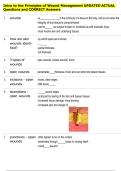
1. wounds -a in the continuity of a tissue of the body, and occurs when the
integrity of any tissue is compromised
-can be , as surgical incision or incidental as with traumatic injury
-most involve skin and underlying tissues
2. how are skin -by which layers are involved
wounds identi- -
fied? -partial thickness
-full thickness
3. 3 types of open wounds, closed wounds, burns
wounds
4. open wounds penetrates thickness of skin and can enter into deeper tissues
5. incisions - open -sharp, clean edges
wounds -little tissue
6. lacerations - - wound edges
open wounds -produced by tearing of the skin and deeper tissues
-increased tissue damage; more bruising
-increased pain and danger of
7. punctures - open -often appear to be on the surface
wounds -penetrates through tissue to varying depth
-most wound
, -debris and bacteria "injected" into deep tissues
-exterior wound often before problem seen
8. Closed wounds entire thickness of penetrated
are called
9. abrasions - · injury (common after vehicular injury - road rash)
closed wounds · Serum oozes, little external hemorrhage.
· Can be internal bleeding and
10. contusions -skin intact with underlying tissue and vessel damage
(bruising) - - , seromas
closed wounds -disruption in blood supply may lead to necrosis
-will require good wound management to heal
11. burns -exposure to excessive heat, or a corrosive substance
-results in coagulation of tissue proteins
-
12. 3 types of burns -first degree
-second degree
-third degree
-each degree based on amt of damage on the skin
13. first degree -cause skin damage - "sunburn"
burns -aka " burns"; they affect the outermost layer of skin
14.
2/7
Questions and CORRECT Answers
1. wounds -a in the continuity of a tissue of the body, and occurs when the
integrity of any tissue is compromised
-can be , as surgical incision or incidental as with traumatic injury
-most involve skin and underlying tissues
2. how are skin -by which layers are involved
wounds identi- -
fied? -partial thickness
-full thickness
3. 3 types of open wounds, closed wounds, burns
wounds
4. open wounds penetrates thickness of skin and can enter into deeper tissues
5. incisions - open -sharp, clean edges
wounds -little tissue
6. lacerations - - wound edges
open wounds -produced by tearing of the skin and deeper tissues
-increased tissue damage; more bruising
-increased pain and danger of
7. punctures - open -often appear to be on the surface
wounds -penetrates through tissue to varying depth
-most wound
, -debris and bacteria "injected" into deep tissues
-exterior wound often before problem seen
8. Closed wounds entire thickness of penetrated
are called
9. abrasions - · injury (common after vehicular injury - road rash)
closed wounds · Serum oozes, little external hemorrhage.
· Can be internal bleeding and
10. contusions -skin intact with underlying tissue and vessel damage
(bruising) - - , seromas
closed wounds -disruption in blood supply may lead to necrosis
-will require good wound management to heal
11. burns -exposure to excessive heat, or a corrosive substance
-results in coagulation of tissue proteins
-
12. 3 types of burns -first degree
-second degree
-third degree
-each degree based on amt of damage on the skin
13. first degree -cause skin damage - "sunburn"
burns -aka " burns"; they affect the outermost layer of skin
14.
2/7