Garantie de satisfaction à 100% Disponible immédiatement après paiement En ligne et en PDF Tu n'es attaché à rien 4.2 TrustPilot
logo-home
Examen

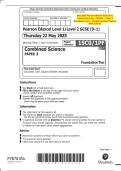
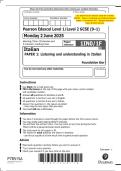
May 2025 Pearson Edexcel: GCSE (9–1) Combined Science – ISCO/3F – Paper 3 (Foundation Tier) – Merged Question Paper & Mark Scheme

Note
-
Vendu
-
Pages
48
Qualité
A+
Publié le
04-10-2025
Écrit en
2025/2026

May 2025 Pearson Edexcel: GCSE (9–1) Combined Science – ISCO/3F – Paper 3 (Foundation Tier) – Merged Question Paper & Mark Scheme DO NOT WRITE IN THIS AREA DO NOT WRITE IN THIS AREA BLANK PAGE 2 ■ ■ ■ ■ infrared gamma ultraviolet radio waves Answer ALL questions. Write your answers in the spaces provided. Some questions must be answered with a cross in one of the four boxes . If you change your mind about an answer, put a line through the box and then mark your new answer with a cross . 1 (a) Draw one straight line from each electromagnetic radiation to its correct description. electromagnetic radiation (b) Different colours of light have different frequencies. Which of these colours has the highest frequency? A blue B green C red D yellow ■■■■ description (3) (1) 3 Turn over the most dangerous radiation may damage eyes, so sunglasses worn as protection the least dangerous radiation used in night vision cameras DO NOT WRITE IN THIS AREA DO NOT WRITE IN THIS AREA DO NOT WRITE IN THIS AREA ray of light coming in glass block ray of light going out (c) Figure 1 is a diagram of a glass block being used to investigate the refraction of light. (Source: © ajizai/) Figure 1 The angle of incidence was varied and the angle of refraction was measured each time. Figure 2 shows the results in a table. angle of incidence in degrees angle of refraction in degrees 20 13 30 20 40 25 50 31 60 35 70 39 80 41 Figure 2 4 ■■■■ DO NOT WRITE IN THIS AREA DO NOT WRITE IN THIS AREA DO NOT WRITE IN THIS AREA Figure 3 shows a graph of these results. 45 40 35 30 angle ofrefraction 25 in degrees 20 15 10 5 0 angle of incidence in degrees Figure 3 (i) The two shaded rows in Figure 2 are not plotted on the graph in Figure 3. Plot these missing results on the graph in Figure 3. (ii) Draw a curve of best fit through the points on the graph in Figure 3. (iii) Using figure 3, describe the relationship between the angle of refraction and the angle of incidence. (2) (1) (2) . . . . . . . . . . . . . . . . . . . . . . . . . . . . . . . . . . . . . . . . . . . . . . . . . . . . . . . . . . . . . . . . . . . . . . . . . . . . . . . . . . . . . . . . . . . . . . . . . . . . . . . . . . . . . . . . . . . . . . . . . . . . . . . . . . . . . . . . . . . . . . . . . . . . . . . . . . . . . . . . . . . . . . . . . . . . . . . . . . . . . . . . . . . . . . . . . . . . . . . . . . . . . . . . . . . . . . . . . . . . . . . . . . . . . . . . . . . . . . . . . . . . . . . . . . . . . . .. . . . . .. . . . . .. . . . . . . . . . . . . . . . . . . . . . . . . . . . . . . . . . . . . . . . . . . . . . . . . . . . . . . . . . . . . . . . . . . . . . . . . . . . . . . . . . . . . . . . . . . . . . . . . . . . . . . . . . . . . . . . . . . . . . . . . . . . . . . . . . . . . . . . . . . . . . . . . . . . . . . . . . . . . . . . . . . . . . . . . . . . . . . . . . . . . . . . . . . . . . . . . . . . . . . . . . . . . . . . . . . . . . . . . . . . . . . . . . . . . . . . . . . . . . . . . . . . . . . . . . . . . . . . . . . . . . . .. . . . . .. . . . . .. . . . . . . . . . . . . . . . . . . . . . . . . . . . . . . . . . . . . . . . . . . . . . . . . . . . . . . . . . . . . . . . . . . . . . . . . . . . . . . . . . . . . . . . . . . . . . . . . . . . . . . . . . . . . . . . . . . . . . . . . . . . . . . . . . . . . . . . . . . . . . . . . . . . . . . . . . . . . . . . . . . . . . . . . . . . . . . . . . . . . . . . . . . . . . . . . . . . . . . . . . . . . . . . . . . . . . . . . . . . . . . . . . . . . . . . . . . . . . . . . . . . . . . . . . . . . . . . . . . . . . . .. . . . . .. . . . . .. . . . . . . . . . . . . . . . . . . . . . . . . . . . . . . . . . . . . . . . . . . . . . . . . . . . . . . . . . . . . . . . . . . . . . . . . . . . . . . . . . . . . . . . . . . . . . . . . . . . . . . . . . . . . . . . . . . . . . . . . . . . . . . . . . . . . . . . . . . . . . . . . . . . . . . . . . . . . . . . . . . . . . . . . . . . . . . . . . . . . . . . . . . . . . . . . . . . . . . . . . . . . . . . . . . . . . . . . . . . . . . . . . . . . . . . . . . . . . . . . . . . . . . . . . . . . . . . . . . . . . . .. . . . . .. . . . . .. . . . . . . . . (Total for Question 1 = 9 marks) ■■■■ 5 Turn over DO NOT WRITE IN THIS AREA DO NOT WRITE IN THIS AREA DO NOT WRITE IN THIS AREA 2 Figure 4 shows a velocity / time graph for a car moving on a test track. 30 25 S R 20 velocity in m / s 15 10 Q 5 0 T P 25 30 35 time in s Figure 4 (a) (i) Use this graph to describe the velocity of the car in stages TS, SR and RQ. TS (3) . . . . . . . . . . . . . . . . . . . . . . . . . . . . . . . . . . . . . . . . . . . . . . . . . . . . . . . . . . . . . . . . . . . . . . . . . . . . . . . . . . . . . . . . . . . . . . . . . . . . . . . . . . . . . . . . . . . . . . . . . . . . . . . . . . . . . . . . . . . . . . . . . . . . . . . . . . . . . . . . . . . . . . . . . . . . . . . . . . . . . . . . . . . . . . . . . . . . . . . . . . . . . . . . . . . . . . . . . . . . . . . . . . . . . . . . . . . . . . . . . . . . . . . . . . . . . . .. . . . . .. . . . . .. . . . . . . . . . . . . . . . . . . . . . . . . . . . . . . . . . . . . . . . . . . . . . . . . . . . . . . . . . . . . . . . . . . . . . . . . . . . . . . . . . . . . . . . . . . . . . . . . . . . . . . . . . . . . . . . . . . . . . . . . . . . . . . . . . . . . . . . . . . . . . . . . . . . . . . . . . . . . . . . . . . . . . . . . . . . . . . . . . . . . . . . . . . . . . . . . . . . . . . . . . . . . . . . . . . . . . . . . . . . . . . . . . . . . . . . . . . . . . . . . . . . . . . . . . . . . . . . . . . . . . . .. . . . . .. . . . . .. . . . . . . . . SR . . . . . . . . . . . . . . . . . . . . . . . . . . . . . . . . . . . . . . . . . . . . . . . . . . . . . . . . . . . . . . . . . . . . . . . . . . . . . . . . . . . . . . . . . . . . . . . . . . . . . . . . . . . . . . . . . . . . . . . . . . . . . . . . . . . . . . . . . . . . . . . . . . . . . . . . . . . . . . . . . . . . . . . . . . . . . . . . . . . . . . . . . . . . . . . . . . . . . . . . . . . . . . . . . . . . . . . . . . . . . . . . . . . . . . . . . . . . . . . . . . . . . . . . . . . . . . .. . . . . .. . . . . .. . . . . . . . . . . . . . . . . . . . . . . . . . . . . . . . . . . . . . . . . . . . . . . . . . . . . . . . . . . . . . . . . . . . . . . . . . . . . . . . . . . . . . . . . . . . . . . . . . . . . . . . . . . . . . . . . . . . . . . . . . . . . . . . . . . . . . . . . . . . . . . . . . . . . . . . . . . . . . . . . . . . . . . . . . . . . . . . . . . . . . . . . . . . . . . . . . . . . . . . . . . . . . . . . . . . . . . . . . . . . . . . . . . . . . . . . . . . . . . . . . . . . . . . . . . . . . . . . . . . . . . .. . . . . .. . . . . .. . . . . . . . . RQ . . . . . . . . . . . . . . . . . . . . . . . . . . . . . . . . . . . . . . . . . . . . . . . . . . . . . . . . . . . . . . . . . . . . . . . . . . . . . . . . . . . . . . . . . . . . . . . . . . . . . . . . . . . . . . . . . . . . . . . . . . . . . . . . . . . . . . . . . . . . . . . . . . . . . . . . . . . . . . . . . . . . . . . . . . . . . . . . . . . . . . . . . . . . . . . . . . . . . . . . . . . . . . . . . . . . . . . . . . . . . . . . . . . . . . . . . . . . . . . . . . . . . . . . . . . . . . .. . . . . .. . . . . .. . . . . . . . . . . . . . . . . . . . . . . . . . . . . . . . . . . . . . . . . . . . . . . . . . . . . . . . . . . . . . . . . . . . . . . . . . . . . . . . . . . . . . . . . . . . . . . . . . . . . . . . . . . . . . . . . . . . . . . . . . . . . . . . . . . . . . . . . . . . . . . . . . . . . . . . . . . . . . . . . . . . . . . . . . . . . . . . . . . . . . . . . . . . . . . . . . . . . . . . . . . . . . . . . . . . . . . . . . . . . . . . . . . . . . . . . . . . . . . . . . . . . . . . . . . . . . . . . . . . . . . .. . . . . .. . . . . .. . . . . . . . . (ii) State how the motion of the car is different in RQ compared with QP. (1) . . . . . . . . . . . . . . . . . . . . . . . . . . . . . . . . . . . . . . . . . . . . . . . . . . . . . . . . . . . . . . . . . . . . . . . . . . . . . . . . . . . . . . . . . . . . . . . . . . . . . . . . . . . . . . . . . . . . . . . . . . . . . . . . . . . . . . . . . . . . . . . . . . . . . . . . . . . . . . . . . . . . . . . . . . . . . . . . . . . . . . . . . . . . . . . . . . . . . . . . . . . . . . . . . . . . . . . . . . . . . . . . . . . . . . . . . . . . . . . . . . . . . . . . . . . . . . .. . . . . .. . . . .

Montrer plus Lire moins
Établissement
May 2025 Pearson Edexcel: GCSE Combined Scie
Cours
May 2025 Pearson Edexcel: GCSE Combined Scie


Oups ! Impossible de charger votre document. Réessayez ou contactez le support.

École, étude et sujet

Établissement
May 2025 Pearson Edexcel: GCSE Combined Scie
Cours
May 2025 Pearson Edexcel: GCSE Combined Scie

Infos sur le Document

Publié le
4 octobre 2025
Nombre de pages
48
Écrit en
2025/2026
Type
Examen
Contenu
Questions et réponses

Sujets

Aperçu du contenu

Please check the examination details below before entering your candidate information
Candidate surname Other names
May 2025 Pearson Edexcel: GCSE (9–1)
Centre Number Candidate Number Combined Science – ISCO/3F – Paper 3
(Foundation Tier) – Merged Question Paper &
Mark Scheme

Pearson Edexcel Level 1/Level 2 GCSE (9–1)
Thursday 22 May 2025
Morning (Time: 1 hour 10 minutes) Paper
reference 1SC0/1PF
Combined Science 🟐 🟐


PAPER 3

Foundation Tier
You must have: Total Marks
Calculator, ruler, Equation Booklet (enclosed)


Instructions

•• Use black ink or ball-point pen.
Fill in the boxes at the top of this page with your name,
centre number and candidate number.
•• Answer all questions.
Answer the questions in the spaces provided
– there may be more space than you need.

Information

•• The total mark for this paper is 60.
The marks for each question are shown in brackets

• Instructure
– use this as a guide as to how much time to spend on each question.
questions marked with an asterisk (*), marks will be awarded for your ability to
your answer logically, showing how the points that you make are related
or follow on from each other where appropriate.

Advice
• Read each question carefully before you start to answer it.
• Try to answer every question.
• your answers if you have time at the end.
Check


Turn over


P78701RA
©2025 Pearson Education Ltd.
Y:1/1/1/1/

,DO NOT WRITE IN THIS AREA DO NOT WRITE IN THIS AREA


■■■■
BLANK PAGE


2

, Answer ALL questions. Write your answers in the spaces provided.

Some questions must be answered with a cross in one of the four boxes . If you change your
DO NOT WRITE IN THIS AREA


mind about an answer, put a line through the box and then mark your new answer with
a cross .
1 (a) Draw one straight line from each electromagnetic radiation to its
correct description.
(3)

electromagnetic radiation description


infrared used in night vision cameras


gamma the least dangerous radiation
DO NOT WRITE IN THIS AREA


may damage eyes, so
ultraviolet
sunglasses worn as protection


radio waves the most dangerous radiation


(b) Different colours of light have different frequencies.
Which of these colours has the highest frequency?
(1)

A blue

B green

C red
DO NOT WRITE IN THIS AREA


D yellow


3
■■■■ Turn over

, (c) Figure 1 is a diagram of a glass block being used to investigate the refraction
of light.


DO NOT WRITE IN THIS AREA
ray of light coming in
glass block


ray of light going out


DO NOT WRITE IN THIS AREA
(Source: © ajizai/docstoc.com)

Figure 1
The angle of incidence was varied and the angle of refraction was measured
each time.

Figure 2 shows the results in a table.

angle of incidence angle of refraction
in degrees in degrees
20 13

30 20

40 25 DO NOT WRITE IN THIS AREA

50 31

60 35

70 39

80 41


Figure 2


4
■■■■

Faites connaissance avec le vendeur

Seller avatar
Les scores de réputation sont basés sur le nombre de documents qu'un vendeur a vendus contre paiement ainsi que sur les avis qu'il a reçu pour ces documents. Il y a trois niveaux: Bronze, Argent et Or. Plus la réputation est bonne, plus vous pouvez faire confiance sur la qualité du travail des vendeurs.
ScholarsDove Arizona State University
Voir profil
S'abonner Vous devez être connecté afin de pouvoir suivre les étudiants ou les formations
Vendu
46
Membre depuis
3 mois
Nombre de followers
0
Documents
678
Dernière vente
4 heures de cela

4.8

4 revues

5
3
4
1
3
0
2
0
1
0

Récemment consulté par vous

Pourquoi les étudiants choisissent Stuvia

Créé par d'autres étudiants, vérifié par les avis

Une qualité sur laquelle compter : rédigé par des étudiants qui ont réussi et évalué par d'autres qui ont utilisé ce document.

Le document ne convient pas ? Choisis un autre document

Aucun souci ! Tu peux sélectionner directement un autre document qui correspond mieux à ce que tu cherches.

Paye comme tu veux, apprends aussitôt

Aucun abonnement, aucun engagement. Paye selon tes habitudes par carte de crédit et télécharge ton document PDF instantanément.

Student with book image

“Acheté, téléchargé et réussi. C'est aussi simple que ça.”

Alisha Student

Foire aux questions