
AAERT Best Practices for Punctuation and Grammar
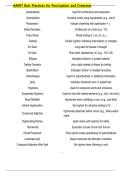
Apostrophes Used for contractions and possession.
Contractions Combine words using apostrophes (e.g., don't).
Possession Indicate ownership with apostrophe + s.
Elided Numbers Omitted part of a date (e.g., '72).
Tricky Words Words ending in z, sh, zh, ch, j.
Dashes Double hyphen indicating interruptions or changes.
Em Dash Long dash for breaks in thought.
En Dash Short dash representing 'to' (e.g., 123-125).
Ellipsis Indicates omission in quoted material.
Trailing Omission Use a dash instead of ellipsis for trailing.
Slash/Slant Indicates 'and/or' or multiple functions.
Parentheses Used for parentheticals or additional information.
[sic] Indicates intentional error in quoted text.
Hyphens Used for compound words and omissions.
Suspended Hyphens Used for lists with shared elements (e.g., two-, four-inch).
Noun Modifier Hyphenate when modifying a noun (e.g., part-time).
Adverb Hyphenation No hyphen for adverbs ending in 'ly'.
Hyphenate adjectives before nouns (e.g., family-autho-
Compound Adjective
rized).
Hyphenating Names Spell names with hyphens for clarity.
Nonwords Examples include uh-huh and huh-uh.
Period Placement Place period inside parentheses for parentheticals.
Lowercase [sic] Always lowercase and italicized in brackets.
Compound Adjective After Verb No hyphen when following a verb.
1/1
Apostrophes Used for contractions and possession.
Contractions Combine words using apostrophes (e.g., don't).
Possession Indicate ownership with apostrophe + s.
Elided Numbers Omitted part of a date (e.g., '72).
Tricky Words Words ending in z, sh, zh, ch, j.
Dashes Double hyphen indicating interruptions or changes.
Em Dash Long dash for breaks in thought.
En Dash Short dash representing 'to' (e.g., 123-125).
Ellipsis Indicates omission in quoted material.
Trailing Omission Use a dash instead of ellipsis for trailing.
Slash/Slant Indicates 'and/or' or multiple functions.
Parentheses Used for parentheticals or additional information.
[sic] Indicates intentional error in quoted text.
Hyphens Used for compound words and omissions.
Suspended Hyphens Used for lists with shared elements (e.g., two-, four-inch).
Noun Modifier Hyphenate when modifying a noun (e.g., part-time).
Adverb Hyphenation No hyphen for adverbs ending in 'ly'.
Hyphenate adjectives before nouns (e.g., family-autho-
Compound Adjective
rized).
Hyphenating Names Spell names with hyphens for clarity.
Nonwords Examples include uh-huh and huh-uh.
Period Placement Place period inside parentheses for parentheticals.
Lowercase [sic] Always lowercase and italicized in brackets.
Compound Adjective After Verb No hyphen when following a verb.
1/1


