
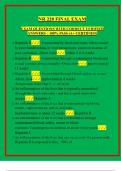
Nr 228 Final Exam Exam Questions With Correct Verified Answers | 100% Pass (A+ Certified)
NR 228 FINAL EXAM EXAM QUESTIONS WITH CORRECT VERIFIED ANSWERS | 100% PASS (A+ CERTIFIED) 1. Hepatitis A -Transmitted by fecal-oral route; often caused by poor handwashing or stool precautions; common in areas of poor sanitation. -Onset rapid within 4 to 6 weeks 2. Hepatitis B -Transmitted through contaminated blood and sexual contact; also perinatally -Onset slow approximately 12 weeks 3. Hepatitis C -Transmitted through blood, saliva, or semen -Onset slow approximately 8 weeks -Progression from Hep C - cirrhosis 4. An inflammation of the liver that is typically transmitted through the fecal-oral route - and has a rapid onset (4-6 weeks) Hepatitis A 5. An inflammation of the liver that is transmitted via blood, semen, vaginal mucus, saliva, and tears. Incubation time is about 12 weeks. Hepatitis B 6. An inflammation of the liver that is transmitted through contaminated blood, saliva, semen or blood exposure. Can progress to cirrhosis in about 10-40 years. Hepatitis C 7. An inflammation of the liver that can occur only if a person with Hepatitis B is exposed to this... 90% of people are likely to be asymptomatic. Hepatitis D 8. Transmitted via oral-fecal route, and is attributed to travel in tropical climates, inadequate sanitation, or poor personal hygiene. Hepatitis E 9. This is the presence of excess fat in feces. Steatorrhea 10. This condition is an early form of alcoholic liver disease, but can also be caused by obesity, complications of drug therapy, excessive parenteral nutrition, pregnancy, DM, inadequate intake of protein, infection or malignancy. Fatty Liver 11. This condition is an overly exuberant wound healing in which excessive connective tissue builds up in the liver. It causes no symptoms but can lead to portal hypertension. Hepatic Fibrosis 12. Condition where the liver cells are replaced by fibrous connective tissue and fat infiltration. Cirrhosis 13. Can result due to portal hypertension. Patients with this condition should eat soft, low-fiber foods. If ruptured, may be fatal. Esophageal Varices 14. Stores bile until being released into the duodenum to expedite absorption of fats, fat-soluble vitamins, and certain minerals. Gallbladder 15. Occurs when gallstones block the cystic duct or when is becomes infected or it becomes ischemic Cholecystitis 16. Inflammatory process characterized by decreased production of digestive enzymes and bicarbonate. Caused by excess alcohol consumption, gallbladder disease, genetics. Pancreatitis 17. Secretes enzymes necessary for protein, carbohydrate, and fat digestion. It also secretes sodium bicarbonate to neutralize acidic gastric contents as they enter the duodenum. Known for secreting insulin and glucagon for glucose homeostasis. Pancreas 18.
Document information
- Uploaded on
- September 29, 2025
- Number of pages
- 11
- Written in
- 2025/2026
- Type
- Exam (elaborations)
- Contains
- Questions & answers


