SOLUTION MANUAL n
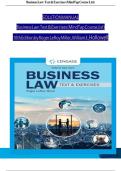
Business Law:Text & Exercises (MindTap Course List) 10th
n n n n n n n n
EditionbyRogerLeRoyMiller,WilliamE. Hollowell
n n n n n n n nn
1
website,dindwholedordindpar
,Chapter1 n
TableofContents n n
Purposeand Perspective of the Chapter .................................................................................................................... 2
n n n n n
Cengage Supplements ................................................................................................................................................... 2
n
List of Student Downloads ......................................................................................................................................... 2
n n n
Chapter Objectives........................................................................................................................................................... 2
n
Key Terms............................................................................................................................................................................ 2
n
What's New in This Chapter ............................................................................................................................................ 3
n n n n
Chapter Outline................................................................................................................................................................. 4
n
Discussion Questions ...................................................................................................................................................... 8
n
Additional Resources .................................................................................................................................................... 10
n
Cengage Video Resources ...................................................................................................................................... 10
n n
Appendix........................................................................................................................................................................... 10
Generic Rubrics ........................................................................................................................................................... 10
n
Standard Writing Rubric........................................................................................................................................... 10
n n
StandardDiscussion Rubric .................................................................................................................................... 12
n n
2
website,dindwholedordindpar
,PurposeandPerspectiveoftheChapter n n n n n
The purpose of this chapter is to examine the relationship between law and ethics. The chapter
n n n n n n n n n n n n n n n
presents issues involved to determining the ethical responsibilities of businesses and provides
n n n n n n n n n n n n
students a framework for analyzing and making ethical decisions.
n n n n n n n n n
CengageSupplements n
The following product-
n n
level supplements provide additional information that may help you inpreparing your course.
n n n n n n n n n n n
They are available in the Instructor Resource Center.
n n n n n n n n
• PowerPoint Deck n
ListofStudentDownloads
n n n
Students should download the following items from the Student Companion Center to complete the
n n n n n n n n n n n n n
activities and assignments related to this chapter:
n n n n n n n
• PowerPointDeck (without teaching notes, activities, or answers) n n n n n n n
ChapterObjectives n
The following objectives are addressed in this chapter:
n n n n n n n
1. Discusshow businesscan discourage unethical behavior n n n n n n
2. Explain therelationship between law and ethics n n n n n n
3. Compareduty-based ethics and utilitarian ethics n n n n n
4. Identify ethical problems in the global context n n n n n n
KeyTerms n
business ethics: Ethics in a business context; a consensus of what constitutes right or wrong be
n n n n n n n n n n n n n n n
havior in the world of business and the application of moral principles to situations that arisein a
n n n n n n n n n n n n n n n n n
business setting.
n n
categorical imperative: A concept developed by the philosopher Immanuel Kant as an ethical
n n n n n n n n n n n n
guideline for behavior. In deciding whether an action is right or wrong, or desirable or undesir
n n n n n n n n n n n n n n n n
able, a person should evaluate the action in terms of what would happen ifdeverybody else in t he
n n n n n n n n n n n n n n n n n n
same situation, or category, acted the same way.
n n n n n n n n
corporate social responsibility (CSR): The concept that corporations can and should act ethically
n n n n n n n n n n n n
and be accountable to society for their actions.
n n n n n n n n
cost-benefit analysis: Addecision- n n
making technique that involves weighing the costs of a givenaction against the benefits of the a
n n n n n n n n n n n n n n n
ction.
n
duty-
based ethics: An ethical philosophy rooted in the idea that every person has certain dutiesto oth ers,
n n n n n n n n n n n n n n n n
including both humans and the planet. Those duties may be derived from religious principle s or
n n n n n n n n n n n n n n n n
from other philosophical reasoning.
n n n n
3
website,dindwholedordindpar
, ethical reasoning: A reasoning process in which an individual links his or her moral convictions or
n n n n n n n n n n n n n n n
ethical standards to the particular situation at hand.
n n n n n n n n
4
website,dindwholedordindpar
Business Law:Text & Exercises (MindTap Course List) 10th
n n n n n n n n
EditionbyRogerLeRoyMiller,WilliamE. Hollowell
n n n n n n n nn
1
website,dindwholedordindpar
,Chapter1 n
TableofContents n n
Purposeand Perspective of the Chapter .................................................................................................................... 2
n n n n n
Cengage Supplements ................................................................................................................................................... 2
n
List of Student Downloads ......................................................................................................................................... 2
n n n
Chapter Objectives........................................................................................................................................................... 2
n
Key Terms............................................................................................................................................................................ 2
n
What's New in This Chapter ............................................................................................................................................ 3
n n n n
Chapter Outline................................................................................................................................................................. 4
n
Discussion Questions ...................................................................................................................................................... 8
n
Additional Resources .................................................................................................................................................... 10
n
Cengage Video Resources ...................................................................................................................................... 10
n n
Appendix........................................................................................................................................................................... 10
Generic Rubrics ........................................................................................................................................................... 10
n
Standard Writing Rubric........................................................................................................................................... 10
n n
StandardDiscussion Rubric .................................................................................................................................... 12
n n
2
website,dindwholedordindpar
,PurposeandPerspectiveoftheChapter n n n n n
The purpose of this chapter is to examine the relationship between law and ethics. The chapter
n n n n n n n n n n n n n n n
presents issues involved to determining the ethical responsibilities of businesses and provides
n n n n n n n n n n n n
students a framework for analyzing and making ethical decisions.
n n n n n n n n n
CengageSupplements n
The following product-
n n
level supplements provide additional information that may help you inpreparing your course.
n n n n n n n n n n n
They are available in the Instructor Resource Center.
n n n n n n n n
• PowerPoint Deck n
ListofStudentDownloads
n n n
Students should download the following items from the Student Companion Center to complete the
n n n n n n n n n n n n n
activities and assignments related to this chapter:
n n n n n n n
• PowerPointDeck (without teaching notes, activities, or answers) n n n n n n n
ChapterObjectives n
The following objectives are addressed in this chapter:
n n n n n n n
1. Discusshow businesscan discourage unethical behavior n n n n n n
2. Explain therelationship between law and ethics n n n n n n
3. Compareduty-based ethics and utilitarian ethics n n n n n
4. Identify ethical problems in the global context n n n n n n
KeyTerms n
business ethics: Ethics in a business context; a consensus of what constitutes right or wrong be
n n n n n n n n n n n n n n n
havior in the world of business and the application of moral principles to situations that arisein a
n n n n n n n n n n n n n n n n n
business setting.
n n
categorical imperative: A concept developed by the philosopher Immanuel Kant as an ethical
n n n n n n n n n n n n
guideline for behavior. In deciding whether an action is right or wrong, or desirable or undesir
n n n n n n n n n n n n n n n n
able, a person should evaluate the action in terms of what would happen ifdeverybody else in t he
n n n n n n n n n n n n n n n n n n
same situation, or category, acted the same way.
n n n n n n n n
corporate social responsibility (CSR): The concept that corporations can and should act ethically
n n n n n n n n n n n n
and be accountable to society for their actions.
n n n n n n n n
cost-benefit analysis: Addecision- n n
making technique that involves weighing the costs of a givenaction against the benefits of the a
n n n n n n n n n n n n n n n
ction.
n
duty-
based ethics: An ethical philosophy rooted in the idea that every person has certain dutiesto oth ers,
n n n n n n n n n n n n n n n n
including both humans and the planet. Those duties may be derived from religious principle s or
n n n n n n n n n n n n n n n n
from other philosophical reasoning.
n n n n
3
website,dindwholedordindpar
, ethical reasoning: A reasoning process in which an individual links his or her moral convictions or
n n n n n n n n n n n n n n n
ethical standards to the particular situation at hand.
n n n n n n n n
4
website,dindwholedordindpar