

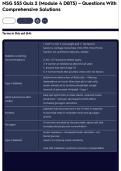
NSG 555 Quiz 2 (Module 4 DBTS) – Questions With
Comprehensive Solutions
Save
Terms in this set (64)
1. OGTT or A1C if overweight and 1 + risk factors
family hx, heritage (nonwhite), CVD, HTN, HLD, PCOS,
inactive, s/s: acanthosis nigricans, obesity
Diabetes screening
recommendations 2. A1C >5.7 should be tested yearly
3. if women an Gestational dbts test q3 years
4. anyone else start at age 45
5. if normal results test q3 years unless new risk factors
autoimmune destruction of Beta cells -->lifelong
dependance on insulin (they have ab to islet cells,
Type 1 diabetes
insulin autoab, ab to tyrosine phosphate), surigal
removal of pancrease (whipple)-->type 1
beta cell dysfunction in older adults--reduced insulin
latent autoimmune dbts
production + lipolysis, decreased incretin effect,
(LABA)
increased glucagon secretions
peptides that are produced in the GI tract in response
Incretins to food that help to modulate insulin and glucagon
activity
A hormone secreted by the pancreatic alpha cells that
Glucagon
increases blood glucose concentration
insulin resistance-->increased insulin secretion-->inc
blood glucose
type 2 diabetes need tx to improve insulin sensitivity.
note that metabolic syndrome common in presentation
, A syndrome marked by the presence of usually three or
more of a group of factors (as high blood pressure,
abdominal obesity, high triglyceride levels, low HDL
metabolic syndrome
levels, and high fasting levels of blood sugar) that are
linked to increased risk of cardiovascular disease and
Type 2 diabetes.
polyuria, polydipsia, polyphagia, wt loss, blurry cision,
type 1 dm presentation fatigue, s/s dbts. Late s/s: DKA (rapid shallow breathing,
low BP, dehydration, n/v/abd pain)
asymptomatic or subtle symptoms. often
vascular/neuropathic complications first
type 2 dm presentation
polyuria, polydipsia, blurry vision, fatigue, infectiosn,
slow healing wounds
focus on dehydration, wt loss (dry/flushed), palpate
exam for dbts initial thyroid (common to also have type 1 dm), vascular and
neuropathic complications.
1. eval glucose control
2. assess for presence/progression of end-organ
damage
3. assess for associated diseases (cv risk factors,
autoimmune disorders)
exam for dbts follow up Q3 Months + full annual exam to assess complications
and glycemic control, check lipids, A1C, renal function
each 3 months and LFTs each year (more frequent if
abnormal)
other yearly screening: urine microalbumin and UA, eye
exam, CV eval if indicated. baseline EKG if >40
based on glucose threshold for which retinopathy risk is
increased
A1C 6.5 or >
Glucose fasting 126 or >
2 hourplasma glucose or OGTT 200>
dx diabetes
IF NO S/S 2 LAB TESTS ON DIFFERENT DAYS
CONFIRMS
IF SYMPTOMS: RANDOM PLASMA GLUCOSE OF 200+
IS DIAGNOSTIC
FOR A1C ALWAYS CHECK 2X TO RULE OUT LAB ERROR
Comprehensive Solutions
Save
Terms in this set (64)
1. OGTT or A1C if overweight and 1 + risk factors
family hx, heritage (nonwhite), CVD, HTN, HLD, PCOS,
inactive, s/s: acanthosis nigricans, obesity
Diabetes screening
recommendations 2. A1C >5.7 should be tested yearly
3. if women an Gestational dbts test q3 years
4. anyone else start at age 45
5. if normal results test q3 years unless new risk factors
autoimmune destruction of Beta cells -->lifelong
dependance on insulin (they have ab to islet cells,
Type 1 diabetes
insulin autoab, ab to tyrosine phosphate), surigal
removal of pancrease (whipple)-->type 1
beta cell dysfunction in older adults--reduced insulin
latent autoimmune dbts
production + lipolysis, decreased incretin effect,
(LABA)
increased glucagon secretions
peptides that are produced in the GI tract in response
Incretins to food that help to modulate insulin and glucagon
activity
A hormone secreted by the pancreatic alpha cells that
Glucagon
increases blood glucose concentration
insulin resistance-->increased insulin secretion-->inc
blood glucose
type 2 diabetes need tx to improve insulin sensitivity.
note that metabolic syndrome common in presentation
, A syndrome marked by the presence of usually three or
more of a group of factors (as high blood pressure,
abdominal obesity, high triglyceride levels, low HDL
metabolic syndrome
levels, and high fasting levels of blood sugar) that are
linked to increased risk of cardiovascular disease and
Type 2 diabetes.
polyuria, polydipsia, polyphagia, wt loss, blurry cision,
type 1 dm presentation fatigue, s/s dbts. Late s/s: DKA (rapid shallow breathing,
low BP, dehydration, n/v/abd pain)
asymptomatic or subtle symptoms. often
vascular/neuropathic complications first
type 2 dm presentation
polyuria, polydipsia, blurry vision, fatigue, infectiosn,
slow healing wounds
focus on dehydration, wt loss (dry/flushed), palpate
exam for dbts initial thyroid (common to also have type 1 dm), vascular and
neuropathic complications.
1. eval glucose control
2. assess for presence/progression of end-organ
damage
3. assess for associated diseases (cv risk factors,
autoimmune disorders)
exam for dbts follow up Q3 Months + full annual exam to assess complications
and glycemic control, check lipids, A1C, renal function
each 3 months and LFTs each year (more frequent if
abnormal)
other yearly screening: urine microalbumin and UA, eye
exam, CV eval if indicated. baseline EKG if >40
based on glucose threshold for which retinopathy risk is
increased
A1C 6.5 or >
Glucose fasting 126 or >
2 hourplasma glucose or OGTT 200>
dx diabetes
IF NO S/S 2 LAB TESTS ON DIFFERENT DAYS
CONFIRMS
IF SYMPTOMS: RANDOM PLASMA GLUCOSE OF 200+
IS DIAGNOSTIC
FOR A1C ALWAYS CHECK 2X TO RULE OUT LAB ERROR


